
Introduction
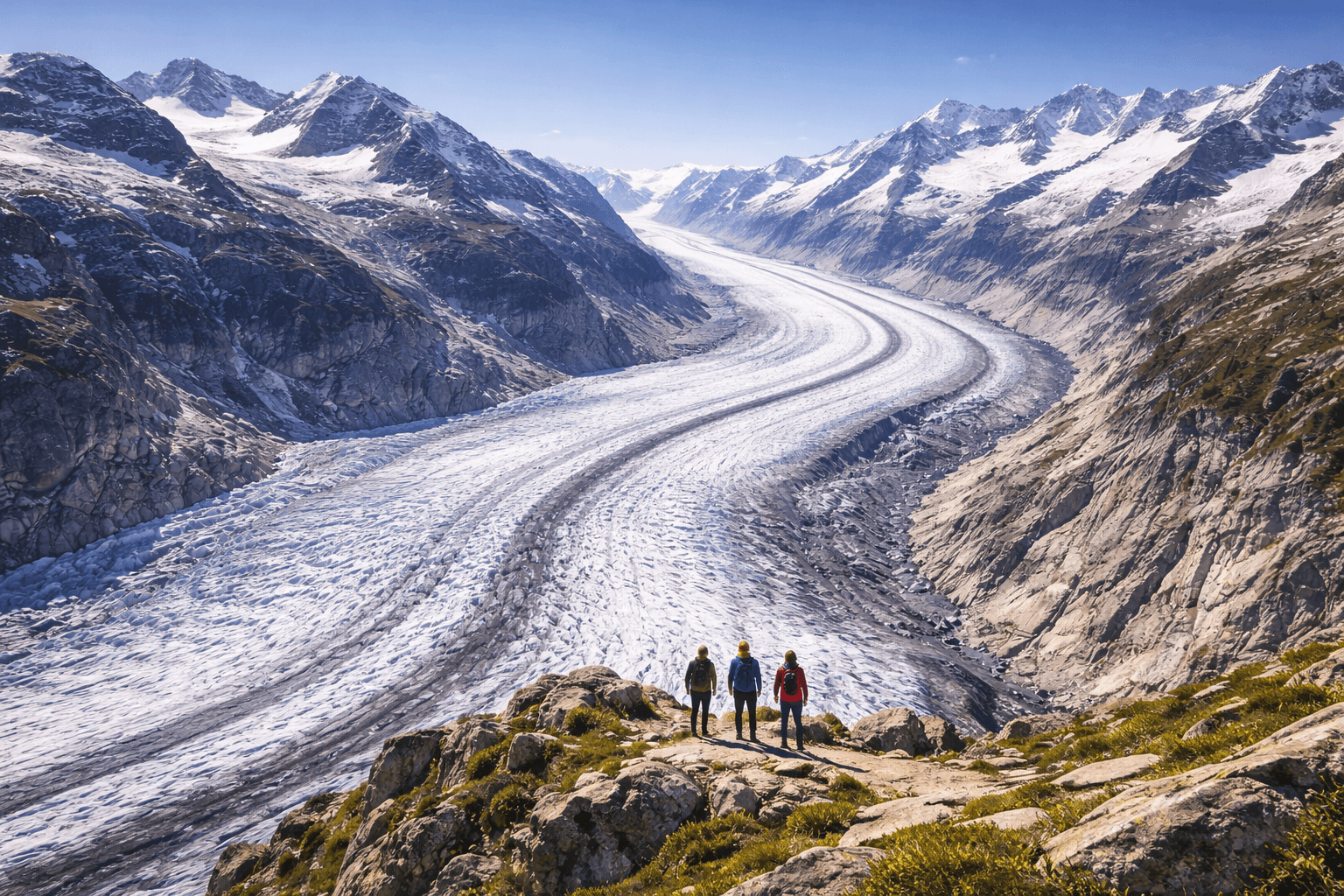
The Aletsch Glacier is the largest glacier in the Alps, a sweeping riverscape of ice running through the Bernese Alps in southwestern Switzerland. A UNESCO World Heritage site (the Jungfrau-Aletsch area), it holds geological, ecological and cultural significance: it records climate history in its ice, shapes dramatic mountain scenery and supports traditional alpine livelihoods in nearby villages.
This place appeals to nature lovers, hikers, photographers, families seeking accessible alpine views, and travelers interested in mountain science and conservation.
Why Visit
- See one of Europe’s most impressive glacier systems and panoramic high-Alpine scenery.
- Walk well-maintained trails and viewpoints with relatively easy access (no technical glacier travel required for most visitors).
- Learn about glacier science, climate change and alpine ecology at visitor centers and interpretive stops.
- Combine the visit with classic Swiss mountain villages and cable-car experiences.
Main Areas & What to See
Eggishorn viewpoint
- What it is: A high ridge above the glacier offering sweeping panoramas across the Aletsch expanse and surrounding peaks.
- Why it matters: It provides the most accessible, dramatic vantage point to appreciate the glacier’s scale and curvature.
- What to notice/do: Take the short walk from the Eggishorn cable car station to the main viewpoint at sunrise or late afternoon for softer light; binoculars help pick out crevasse patterns and distant peaks.
Bettmerhorn and Bettmeralp
- What it is: A car-free village and mountain accessed by cable car, with trails that look down onto the glacier.
- Why it matters: Bettmeralp’s calm atmosphere and panoramic trails are ideal for family-friendly hikes and multi-day stays.
- What to notice/do: Follow the clearly marked ridge paths toward viewpoints; stop at local cafés for regional Alpine dishes.
Aletsch Forest and Märjelen Glacier forefield
- What it is: Lower-elevation sections where the glacier’s meltwater has created lakes, braided streams and moraines; the Märjelen area includes an interpretive trail.
- Why it matters: Shows the glacier’s dynamic edge and ecological transition zones—good for understanding glacial processes.
- What to notice/do: Walk the Märjelen Trail to see the glacier terminus area, ponds and birdlife; trail surfaces can be uneven—sturdy shoes recommended.
Aletsch Arena visitor resources (incl. visitor centers)
- What it is: Information centers, exhibits and guided-tour services in local towns (e.g., Riederalp, Bettmeralp).
- Why it matters: Offers context about the glacier, safety guidance and current conditions.
- What to notice/do: Check seasonal opening hours and guided-walk schedules; pick up maps and weather alerts.
Best Time to Visit
- Time of day: Early morning for solitude and softer light; late afternoon for warm tones and fewer peak-tour groups. Midday is fine for village access and cable-car timetables.
- Crowd considerations: Summer (July–August) is busiest; shoulder seasons (late June, September) are calmer but weather can change quickly.
- Atmosphere differences: Clear summer days offer long views and accessible trails; autumn brings crisp air and mellow light; winter transforms the area into a snow-blanketed landscape with limited glacier visibility but excellent for snowshoeing.
Seasonal Highlights
- Spring (May–June): Wildflowers and thawing streams; some high trails still have snow—check local info.
- Summer (July–August): Full trail network, longest daylight, regular cable-car service; best time for panoramic hikes.
- Autumn (September–October): Fewer crowds, clear air and golden slopes; some facilities begin to close mid-late October.
- Winter (November–April): Snow activities, many village access points become car-free ski/snowshoe zones; glacier views limited by snow cover but striking in low winter light.
Practical Tips
- Cultural etiquette: Greet locals with a friendly “Grüezi” (German) or “Bonjour” in areas where French is used; respect quiet village life—keep noise low, especially at night.
- Photography: Drones are restricted in many parts of the Swiss Alps and near protected sites—check local regulations and avoid disturbing wildlife or other visitors.
- Payment & timings: Small shops and mountain cafés accept cards but keep some Swiss francs for small purchases and cable-car ticket machines. Cable-car schedules vary seasonally—confirm times in advance.
- Access & safety: You can view most of the glacier from marked trails and viewpoints; do not walk onto the glacier without a certified guide and appropriate equipment. Weather in the high Alps changes quickly—bring layers, windproof clothing and a basic first-aid kit.
- Estimated visit duration: 2–6 hours for a viewpoint-focused visit (Eggishorn + short walks); a full day to combine viewpoints, interpretive trails and a village lunch; multi-day stays if you plan longer hikes or to explore nearby valleys.
Getting There
- Nearest major access points: The common gateways are the car-free resorts of Riederalp, Bettmeralp and the cable car at Fiesch/Eggishorn.
- From Bern: Typical travel time by train + local transit ~2.5–3.5 hours to Fiesch or Brig, then cable cars up to the viewing areas.
- From Geneva: Expect ~3.5–4.5 hours by train to Brig/Fiesch plus cable car connections.
- From Interlaken: Typical train time ~2–3 hours to Visp/Brig, then local connections and cable cars.
- Note: Swiss public transport is frequent and reliable; plan connections using regional timetables and allow time for cable-car transfers.
Is It Worth It?
Yes—if you value dramatic alpine scenery, accessible mountain viewpoints and learning how glaciers shape landscapes. The Aletsch Glacier offers a rare chance to experience a major glacier without technical mountaineering. For travelers expecting close-up icewalking or guaranteed solitude, set expectations: the most dramatic views are accessible and rewarding, but the glacier’s scale means quiet reflection rather than intimate exploration unless you join a guided glacier tour.