
Introduction
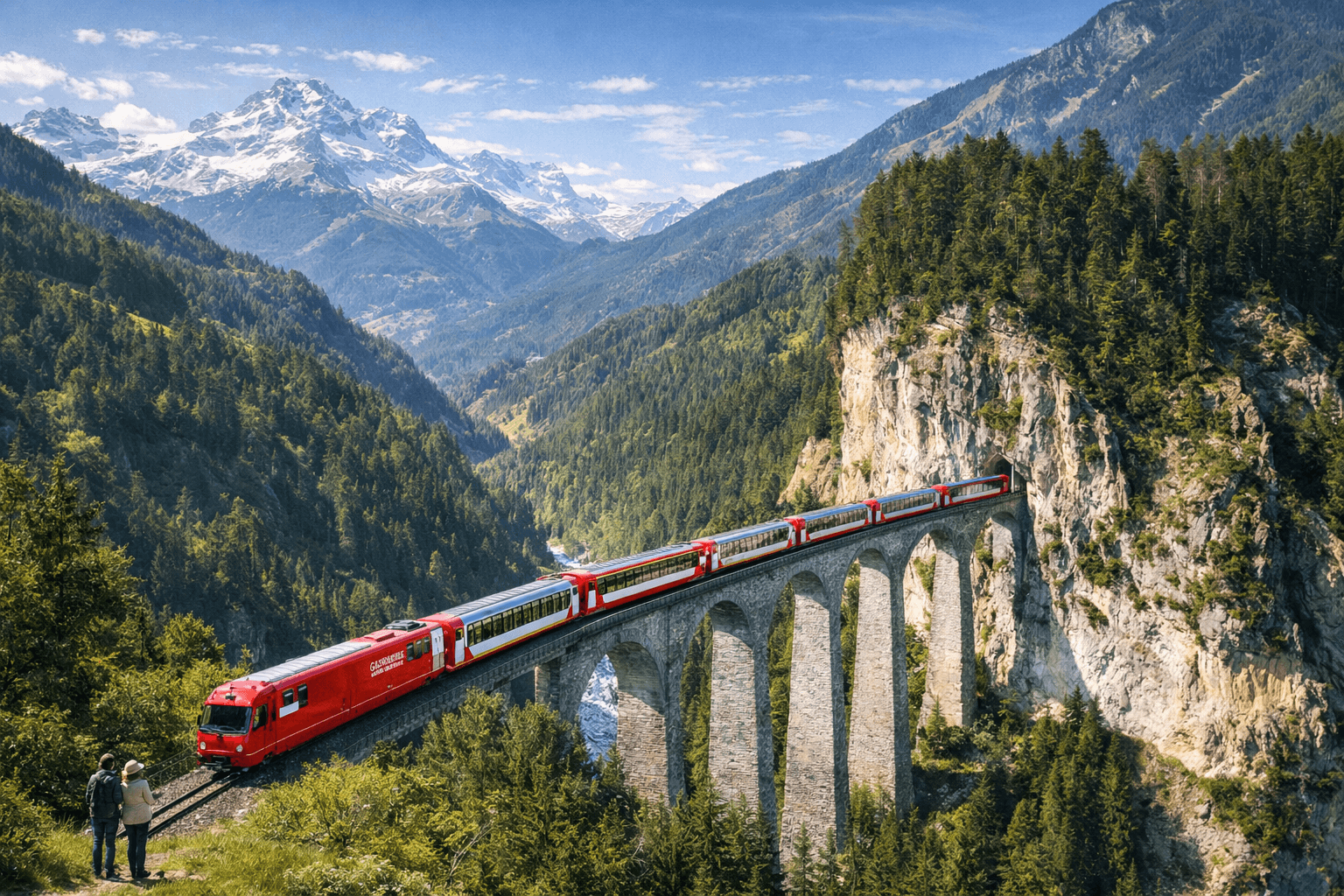
The Glacier Express is a long-distance panoramic train route that links Zermatt in the Valais with St. Moritz and Davos in Graubünden (via Chur). More than a mode of transport, it’s a curated scenic experience that crosses high mountain passes, deep gorges and wide alpine valleys through large panoramic windows. The journey is historically significant for connecting remote alpine towns and for popularizing scenic rail travel in Switzerland. It appeals to curious first-time visitors, photography-minded travelers, and anyone seeking a relaxed, accessible way to see major alpine landscapes without driving.
Why Visit
- Uninterrupted alpine scenery framed by oversized panoramic windows.
- Comfortable, accessible travel between iconic Swiss mountain towns.
- Hassle-free way to photograph glaciers, viaducts and mountain passes.
- Onboard dining and commentary make it a full-day, single-ticket experience.
Main Areas & What to See
Zermatt and the Matterhorn (western terminus)
- What it is: Car-free village at the foot of the Matterhorn.
- Why it matters: Classic alpine views; start or end point for mountain activities.
- Notice/Do: Allow time for a brief stroll in Zermatt or a trip up to Gornergrat for a different perspective before/after the train.
Visp and Brig valleys
- What it is: Transition from vineyards and steep valley walls into higher alpine terrain.
- Why it matters: Visual change from settled Valais into the high-mountain environment.
- Notice/Do: Watch for terraced vineyards and small villages—good for seasonal color.
Oberalp Pass and the Rhine Source area
- What it is: Highest point on the route; alpine plateau and mountain lakes.
- Why it matters: Dramatic high-country landscapes—snow fields in shoulder seasons.
- Notice/Do: If making short excursions, check local stops; weather changes quickly here.
Rhine Gorge (Ruinaulta)
- What it is: Narrow, dramatic gorge near the eastern section of the route.
- Why it matters: One of Switzerland’s most impressive river gorges visible from the train.
- Notice/Do: Keep camera ready—steep rock walls and swirling river below.
Chur, St. Moritz and Engadine (eastern terminus)
- What it is: Ancient towns and high alpine lakes in Graubünden.
- Why it matters: Cultural contrast—Romansh influences, elegant alpine resorts.
- Notice/Do: Arrive early or stay overnight to explore St. Moritz’s lakeside walks or Chur’s old town.
Best Time to Visit
- Time of day: Morning departures let you arrive before evening; light is often best mid-morning to afternoon for valley shots. Eastbound vs westbound changes sun angles—choose based on what you want to photograph.
- Crowd considerations: The train fills during school holidays and summer; reserve seats early. Off-peak weekdays are quieter.
- Atmosphere differences: Clear days deliver wide views; misty days create intimate alpine moods.
Seasonal Highlights
- Spring (Apr–Jun): Melting snow, early wildflowers in lower valleys, occasional snow on passes.
- Summer (Jul–Aug): Lush meadows, long daylight, best time for full panoramic clarity but busiest.
- Autumn (Sep–Oct): Larch and beech turn golden—excellent color contrasts in Engadine and Valais.
- Winter (Nov–Mar): Snow-covered peaks and frozen valleys; picture-perfect scenes but shorter daylight and occasional delays.
- Events: Local festivals occur in terminus towns (market days, regional events); check town calendars when planning overnight stays.
Practical Tips
- Reservations: Seat reservations are highly recommended and often required on the Glacier Express—book well in advance, especially for full-route trips.
- Tickets & passes: Swiss Travel Pass and regional passes cover travel but may still require a reservation fee; verify when booking.
- Accessibility: Trains are wheelchair-accessible with assistance; check carriage layouts when reserving.
- Luggage: Limited space—pack compactly; larger luggage storage is available in vestibules.
- Food & drink: Onboard dining is offered on most services; pre-ordering is possible on long runs. Bring water and snacks for shorter services or if you prefer specific items.
- Photography: Large windows are ideal; glide the camera against the glass to reduce reflections. Avoid using flash. If you want unobstructed shots, choose seats early and be ready at key landmarks.
- Cultural etiquette: Keep noise low, respect other passengers’ space, and follow staff instructions.
- Timing: Full end-to-end trip takes about 7.5–8 hours; many travelers split the route with overnight stops.
- Estimated visit duration: Plan a full day if traveling straight through; 2–3 days if combining with local exploration in Zermatt or St. Moritz.
Getting There
- Nearest stations/access points: Zermatt (car-free — arrive via Täsch shuttle), Visp/Brig, Andermatt (mid-route), Chur, St. Moritz (eastern terminus).
- Typical travel time from city centers:
- From Zurich main station (Zürich HB) to Chur: ~1.5 hours by regular train; then transfer for Glacier Express section eastbound.
- From Geneva to Brig: ~2.5–3 hours by regular trains; then connect to Glacier Express at Brig/Visp.
- Full Glacier Express route Zermatt–St. Moritz: approximately 7.5–8 hours (single-day journey).
Is It Worth It?
For travelers who value relaxed, panoramic travel and want to see a cross-section of Switzerland’s high mountain landscapes without driving, the Glacier Express delivers a reliably memorable experience. It’s less about high-speed transit and more about a thoughtfully arranged sightseeing day; if that matches your travel priorities (photography, comfort, scenic variety), it’s worth the time and expense. For travelers with limited time who prefer active mountain time over a day on a train, consider doing shorter segments and overnighting in Zermatt or St. Moritz instead.