
Introduction
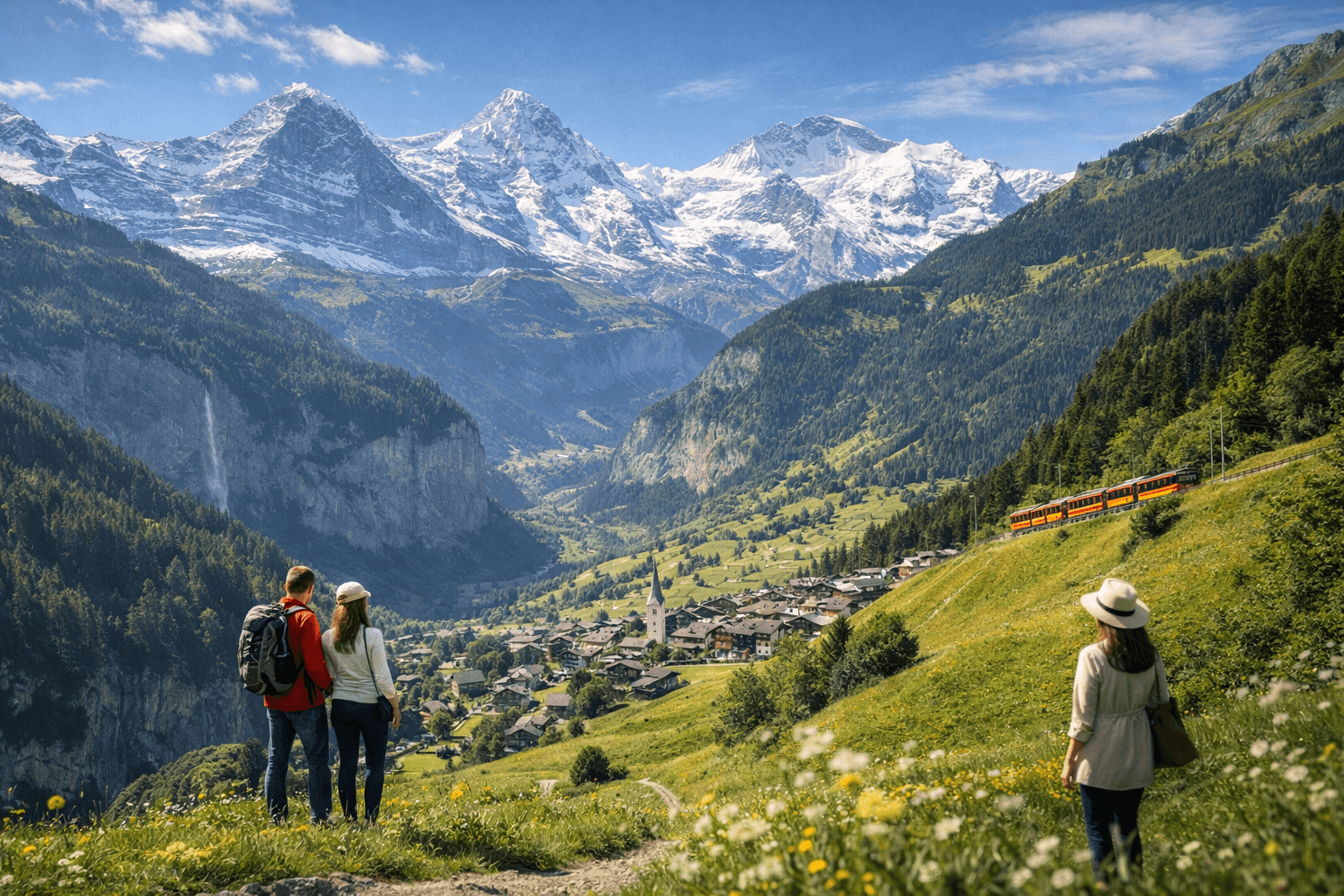
The Jungfrau Region sits in the heart of the Bernese Oberland in the Swiss Alps, anchored by the towering trio of Eiger, Mönch and Jungfrau. It’s a compact area of dramatic valleys, alpine villages, waterfalls and high-mountain railways that has long been a destination for scenic train journeys, mountain sports and classic Swiss village culture. The region appeals to outdoor lovers, families, rail travelers, photographers and anyone seeking accessible high-mountain experiences without technical climbing.
Why Visit
- World-class mountain scenery accessible by scenic trains and cable cars.
- A variety of activities year-round: hiking, skiing, sledging, glacier sightseeing.
- Charming alpine villages (Grindelwald, Wengen, Mürren) with easy access to peaks and valleys.
- Unique rail experiences—Kleine Scheidegg, Jungfraujoch (Top of Europe) and mountain cableways.
Main Areas & What to See
Interlaken
What it is: Gateway town between Lakes Thun and Brienz. Why it matters: Typical starting point for trains to the Jungfrau Region and a good base for services and accommodation. What to notice/do: Stroll the Höheweg, book excursions, and use Interlaken Ost station for onward connections.
Grindelwald
What it is: Lively mountain village on the southern slope of the Eiger. Why it matters: Base for Eiger walks, first-class hiking and cableways to First. What to notice/do: Take the gondola to First for the Cliff Walk, mountain-scooter or summer hikes; local bakeries and outdoor equipment shops are good staging points.
Wengen
What it is: Car-free village perched above Lauterbrunnen Valley. Why it matters: Classic alpine atmosphere with easy train access to Kleine Scheidegg and Jungfraujoch. What to notice/do: Enjoy village views, short hikes to viewpoints, and ride the cogwheel to Kleine Scheidegg for Eiger views.
Lauterbrunnen Valley
What it is: Deep glacial valley with dramatic cliffs and many waterfalls. Why it matters: Iconic valley scenery—Staubbach and Trümmelbach Falls are highlights. What to notice/do: Walk or cycle in the valley floor, visit the Trümmelbach glacial falls (inside the mountain), and use the valley as a hub to Wengen and Mürren.
Mürren & Schilthorn
What it is: High, car-free station village with panoramic views; Schilthorn is a nearby summit. Why it matters: Panoramas of the Jungfrau massif and the famous revolving restaurant on Schilthorn (Piz Gloria). What to notice/do: Take the cable car from Lauterbrunnen/Stechelberg via Gimmelwald to Mürren, then the lift to Schilthorn for views and short alpine walks.
Kleine Scheidegg & Jungfraujoch
What it is: Kleine Scheidegg is a high saddle and transfer point; Jungfraujoch is the high-mountain railway terminus on the Aletsch Glacier. Why it matters: Jungfraujoch (Top of Europe) offers glacier views, an ice palace and high-altitude panoramas; Kleine Scheidegg provides spectacular Eiger face views. What to notice/do: Plan extra time for the Jungfraujoch station, dress warmly, and consider stopping at Kleine Scheidegg for hikes or photos rather than going all the way up.
Best Time to Visit
- Time of day: Early morning for clear mountain light and fewer crowds; late afternoon for warmer slopes and golden light for photos.
- Crowd considerations: Midday and late-morning trains to Jungfraujoch and popular cableways are busiest; arrive early or book timed tickets where possible.
- Atmosphere differences: Mornings are quieter and cooler; afternoons livelier in villages with walkers and day-trippers returning.
Seasonal Highlights
- Spring (Apr–Jun): Snow still caps peaks, lower valleys bloom; fewer tourists and good shoulder-season hiking on lower trails.
- Summer (Jul–Aug): Best for full-hiking network, alpine meadows, mountain sports and longer daylight; busiest period.
- Autumn (Sep–Oct): Crisp air, autumn colors in lower valleys, quieter trails—good for photography and clear views.
- Winter (Nov–Mar): Skiing, sledging and winter hiking; villages take on a festive, snowy character. Jungfraujoch remains accessible year-round but expect colder conditions.
- Events: Seasonal village and ski events occur locally (Christmas markets, summer festivals); check local event calendars when planning.
Practical Tips
- Cultural etiquette: Swiss punctuality is real—arrive on time for trains and reservations. Respect quiet hours in villages and hotel policies.
- Photography: Most areas are open for photography; be mindful in enclosed exhibits (ice palace) and when other visitors seek quiet. Drones are restricted in many protected alpine areas—check local rules and signage.
- Payment & access: Major cards are widely accepted but carry some Swiss francs for small shops, mountain huts and local buses. Many mountain lifts operate on a timetable—buy tickets in advance for popular routes.
- Timing & duration: Short visits (half–full day) can cover a village and a cable car; a full Jungfraujoch round trip plus a village visit takes a full day. Plan 1–4 days depending on activities.
Getting There
- Nearest major rail hub: Interlaken Ost (or Interlaken West for some connections).
- Typical travel times: From Interlaken Ost, trains to Grindelwald or Lauterbrunnen take roughly 30–40 minutes; trains from Zurich HB to Interlaken are about 2–2.5 hours; from Bern about 1–1.5 hours. Mountain rail links (to Kleine Scheidegg, Jungfraujoch, Mürren) require transfers and add time—expect 30–90 minutes depending on the route.
- Access tips: Use Switzerland’s efficient rail connections; regional passes (e.g., Swiss Travel Pass or Jungfrau region passes) may reduce cost for multiple lifts and trains.
Is It Worth It?
Yes—if you value accessible high-mountain scenery, reliable infrastructure and a mix of outdoors and village charm. For travelers on a tight schedule, prioritize one or two highlights (e.g., a Lauterbrunnen valley walk plus a ride to Kleine Scheidegg or First). If you dislike crowds or high-altitude tourist hubs, skip peak-day trips to Jungfraujoch and focus on quieter hikes and villages.