
Introduction
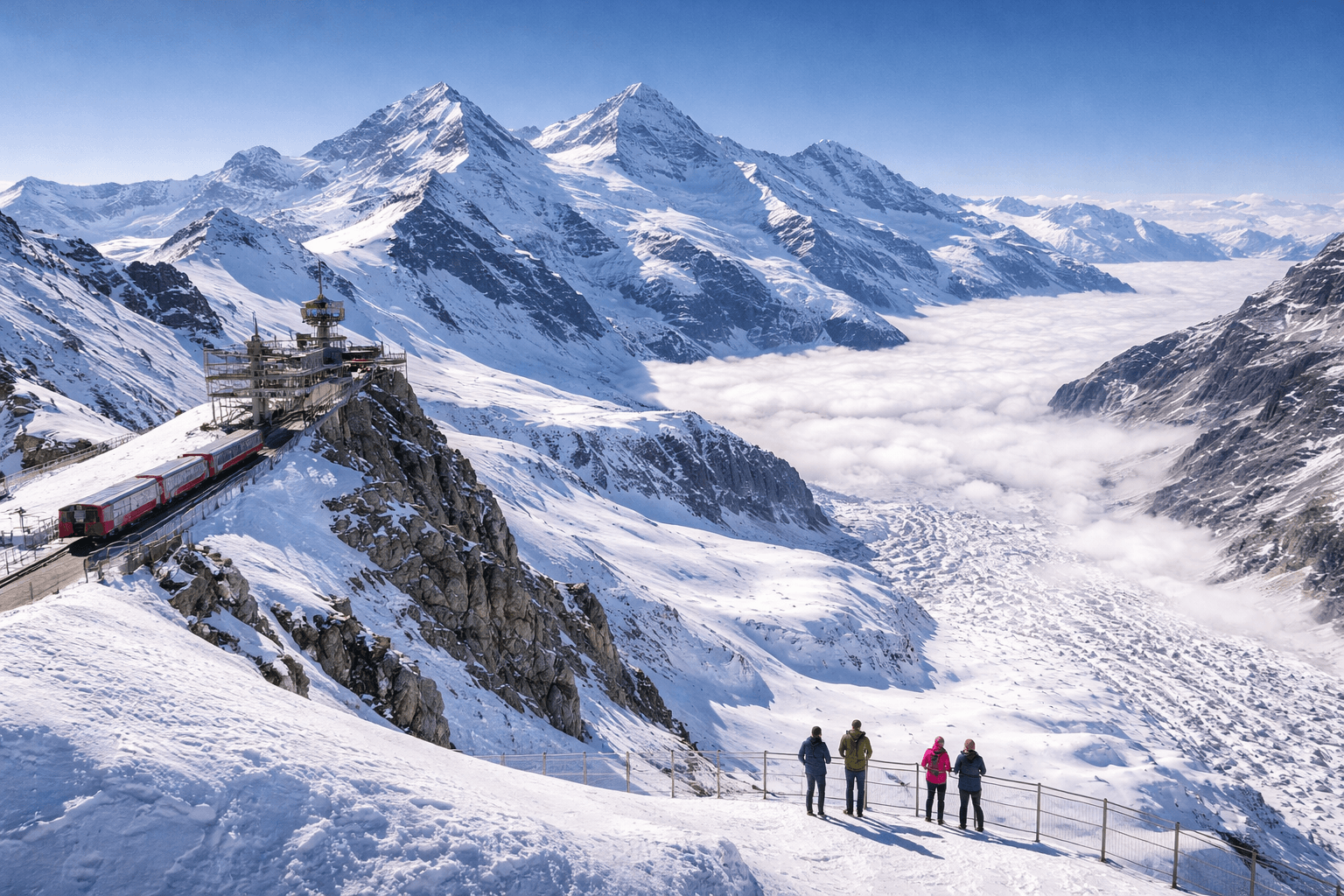
Jungfraujoch, often called the "Top of Europe," is a high-alpine saddle and visitor complex perched at 3,454 meters (11,332 ft) between the peaks of Jungfrau and Mönch in the Swiss Alps. Reached by the historic Jungfrau Railway, it offers dramatic views of the Aletsch Glacier, alpine exhibits, and a set of activities—both contemplative and adventurous. The site represents a feat of mountain engineering from the early 20th century and serves as a focal point for alpine culture, scientific observation, and international tourism.
Jungfraujoch appeals to first-time visitors seeking a breathtaking, accessible high-mountain experience; photographers and nature lovers who want glacier panoramas; families and older travelers who value comfortable, short-duration alpine access; and active travelers looking for winter sports or glacier walks.
Why Visit
- Panoramic views of the Aletsch Glacier (a UNESCO World Heritage area) and surrounding 4,000m peaks.
- Easy high-altitude access via the scenic Jungfrau Railway—no mountaineering required.
- Indoor attractions (Ice Palace, exhibitions) plus outdoor activities (glacier plateau, short hikes).
- Reliable infrastructure: restaurants, viewing platforms, and visitor services.
Main Areas & What to See
Jungfraujoch Railway Station & Tunnel Portals
What it is: The terminus of the Jungfrau Railway carved through the mountain. Why it matters: Historic engineering and the gateway to the summit complex. What to notice/do: Arrive early to watch trains, study the engineering displays, and follow signs to the Sphinx viewing lift.
Sphinx Observatory & Viewing Terrace
What it is: A high, partially enclosed observation platform and scientific observatory. Why it matters: Offers some of the most unobstructed panoramic views in the Alps, including the Aletsch Glacier. What to notice/do: Use the terrace for sunrise/late-afternoon light; bring a warm layer—wind can be strong. The indoor viewing area is useful on windy or cloudy days.
Aletsch Glacier Panorama & Glacier Plateau
What it is: The vast glacier and nearby outdoor areas where visitors can walk and view the icefield. Why it matters: The largest glacier in the Alps and a defining landscape feature. What to notice/do: Stay on marked paths; consider a guided glacier walk if you want to approach the ice safely.
Ice Palace
What it is: A tunnel carved into the glacier featuring ice sculptures and chambers. Why it matters: Unique, family-friendly attraction that demonstrates glacier structure and artistry. What to notice/do: Watch for slippery spots—sturdy shoes recommended. The lighting creates photo opportunities but low temperatures mean gloves are useful.
Exhibitions and Alpine Sensation
What it is: Educational displays about the railway, mountain history, and alpine environment, plus a short immersive walkway tracing the railway’s construction. Why it matters: Adds cultural and historical context to the visit. What to notice/do: Allow 20–30 minutes to read exhibits if you enjoy history and engineering.
Best Time to Visit
Time of day recommendations:
- Early morning (first trains) for thinner crowds and calmer light for photos.
- Late afternoon for warmer light on the peaks and fewer visitors on the platforms.
Crowd considerations:
- Peak season (summer months and school holidays) sees heaviest visitor numbers; expect lines at lifts and restaurants.
- Midweek visits are generally less crowded than weekends.
Atmosphere differences:
- Clear days: sweeping vistas and excellent visibility out to distant peaks.
- Cloudy or snowy days: dramatic close-in alpine mood; visibility may be limited—indoor areas remain worthwhile.
Seasonal Highlights
- Summer (June–September): Long daylight, wildflower meadows at lower stations, most services open, best visibility for glacier panoramas.
- Autumn (October–November): Cooler light, fewer crowds, possible early snow—some facilities reduce hours late in the season.
- Winter (December–March): Classic alpine snowscape, winter sports available on nearby slopes; very cold—dress in layers.
- Spring (April–May): Variable weather, thinner crowds; mountain roads and lower attractions reopen gradually.
Special events: Seasonal events are mostly organized at nearby towns (Grindelwald, Wengen); Jungfraujoch itself focuses on year-round attractions rather than large festivals.
Practical Tips
Cultural etiquette:
- Keep noise moderate in indoor areas; respect signage in protected glacier zones.
- The Swiss value punctuality—trains and timetables are reliable; arrive on time for reserved trains.
Photography rules or restrictions:
- Photography for personal use is allowed widely; drones are restricted and typically not permitted due to safety and environmental regulations—check local rules beforehand.
Payment, access, or timing tips:
- Book Jungfrau Railway tickets in advance during high season; saver fares and regional passes (Swiss Travel Pass, etc.) can offer discounts—verify validity for the Jungfrau Railway.
- Allow time for connections: common itineraries include stops at Grindelwald or Lauterbrunnen and a transfer at Kleine Scheidegg.
- Altitude: Take it easy—some visitors feel short of breath or mild headache; hydrate and avoid strenuous activity immediately after arrival.
Estimated visit duration:
- Short visit (2–3 hours): station, Sphinx terrace, short plateau walk, Ice Palace.
- Longer visit (4–6 hours): add exhibitions, a guided glacier walk, lunch, and relaxed photography.
Getting There
Nearest access points:
- Grindelwald and Lauterbrunnen are the primary valley towns for Jungfraujoch access.
- The standard route: take a regional train to Kleine Scheidegg via Grindelwald (from Interlaken) or take the Wengernalp Railway from Lauterbrunnen—then board the Jungfrau Railway to Jungfraujoch.
Typical travel times from nearby centers:
- From Interlaken Ost: about 2 to 2.5 hours one way (train connections via Grindelwald or Lauterbrunnen and Kleine Scheidegg).
- From Grindelwald: roughly 1 to 1.5 hours one way.
- From Lauterbrunnen: roughly 1.5 to 2 hours one way.
Note: Times vary by connection; check timetables on the day of travel.
Is It Worth It?
Short, balanced conclusion: Jungfraujoch delivers a uniquely accessible high-alpine experience—spectacular glacier views, historic railway charm, and convenient visitor facilities. It can feel touristy during peak season and is relatively expensive, but for many travelers the combination of dramatic scenery and effortless altitude access justifies the visit at least once.
Honest traveler perspective:
- Worth it if you prioritize panoramic alpine views without technical mountaineering, have limited time in the Swiss Alps, or are traveling with family or less-mobile companions.
- Consider alternatives (Schilthorn, First, or mountain viewpoints lower down) if you want a quieter, less costly alpine day with hiking options.