
Introduction
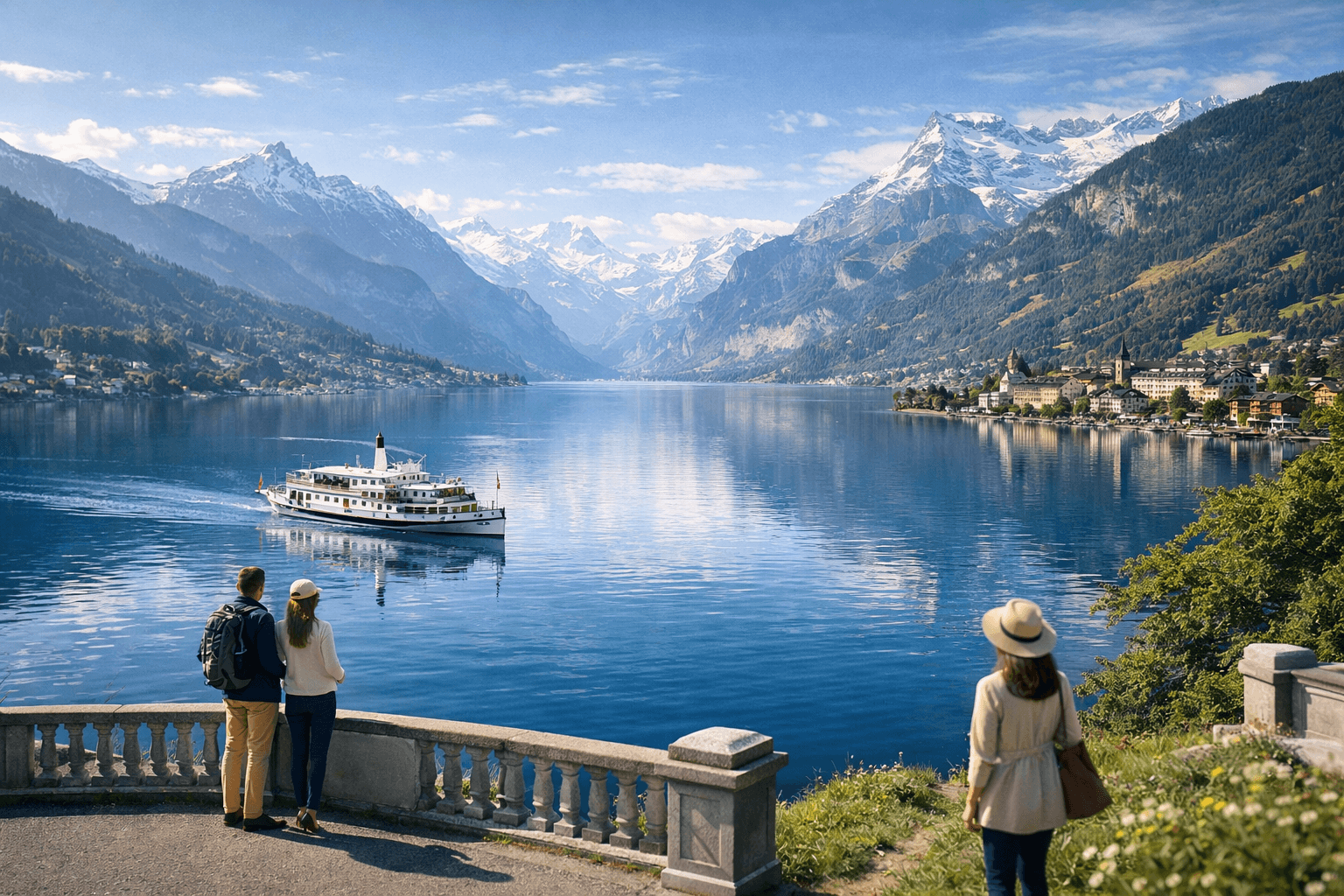
Lake Lucerne (German: Vierwaldstättersee) sits at the heart of the Swiss Alps around the city of Lucerne. A deeply indented, fjord-like lake ringed by steep mountains and historic towns, it has long been a cultural and transport hub—linked to Swiss nation-building, classical music, and alpine tourism. The lake appeals to nature lovers, day-trippers from nearby cities, photographers, boat and rail enthusiasts, and travelers looking for easy access to alpine walks without long drives.
Why Visit
- Dramatic mountain-and-water scenery within easy reach of Lucerne city center.
- Scenic steamboat and paddle-boat cruises that double as transport and sightseeing.
- A mix of gentle lakeside promenades, historic sites, and mountain excursions.
- Good base for hiking, cycling, and accessing nearby peaks (Rigi, Pilatus, Stanserhorn).
Main Areas & What to See
Lucerne Harbor & Old Town
- What it is: The main gateway on the lake beneath the Kapellbrücke (Chapel Bridge) and the medieval center.
- Why it matters: Combines lakeside views with centuries-old architecture and museums.
- What to notice/do: Walk the Reuss riverside, visit the Musegg wall, buy boat tickets at the pier, and sample local cafés.
Weggis & Vitznau (Rigi Access)
- What it is: Picturesque lakeside villages on opposite shores, starting points for the Rigi mountain railway.
- Why it matters: Classic views over the lake; easy alpine access via cogwheel or cable car.
- What to notice/do: Take the Rigi Bahn from Vitznau or the cable car from Weggis; stroll the waterfront promenades.
Hertenstein & Küssnacht (Pilatus & Mount Views)
- What it is: Southwestern shores with mountain vistas and ferry stops.
- Why it matters: Good launching points for Pilatus excursions and quieter shoreline walks.
- What to notice/do: Combine a short ferry hop with a Pilatus cable car or the world’s steepest cogwheel railway from Alpnachstad.
Brunnen & Flüelen (Historic Lakeside Towns)
- What it is: Eastern arm towns offering history and transport links toward the Gotthard corridor.
- Why it matters: Historic inns, memorials (Tellskapelle at Bürglen nearby), and quieter walking routes.
- What to notice/do: Visit the Tell Chapel area, use Brunnen/Flüelen as a quieter base for multi-day lake exploration.
Full-Lake Steamship Cruises
- What it is: Historic steamers and modern ships that traverse the lake on scheduled routes.
- Why it matters: One of the most scenic and relaxed ways to see multiple lakeside towns and mountain backdrops.
- What to notice/do: Check schedules for round-trip options; book during high season or for popular departure times.
Best Time to Visit
- Time of day: Early morning for calm water and soft light; late afternoon to golden hour for photography and quieter promenades.
- Crowd considerations: Midday and weekend afternoons (June–August) are busiest near Lucerne pier and popular mountain lifts.
- Atmosphere differences: Mornings = tranquil; mid-afternoon = lively with tourists and families; evenings = relaxed dining and waterfront strolls.
Seasonal Highlights
- Spring (Mar–May): Alpine flowers and thawing waterfalls; fewer crowds—good for walks and early boat services.
- Summer (Jun–Aug): Warmest weather, full boat timetables, mountain hiking and swimming; peaks for festivals like the Lucerne Festival (classical music) in summer.
- Autumn (Sep–Nov): Crisp air and vivid foliage on the lower slopes—ideal for photography and quieter trails.
- Winter (Dec–Feb): Snow-capped peaks, quieter lakeshores, and winter sports on nearby mountains; Lucerne Carnival (Fasnacht) in late winter brings lively parades to the city.
Practical Tips
- Cultural etiquette: Greet shopkeepers and service staff with a polite “Grüezi” (hello) if you know it; be punctual for trains, boats, and tours.
- Photography: Public lakeside and boat photography is unrestricted; respect signage at private properties, churches, and some museum interiors.
- Payment & access: Cards are widely accepted; carry a small amount of CHF for small vendors or mountain huts. Boats and mountain railways run on schedules—check timetables in advance.
- Timing & bookings: Peak season and weekend steamers fill up—reserve seats for popular cruise times or mountain railways if possible.
- Estimated visit duration: 2–4 hours for a lakeshore stroll and short cruise; half-day to full-day to combine a boat trip with a mountain ascent; several days to explore surrounding towns and hikes.
Getting There
- Nearest major station: Lucerne Hauptbahnhof (central station) sits a short walk (5–15 minutes) from the main lake piers.
- From Lucerne city center: 5–15 minutes on foot to the central pier; local buses and taxis available.
- From Zurich: Frequent direct trains to Lucerne take about 45–60 minutes from Zurich HB (main station); from there access the lake by foot or short local transit.
- From Interlaken/Geneva/Bern: Train connections usually require a change in Lucerne or other hubs—allow 1.5–3 hours depending on origin.
Is It Worth It?
Yes—Lake Lucerne delivers classic Swiss alpine scenery with minimal travel friction. For first-time visitors, the combination of a lakeside stroll, a short steamer cruise, and a single mountain outing (Rigi or Pilatus) offers a compact, unforgettable alpine day. Returning travelers will find quieter coves, longer hikes, and off-peak seasons rewarding. Expectations: beautiful and accessible, but best experienced with modest planning around boat and lift schedules.