
Introduction
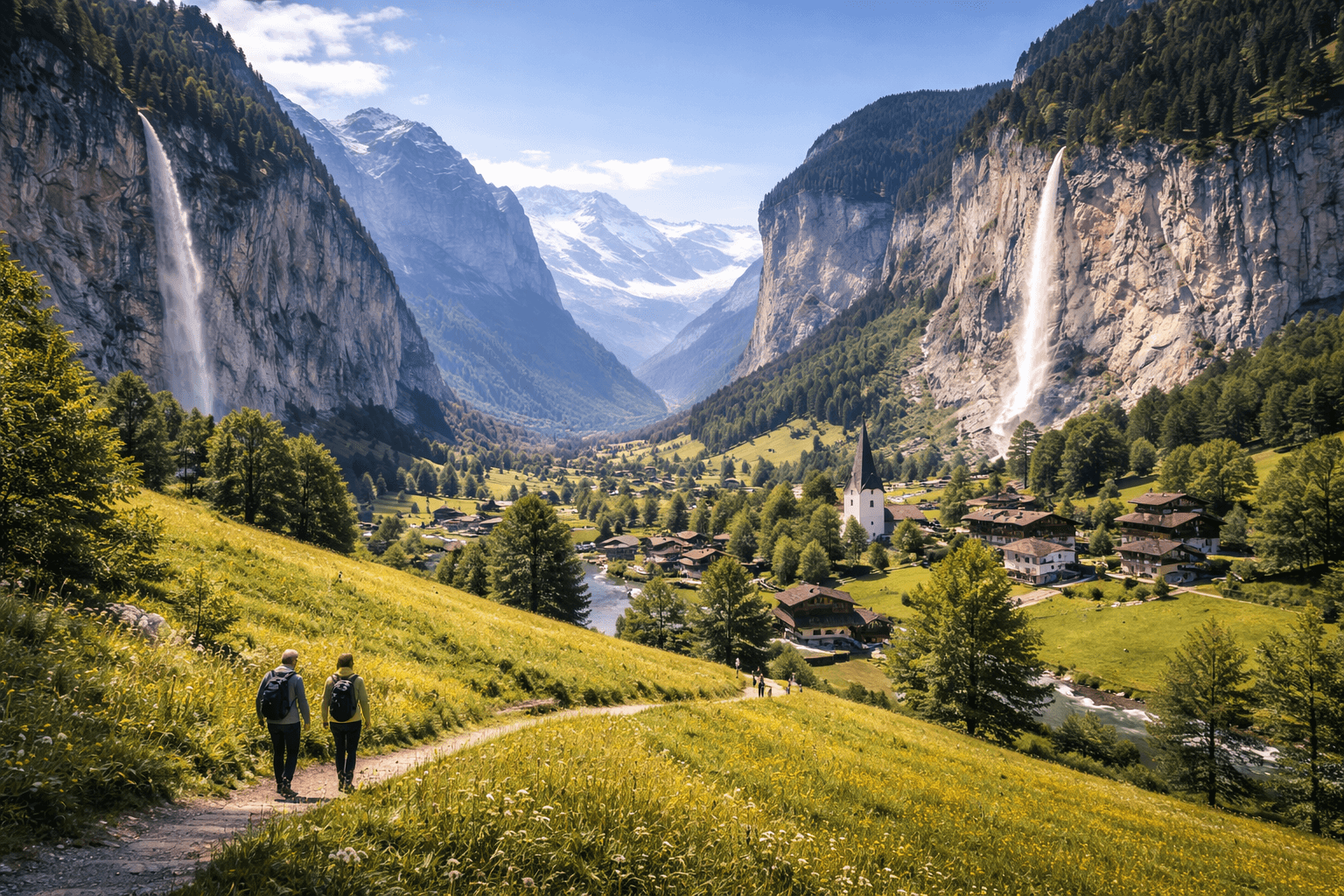
Lauterbrunnen Valley is a steep-sided glacial valley in the Bernese Oberland of the Swiss Alps centered on the village of Lauterbrunnen. Famous for its dramatic cliffs, more than 70 waterfalls, and traditional alpine villages, the valley offers a concentrated experience of classic Swiss mountain scenery and outdoor activity. It matters historically as a long-inhabited alpine valley with traditional farming hamlets and culturally as the gateway to nearby high-alpine spots like Mürren, Wengen, and the Jungfrau region.
This guide suits first-time visitors who want an efficient, scenic introduction to the Alps and returning travelers seeking hiking, photography, or a relaxed alpine base.
Why Visit
- Iconic alpine scenery: sheer rock faces, tumbling waterfalls, and green valley floor.
- Easy access to cable cars and mountain railways for high-mountain experiences (Jungfrau, Schilthorn, Mürren).
- Excellent hiking and winter-sports options for varied fitness levels.
- Charming, small-scale Swiss villages with local culture and straightforward logistics.
Main Areas & What to See
Lauterbrunnen Village
- What it is: The valley’s main settlement at the valley floor with hotels, shops, and the train station.
- Why it matters: Central transport hub and walking access to many waterfalls; base for excursions.
- What to notice/do: Walk the village lanes, visit the Staubbach Falls viewpoint which drops almost vertically beside the village, and gather trail maps at the tourist office or station.
Staubbach Falls
- What it is: One of the highest free-falling waterfalls in Switzerland, visible from the village.
- Why it matters: Symbol of Lauterbrunnen—photogenic and easily reached.
- What to notice/do: View from the village or take the short path up to the base for misty close-ups; avoid slippery rocks.
Trümmelbach Falls
- What it is: A series of ten glacier-fed waterfalls inside a mountain accessible by a tunnel-lift and walkways.
- Why it matters: A rare, powerful inside-the-rock waterfall experience—different from the open falls.
- What to notice/do: Wear sturdy shoes; expect loud, spray-filled passages and excellent close-range views.
Mürren & Schilthorn (via cable car)
- What it is: Car-free cliff-top village (Mürren) and the Schilthorn summit with panoramic views.
- Why it matters: Classic high-Alpine panoramas including the Eiger, Mönch, and Jungfrau; Schilthorn has a rotating-view restaurant and James Bond connections.
- What to notice/do: Combine a day trip with short hikes, or take the cableway for sunrise/sunset photos if schedules allow.
Wengen & Kleine Scheidegg / Jungfraujoch
- What it is: Wengen is a traffic-free village up-valley; Kleine Scheidegg is the rail junction to Jungfraujoch (Top of Europe).
- Why it matters: Direct access to high-mountain railways; spectacular views and glacier attractions atop Jungfraujoch.
- What to notice/do: Reserve Jungfraujoch tickets in busy seasons; expect crowds at the summit but unforgettable glacier views.
Valley Hamlets (Gimmelwald, Stechelberg)
- What it is: Small farming settlements dotted along the valley and side ridges.
- Why it matters: Offer quieter, authentic alpine atmosphere and good local lodging or mountain-hut access.
- What to notice/do: Explore local trails, visit small cafes, and respect private farms.
Best Time to Visit
- Time of day: Early morning for soft light on waterfalls and empty trails; late afternoon for warm slopes and valley shadows.
- Crowd considerations: Peak season is mid-June to August and winter holiday periods (late December–February). Visit shoulder seasons (May–early June, September–October) for fewer crowds and clear views.
- Atmosphere differences: Mornings are calm and misty; afternoons bring more hikers and activity; evenings are quiet with good chances to hear rushing water and church bells.
Seasonal Highlights
- Spring (May–June): Waterfalls at full flow from snowmelt; wildflowers on lower trails; some higher routes still snowbound.
- Summer (June–August): Best access to high trails and mountain railways; long daylight and festival/activity options.
- Autumn (September–October): Crisp air, autumn colors on larches and pastures, fewer tourists; some services start to reduce.
- Winter (November–March): Snow-covered valley and winter sports in nearby resorts (Wengen, Mürren); Trümmelbach inside the rock is closed in deep winter—check opening times.
- Events: Local village festivals and seasonal markets occur irregularly; specialist events (e.g., alpine races or cultural fairs) happen—check local calendars when planning.
Practical Tips
- Cultural etiquette: Greet locals with a friendly “Grüezi” (German-speaking Bernese region); keep noise low in villages and respect private pastureland.
- Photography rules: Public viewpoints are free; use caution near cliffs and falls. Drones are regulated—obtain local permits and avoid flying over crowds, protected areas, and near cableways.
- Payment & access: Small shops accept cards, but some mountain huts and local vendors prefer cash—carry a small amount of CHF. Trains and cable cars run on a reliable timetable; buy or reserve tickets for Jungfraujoch and Schilthorn in advance during high season.
- Timing tips: Allow buffer time for weather-dependent transfers; mountain weather changes quickly—pack layers, waterproofs, and sturdy footwear.
- Estimated visit duration: 1–3 days for a focused visit (village, two nearby attractions); 4–7+ days to include higher alpine excursions, multi-day hikes, or winter sports.
Getting There
- Nearest stations/access points: Lauterbrunnen railway station (served by Bern–Interlaken–Lauterbrunnen regional and S-Bahn services). The valley is accessible from Interlaken Ost via a 20–25 minute regional train.
- Typical travel time from city centers: From Interlaken (city center) ~20–30 minutes by train; from Bern ~1 hour 15 minutes to Interlaken plus train to Lauterbrunnen (total ~1.5–2 hours); from Zurich ~2.5–3 hours by train (with transfer in Interlaken).
Is It Worth It?
Yes—Lauterbrunnen Valley delivers a concentrated alpine experience that’s both accessible and scenic. For travelers seeking dramatic landscapes, straightforward mountain access, and a mix of active and relaxed options, it’s highly rewarding. If you want crowd-free solitude or extended high-alpine trekking, plan outside peak summer and arrange longer stays; otherwise a day trip covers highlights but misses quieter charms.