
Introduction
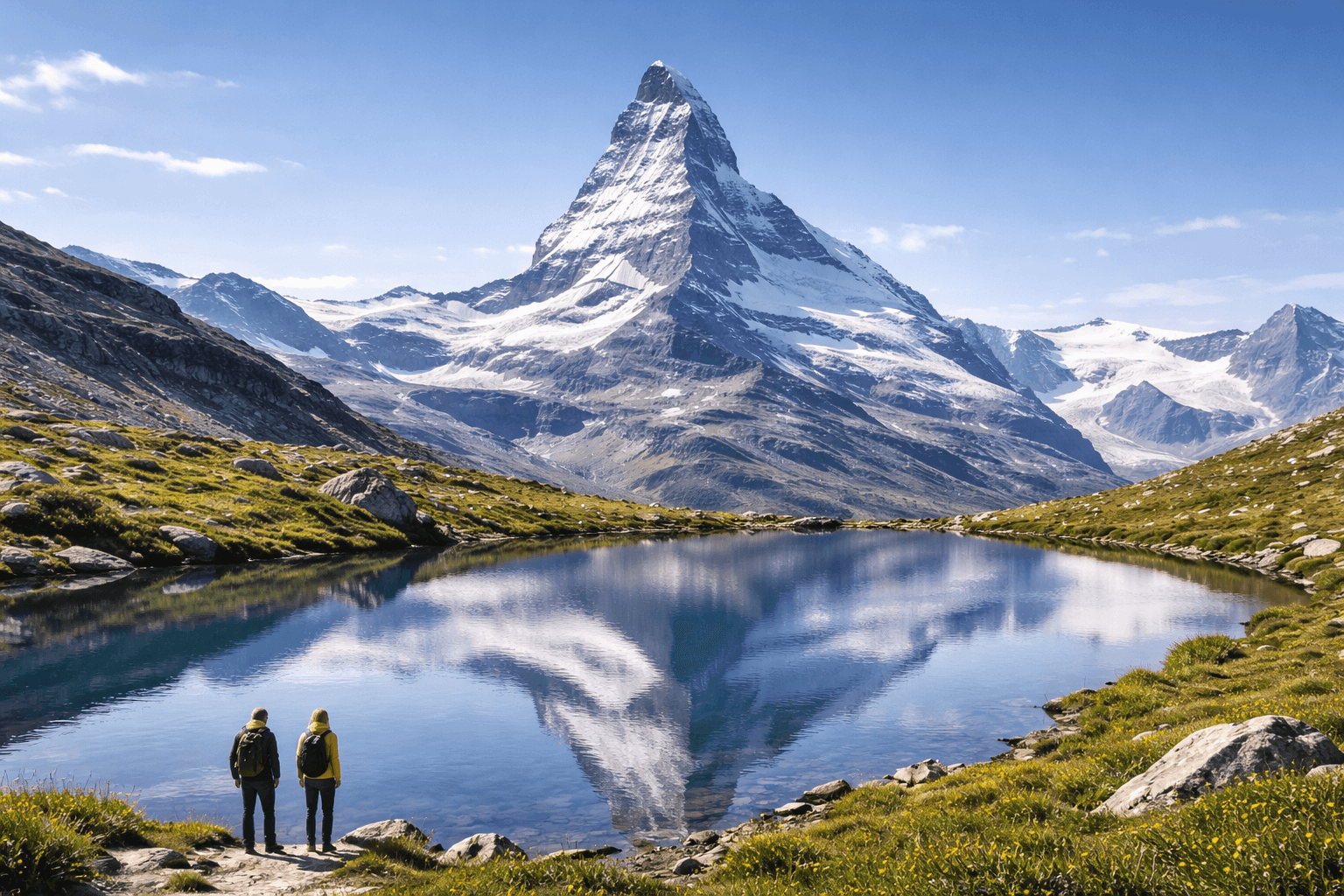
The Matterhorn is one of the most iconic peaks in the Swiss Alps, a sharply pyramidal mountain on the border between Switzerland and Italy. Rising to 4,478 meters (14,692 ft), its distinctive silhouette has shaped alpine history, mountain culture, and the image of Switzerland worldwide. The area around the Matterhorn—centered on the town of Zermatt on the Swiss side—offers dramatic scenery, a mix of outdoor activities, and a long mountain-climbing tradition.
Who it's for: day visitors who want spectacular views; photographers and nature lovers; hikers and mountaineers; families seeking alpine experiences; and travelers who appreciate small alpine-town charm with high-mountain access.
Why Visit
- Unforgettable mountain scenery and the classic Matterhorn profile.
- High-alpine access without requiring technical climbing (via cable cars and viewpoints).
- World-class hiking, skiing, and mountain infrastructure centered on Zermatt.
- Rich mountaineering history and museums that explain alpine heritage.
Main Areas & What to See
Zermatt village
- What it is: Car-free Alpine village at the foot of the Matterhorn.
- Why it matters: Base for mountain access, with hotels, restaurants, and local shops.
- What to notice/do: Stroll Bahnhofstrasse, sample Swiss alpine cuisine, and book mountain transport or guided activities.
Gornergrat
- What it is: Ridge viewpoint reached by the Gornergrat cog railway.
- Why it matters: Panoramic views of the Matterhorn, Monte Rosa, and a large glaciated landscape.
- What to notice/do: Take the train from Zermatt (approx. 30–40 minutes), walk short trails near the summit station, and visit the observation platform at sunrise or sunset for the best light.
Klein Matterhorn / Matterhorn Glacier Paradise
- What it is: The highest cable-car station in Europe with an ice palace and panoramic terraces.
- Why it matters: Close-up high-altitude views of the Matterhorn and surrounding glaciers; year-round snow activities.
- What to notice/do: Ride from Zermatt via Trockener Steg; allow time for the glass terraces and the glacier palace; check weather for visibility.
Hörnli Hut and the Hörnli Ridge (for experienced mountaineers)
- What it is: Starting point for climbs up the Matterhorn's classic Hörnli Ridge.
- Why it matters: Historic route with deep mountaineering significance.
- What to notice/do: Only for experienced, well-guided climbers. Book guides and hut places well in advance; respect safety regulations and weather windows.
Schwarzsee and Riffelsee
- What it is: Smaller alpine lakes and viewpoints close to popular trails.
- Why it matters: Calm reflections of the Matterhorn (Riffelsee is famous for classic reflected photos).
- What to notice/do: Short hikes from the lift stations; arrive early to avoid crowds and capture reflections.
Matterhorn Museum (Zermatlantis)
- What it is: Local museum in Zermatt detailing mountaineering history and village life.
- Why it matters: Context for the Matterhorn’s role in alpine exploration and local culture.
- What to notice/do: Visit before heading into the mountains for historical perspective.
Best Time to Visit
- Time of day: Early morning and late afternoon for the best light on the mountain and fewer crowds. Sunrise views from Gornergrat or Riffelsee are exceptional.
- Crowds: Peak summer (July–August) and winter holiday weeks (late December–early January, February) are busiest. Shoulder seasons (late June, September–October) offer quieter paths and good weather windows.
- Atmosphere differences: Summer feels lively with hikers; winter is alpine-sport focused (skiing, freeride). Autumn delivers crisp air and quieter trails; spring can be variable with lingering snow at higher elevations.
Seasonal Highlights
- Summer (June–September): Extensive hiking, mountain huts open, wildflowers, long daylight hours. Best for non-technical approaches and photography.
- Autumn (late September–October): Fewer crowds, clear air, good visibility; many lifts may begin seasonal maintenance late in October.
- Winter (November–March/April): Skiing and snowboarding across high-altitude terrain; Matterhorn Glacier Paradise offers year-round snow. Zermatt is lively with winter sports infrastructure.
- Spring (April–June): Shoulder season with mixed conditions; lower trails open gradually. Avoid trusting high routes without checking current conditions.
- Events: Zermatt hosts occasional alpine and cultural events (check local listings for specific dates during your planning).
Practical Tips
- Cultural etiquette: Respect local customs—quiet hours in the village (often late evening), polite greetings in shops and hotels, and care for shared mountain environments.
- Photography: Popular spots get crowded; use early morning or late afternoon. Drones are restricted in many alpine areas and around Zermatt—check local regulations and respect privacy.
- Payment & access: Zermatt is largely cash and card friendly; carry a card usable in Europe. The village is car-free—park in Täsch (about 12 km from Zermatt) if arriving by car and take the shuttle train (frequent service).
- Safety & timing: Weather changes fast in the high Alps—carry layers, a windproof jacket, sun protection, and adequate footwear. If you plan mountaineering, hire an accredited mountain guide and allow contingency days for weather.
- Estimated visit duration: Day-trip viewpoints (Gornergrat or Klein Matterhorn) can be done as a half- to full-day excursion from Zermatt. A relaxed visit to Zermatt with one or two mountain excursions: 2–4 days. Technical climbs require multi-day planning.
Getting There
- Nearest major access point: Zermatt railway station (train access only; village is car-free).
- From Swiss cities: Typical travel time by train—visitors often come from Visp (about 1 hour from Bern/Geneva) or by direct rail from major hubs. From Zürich, expect roughly 3.5–4 hours by train (with one or two changes). From Geneva, expect ~3.5–4 hours by rail.
- By car: Drive to Täsch (approx. 12 km from Zermatt), park in one of the long-term car parks, then take the shuttle train (12–15 minutes) or taxis/electric vehicles into Zermatt.
Is It Worth It?
Yes—if dramatic alpine scenery, accessible high-mountain viewpoints, or classic mountaineering history are priorities. For non-climbers, the combination of a charming car-free village and world-class lift and rail access makes the Matterhorn area highly rewarding. For those seeking solitude or easy lowland nature, it can be busy and expensive—budget time and acceptance of some crowds to get the best experience.