
Introduction
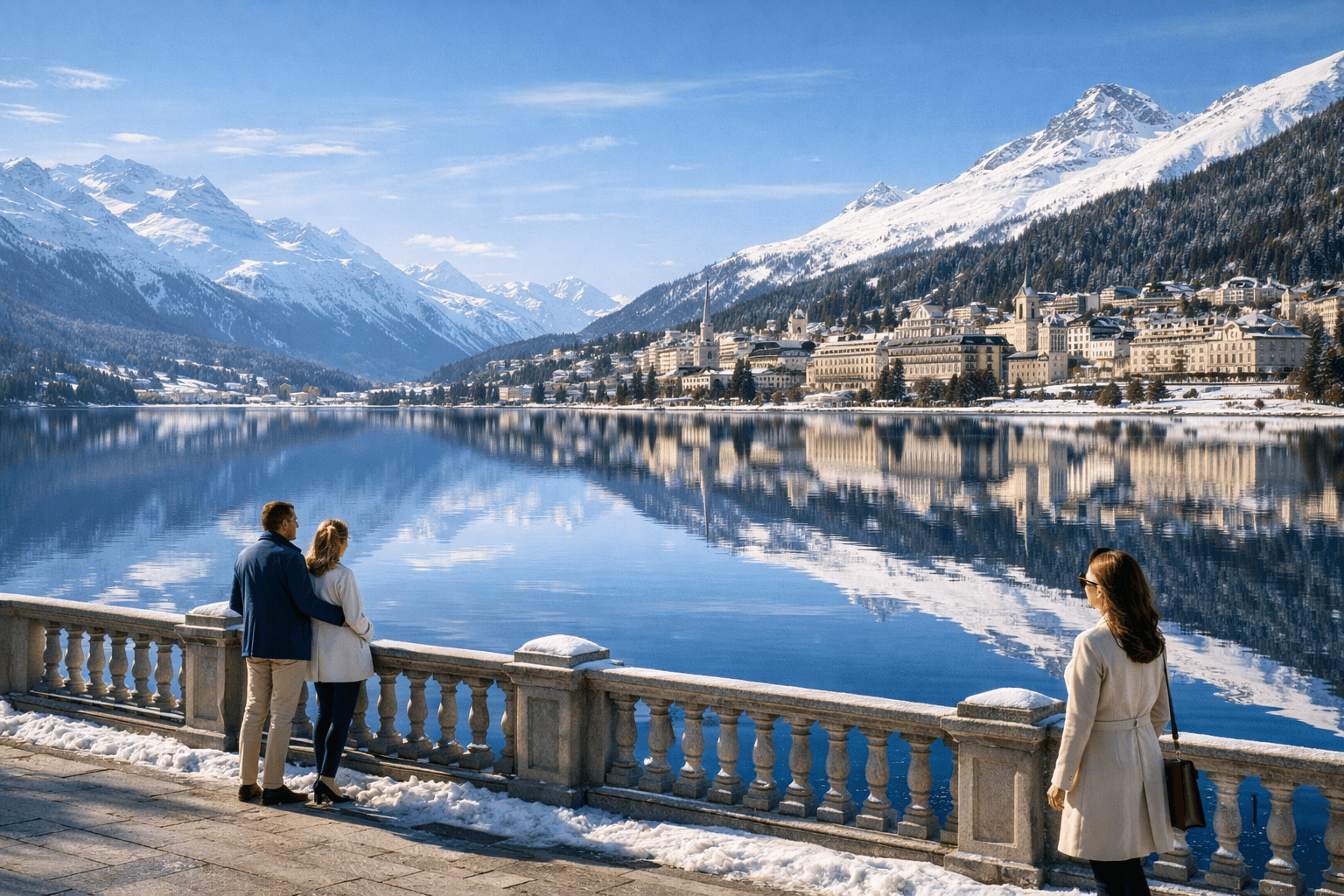
St. Moritz is an alpine resort town in the Engadin valley of the Swiss Alps known for its high-end winter sports history, clear mountain light, and refined lakeside setting. It played a formative role in turning alpine winter tourism into an international pastime and remains a meeting point for outdoor enthusiasts, design-minded travelers, and those seeking tranquil mountain luxury.
Why it matters: St. Moritz combines natural scenery (blue lakes, glacier-fed air, and broad valley panoramas) with a compact town center of hotels, galleries, cafés, and mountain transport hubs. It appeals to both active visitors (skiers, hikers, wind-surfers on the lake in summer) and travelers who want scenic relaxation with easy access to classic Swiss hospitality.
Who it’s for: first-time visitors wanting an iconic Swiss Alps experience; return visitors looking for different outdoor seasons or special events; travelers who value convenience, well-maintained infrastructure, and a polished alpine atmosphere.
Why Visit
- World-class winter sports and reliable snow conditions.
- Scenic, accessible alpine nature with trails, lakes, and cable cars.
- Compact, walkable town with refined dining, shopping, and spa options.
- Distinct seasonal experiences: frozen lake events (winter) and sunny high-alpine hikes (summer).
Main Areas & What to See
Lake St. Moritz (Lej da San Murezzan)
What it is: The wide, shallow lake at the town’s heart. Why it matters: In winter it freezes and hosts skating and traditional events; in summer it’s a flat, reflective stage for promenades and paddle activities. What to do: Walk the lakeside promenade at sunrise or sunset, photograph reflections of the mountains, join guided skating/snowshoe tours in winter, or rent a stand-up paddle in summer.
Corviglia / Corvatsch Ski Areas
What it is: Two main mountain playgrounds reachable by short lifts from town. Why it matters: They offer a variety of pistes, panoramic terraces, and straightforward lift access — great for day trips and mixed-ability groups. What to do: Take the funicular to Corviglia for morning skiing or a scenic winter coffee; in summer, hike high-alpine trails and use mountain restaurants as rest points.
Engadine Museum and Old Town
What it is: Small cultural institutions and a compact historical quarter. Why it matters: Provides local context — Engadin architecture, history of alpine tourism, and seasonal cultural life. What to do: Spend an hour in the museum to learn regional traditions, stroll narrow lanes to view sgraffito facades, and stop at a café to watch passerby style.
St. Moritz-Bad and Mineral Springs
What it is: Historic spa area with thermal springs and landscaped parks. Why it matters: Longstanding wellness tradition — a good counterpoint to outdoor exertion. What to do: Visit the public baths or book a treatment at a spa hotel; enjoy gentle park walks and the quieter atmosphere away from the central promenade.
High-Altitude Walks and Scenic Drives
What it is: Alpine passes and trails surrounding the town (e.g., Julier Pass, nearby valleys). Why it matters: Offer immediate access to classic Swiss mountain vistas without long transfers. What to do: Drive or take public transport for short excursions, or pick a summit trail for half- to full-day hikes; check weather and elevation gains before setting out.
Best Time to Visit
Time of day: Early morning is best for soft light on the lake and empty trails. Late afternoon brings long shadows and a calmer town center.
Crowd considerations: Peak winter (Dec–Feb holiday weeks) and summer (July–Aug) see the most visitors. Shoulder seasons (late spring, early autumn) are quieter and good for lower prices and calmer trails.
Atmosphere differences: Winters feel polished, active, and social; summers are luminous and relaxed with more daylight for outdoor activities.
Seasonal Highlights
Winter (Dec–Mar): Skiing/boarding, frozen-lake activities, and high-society winter ambiance. Key moments include local ice polo, sledging runs, and sun terraces at mountain restaurants.
Spring (Apr–May): Snow recedes at lower elevations; quieter walks and early wildflowers. Some lifts close for maintenance — check schedules.
Summer (Jun–Sep): Alpine hiking, mountain biking, sailing and paddle sports on the lake, open-air concerts and relaxed terraces.
Autumn (Oct–Nov): Crisp air, fewer crowds, golden larch displays in higher meadows. Many hotels and services may reduce hours between seasons.
Events: St. Moritz hosts several signature events (winter sports competitions, cultural gatherings). If you’re planning around a specific festival, confirm exact dates well in advance.
Practical Tips
Cultural etiquette: Swiss norms favor punctuality, quiet public behavior, and respect for private property. Greet shopkeepers and service staff courteously; English is widely spoken but learning a few German or Romansh phrases is appreciated.
Photography: Public spaces, landscapes, and street scenes are fine; be mindful when photographing people — ask permission for close portraits. Respect hotel and spa privacy rules when shooting interiors.
Payment & access: Cards are widely accepted; carry a small amount of Swiss francs for mountain huts, small vendors, or remote services. Public transport is reliable; consider a regional travel pass for multiple mountain lifts and trains.
Timing & duration: A focused visit can be 2 full days (town, one mountain area). For skiing, spa time, and a day trip, allow 4–5 days. Day-trip options from nearby towns are convenient.
Getting There
Nearest major rail hub: St. Moritz is served by the Rhaetian Railway (RhB). Trains connect from Chur and Pontresina; scenic routes make rail travel part of the experience.
Nearest airports: The closest international airports are Zurich (two to three hours by train/car) and Milan (longer by road). Transfers are regular but check seasonal timetables.
Typical travel time from city centers: From Zurich city center by direct rail or car plan roughly 3 hours; from Milan around 4–5 hours by road depending on route and border traffic.
Is It Worth It?
Short answer: Yes, if you want polished alpine scenery, reliable mountain access, and a compact base with quality services. St. Moritz excels at combining outdoor activity with comfortable infrastructure.
Balanced perspective: It’s not the place for low-budget backpacking or raw, off-grid wilderness — expect higher prices and a refined atmosphere. For travelers seeking memorable mountain panoramas, efficient transport, and seasonal variety (skiing to hiking), St. Moritz is a strong choice.