
Introduction
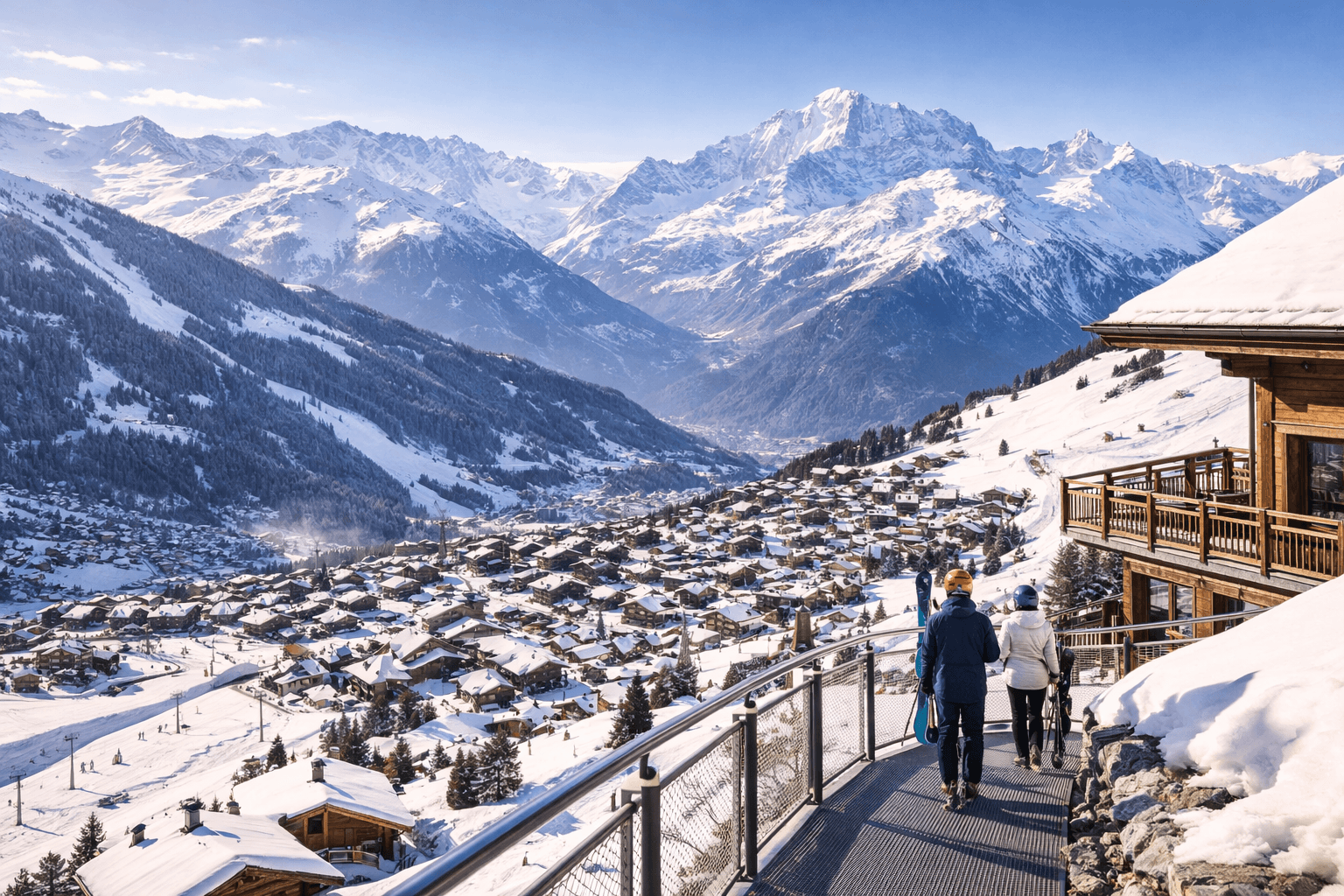
Verbier is a high-altitude village and internationally known alpine resort in the Valais canton of Switzerland, set on a sunny plateau above the Rhône valley. Long associated with winter sports and freeride skiing, it also has a refined summer scene of hiking, mountain biking and classical music. Culturally it's a mix of traditional Valaisan mountain life and an upscale, international resort culture.
Verbier appeals to:
- Skiers and snowboarders seeking access to extensive off-piste and linked lifts.
- Outdoor lovers (hikers, mountain bikers, climbers) looking for high-Alpine trails.
- Travelers who want a compact village with lively après-ski, restaurants and boutique hotels.
- Culture-minded visitors during the summer festival season.
Why Visit
- World-class ski terrain and freeride opportunities across the 4 Vallées network.
- Scenic high-Alpine hiking and panoramic viewpoints (Mont Gelé, Mont Fort).
- Compact village with a lively food-and-bar scene and quality mountain infrastructure.
- Easy base for day trips to nearby Valais towns, glaciers and wine regions.
Main Areas & What to See
Village Centre
What it is: The pedestrian streets and small squares at the heart of Verbier. Why it matters: Houses most hotels, restaurants, bars and shops; social hub for arrivals and après. What to notice/do: Walk from Place Centrale toward the Savoleyres lifts; check chalet architecture, sample a raclette or fondue.
Le Châble and Cable Car
What it is: The valley station (lower village) with the main train connection and a large cable car to Verbier. Why it matters: Primary public access point—practical for luggage and day-trippers. What to notice/do: Arrive by train to Le Châble, take the 10–12 minute cable car; explore the quieter valley restaurants if you have time.
Ski Area (4 Vallées) and Mont Fort
What it is: The interconnected lift-and-run network reaching Mont Fort (3,328 m). Why it matters: Offers wide-ranging pistes, glacier views and some of the region’s best off-piste. What to notice/do: Take the lift to Mont Fort for panoramic views of the Matterhorn, Mont Blanc and the Grand Combin; hire a guide for off-piste.
Savoleyres and La Tzoumaz
What it is: Lower sectors of the lift network with sunny slopes and calmer runs. Why it matters: Good for families and intermediate skiers; panoramic viewpoints back to the Rhone valley. What to notice/do: Try a quieter run here at sunrise or late afternoon when the slopes mellow.
Hiking Trails and Mountain Huts
What it is: Network of marked summer trails and alpine huts. Why it matters: You can walk between ridgelines, sample local mountain cuisine in huts, and access high passes. What to notice/do: Hike to Lac de Louvie (if driving out) or take the Cable Car then walk to Col des Mines; carry water, map and proper footwear.
Verbier Festival and Concert Venues
What it is: Summer classical music festival and smaller concerts. Why it matters: Adds cultural depth to the summer season and attracts international performers. What to notice/do: Book concerts in advance in July–August; check evening schedules and dress codes for concert halls.
Best Time to Visit
Time of day recommendations:
- Skiing: first lifts (08:30–09:30) for freshly groomed runs; late afternoon (15:30–16:30) for quieter slopes before lift closures.
- Summer hiking: early morning or late afternoon to avoid strong sun and maximize mountain light.
Crowd considerations:
- Peak winter holidays (around Christmas–New Year and February school breaks) are busiest and more expensive.
- July–August bring steady summer visitors; weekdays are quieter.
Atmosphere differences:
- Winter: energetic, social, nightlife-oriented with ski-town buzz.
- Summer: calmer, outdoors-focused and family-friendly with cultural events.
Seasonal Highlights
Winter (Dec–Apr): Skiing and freeride are the main draws; lively après-ski and sports events. Expect cold, snowy conditions and full lift operations. Spring (Apr–Jun): Transition season—spring skiing at altitude, quieter village, good-value accommodation. Summer (Jun–Sep): Hiking, mountain biking, climbing and the Verbier Festival (classical music) in mid-summer; alpine meadows and long daylight. Autumn (Oct–Nov): Off-season quiet; many hotels reduce services but great for solitude and lower prices.
Notable events (annual timing can vary):
- Verbier Festival (classical music) — typically in July/August.
- Freeride competitions and ski races — often scheduled in late winter/early spring; dates change yearly.
Practical Tips
Cultural etiquette:
- French is the local language; basic greetings (Bonjour/Bonsoir, S’il vous plaît, Merci) are appreciated.
- Dress is casual on slopes; smart-casual for finer restaurants.
Photography and drones:
- Photography is welcome in most public areas; be respectful of privacy in crowded après-ski and at private chalets.
- Drone use is restricted in alpine resorts and near crowds—check local regulations and obtain permissions.
Payment, access and timing:
- Swiss francs (CHF) are standard; credit cards widely accepted but keep some cash for small vendors.
- Lifts run on a seasonal schedule; check first/last lift times for your dates.
- Book accommodation and lift passes early for peak winter weeks and major summer festival dates.
Estimated visit duration:
- Short visit: 1–2 days (sample skiing or a village stroll and a scenic lift ride).
- Typical stay: 3–5 days to enjoy full-slope access or a few day hikes and local dining.
- Extended stay: 7+ days for in-depth skiing, multi-day hikes or to attend festival programming.
Getting There
Nearest stations and access points:
- Train: Le Châble is the nearest railway station (regional trains from Martigny). From Le Châble take the cable car or a short bus/taxi to Verbier.
- Major airports: Geneva (Genève) is the most common international gateway; Zürich and Milan are alternative options.
Typical travel time from city centers:
- Geneva city center to Verbier: about 1 hour 45 minutes to 2 hours by car; public transport (train to Martigny/Le Châble + cable car) typically 2–2.5 hours depending on connections.
- Lausanne to Verbier: roughly 2–2.5 hours by car; longer by public transport depending on transfer times.
Is It Worth It?
If you value quality mountain infrastructure, varied high-Alpine terrain and a compact village that mixes traditional Swiss charm with international hospitality, Verbier is worth a visit. For hardcore budget travelers or those seeking an untouched alpine hamlet, it can feel busy and upscale. Balanced stays of 3–5 days let you sample the best—whether that’s the skiing, summer trails or a festival performance—without rushing.