
Introduction
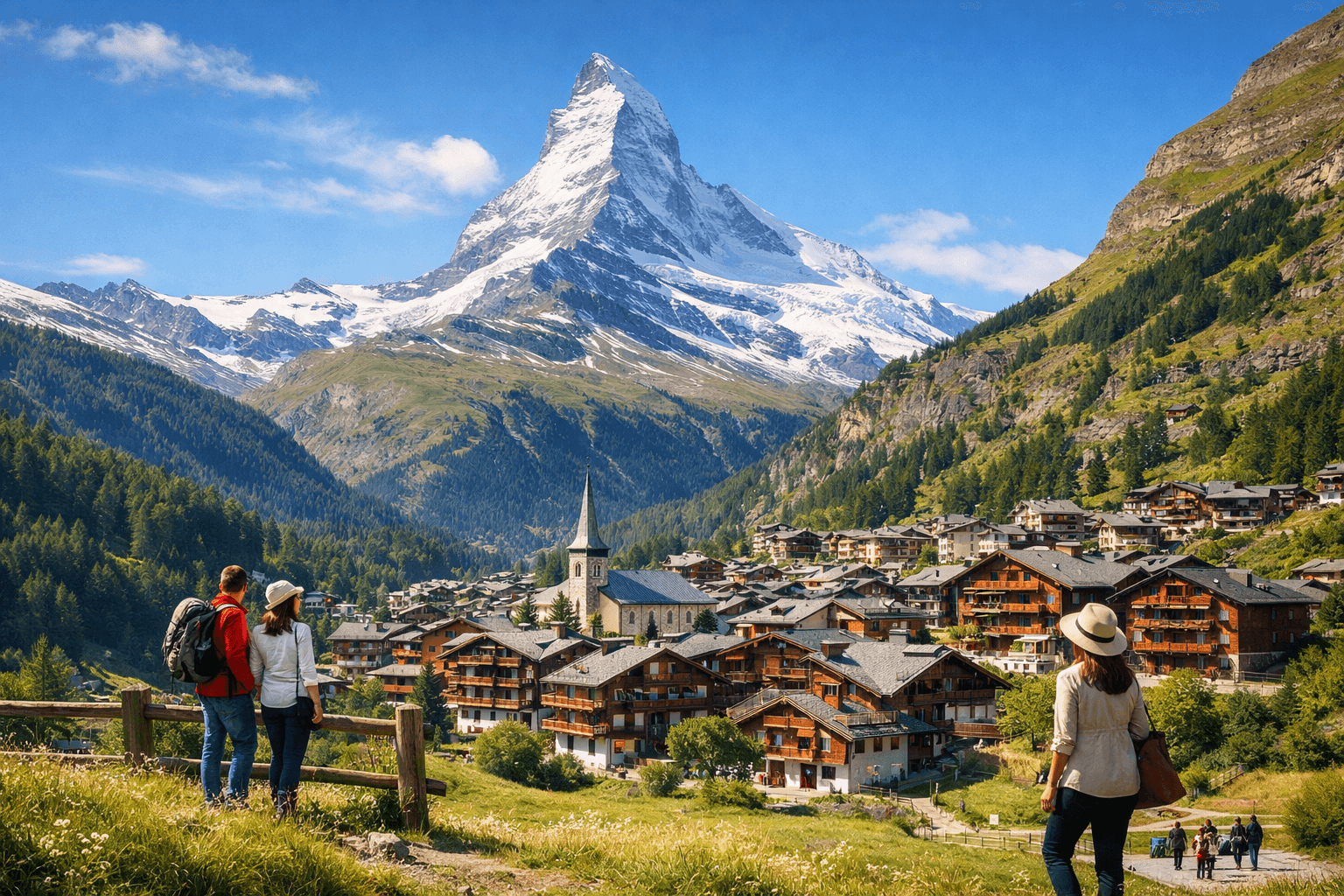
Zermatt is a car-free mountain village beneath the Matterhorn in the Swiss Alps. Known for dramatic alpine scenery, world-class skiing and mountaineering history, it blends traditional Swiss architecture with modern hospitality. Visitors come for outdoor adventure (skiing, hiking, climbing), scenic railways and a compact village atmosphere that feels both historic and purposeful.
Why Visit
- Iconic views of the Matterhorn and surrounding 4,000m peaks.
- Reliable year-round mountain activities: winter sports and summer hiking/glacier access.
- Unique car-free village with pedestrian streets, authentic chalets and refined dining.
- Excellent mountain transport (cable cars, cogwheel railways) that makes high alpine landscapes easily accessible.
Main Areas & What to See
The Village Center (Dorf)
- What it is: Pedestrian streets lined with shops, cafés, churches and hotels.
- Why it matters: It’s the cultural heart of Zermatt and the best place to feel the local rhythm.
- What to notice/do: Stroll Bahnhofstrasse, visit the old wooden houses and stop at a café for rösti or a chalet-style lunch.
Bahnhof (Zermatt Railway Station)
- What it is: The arrival point for trains from Täsch/Visp and the hub for taxis and electric vehicles.
- Why it matters: Practical starting point for transfers and mountain transport connections.
- What to notice/do: Buy regional transport passes, check cable car departure boards and grab last-minute maps or guides.
Gornergrat
- What it is: A cogwheel railway ride to an observation ridge at 3,089 m.
- Why it matters: Offers one of the most complete panoramic views of the Matterhorn, Monte Rosa and surrounding glaciers.
- What to notice/do: Take the round-trip train, dress warmly at the summit, and walk short trails for different viewpoints or stay for sunrise/sunset photography.
Klein Matterhorn / Matterhorn Glacier Paradise
- What it is: Europe’s highest cable-car station (to the Klein Matterhorn) with glacier access and an indoor viewing platform.
- Why it matters: Access to year-round snow, glacier walks and high-altitude views including close-up perspectives on the Matterhorn.
- What to notice/do: Bring sun protection and windproof layers; consider the Glacier Palace (ice tunnels) and panoramic terrace.
Sunnegga–Rothorn Area
- What it is: A funicular (Sunnegga) and cable car (Rothorn) linking sunny terraces and family-friendly hiking.
- Why it matters: Great for views of the Matterhorn reflected in Leisee, easy hikes, and summer alpine pastures.
- What to notice/do: Family-friendly trails, alpine picnic spots, and chairlift rides to higher viewpoints.
Old Church and the Museum of Zermatlantis (or Local History Exhibits)
- What it is: Small heritage sites that tell the story of early mountaineering and village life.
- Why it matters: Provides context on Zermatt’s transformation from an alpine hamlet to an international mountain destination.
- What to notice/do: Read about the first ascents of the Matterhorn and local customs; combine with a quiet stroll through older streets.
Best Time to Visit
- Time of day: Early morning and late afternoon offer the clearest light for photos and fewer crowds at major viewpoints; afternoons can be peak time at cable car stations.
- Crowd considerations: Peak winter (December–March) and the summer high season (July–August) are busiest. Shoulder seasons (late June; September–October) balance weather and fewer visitors.
- Atmosphere differences: Winter is sporty and bustling with skiers; summer is relaxed, with hikers and families enjoying alpine meadows.
Seasonal Highlights
- Winter (Dec–Mar): Excellent skiing on glacier and piste networks, lively après-ski, Christmas and New Year hotel programming.
- Spring (Apr–Jun): Melting snows, quieter village, lower prices; some high lifts may still be open for glacier skiing.
- Summer (Jul–Aug): Wildflowers, long daylight for hiking, high alpine trails and mountain huts open; reflections in Leisee are photogenic.
- Autumn (Sep–Nov): Crisp air, fall colors at lower elevations, quieter trails; some lifts begin maintenance closures.
- Events: Seasonal race events, mountain festivals and local markets occur at various times—check local listings when planning.
Practical Tips
- Cultural etiquette: Greet with a polite “Grüezi” or “Bonjour” (German/French influence). Respect quiet hours (typically 10:00 PM–7:00 AM) and local recycling rules.
- Photography rules: Most public areas are fine for photos; avoid photographing people closely without permission and respect signage near scientific or private facilities.
- Payment & access: Switzerland is card-friendly (chip & PIN); carry some francs for small vendors. Zermatt is car-free—leave vehicles in Täsch and transfer by shuttle train or taxi. Many mountain lifts require separate tickets or regional passes.
- Timing tips: Allow buffer time for lift changes and weather delays at high altitude; acclimatize if you plan strenuous activities.
- Estimated visit duration: A focused visit can be 1–2 days (village + one major mountain excursion); 3–5 days allows skiing, hiking and a relaxed pace.
Getting There
- Nearest major rail stations: Visp (Valais) and Brig. From Visp/Brig, take the Matterhorn Gotthard Railway direct to Zermatt (approx. 1 hour from Visp).
- From Täsch: Road access ends here; regular shuttle trains to Zermatt take about 12 minutes (frequent departures). Park-and-ride facilities are in Täsch.
- From major cities: Zurich to Zermatt by train is roughly 3–4 hours; Geneva to Zermatt by train is about 3.5–4.5 hours depending on connections.
Is It Worth It?
Zermatt is worth visiting for anyone seeking dramatic alpine scenery combined with excellent mountain access. It’s especially rewarding for outdoor enthusiasts and travelers who appreciate a compact, car-free village base. Expect premium prices and some crowds in peak periods, but also consistently superb views and well-maintained infrastructure that make the experience straightforward and memorable.