
Introduction
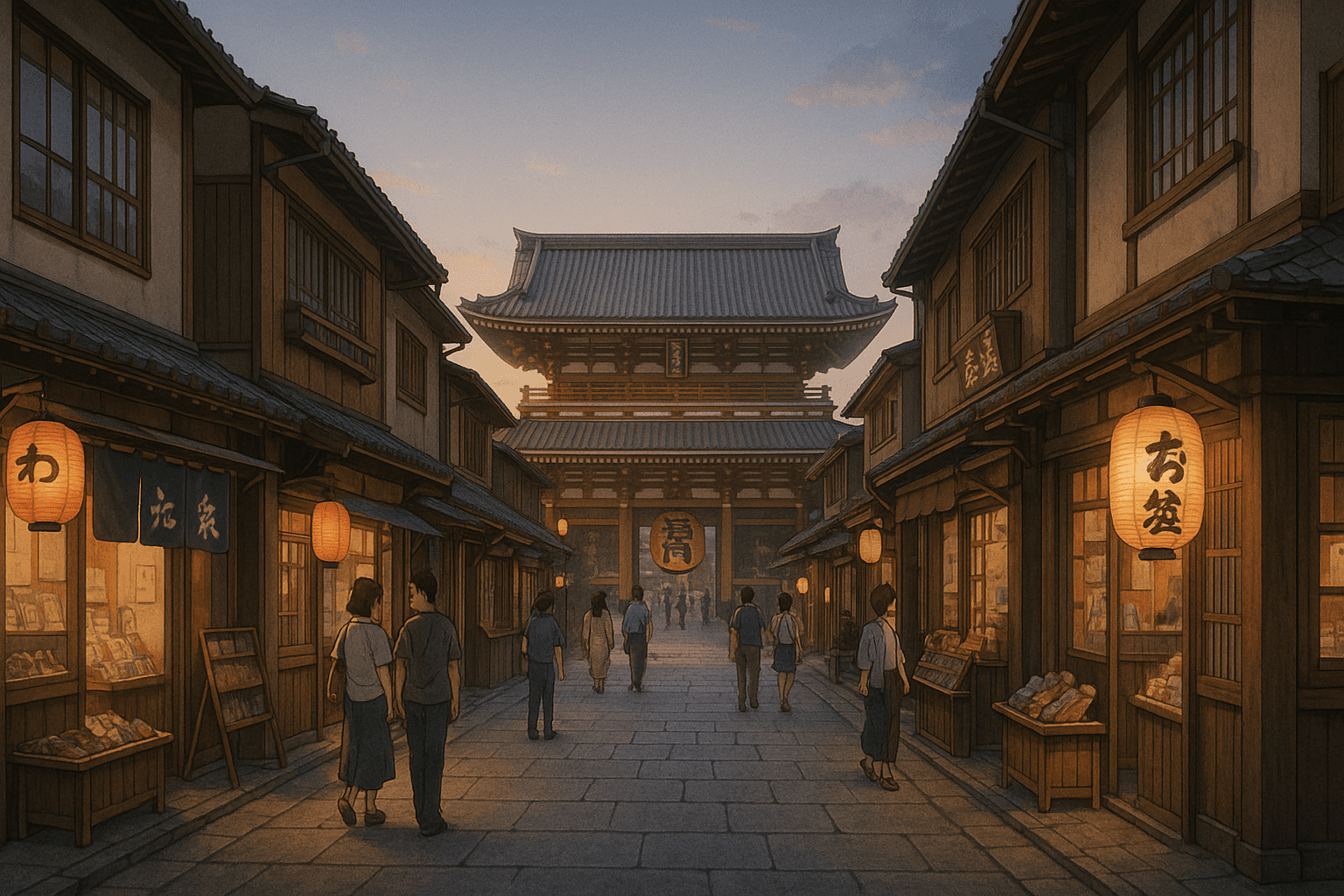
Asakusa is one of Tokyo's most atmospheric neighborhoods, centered on the historic Sensō-ji temple and its Nakamise shopping street. It combines Edo-period charm with lively street life: wooden lanterns, traditional snacks, rickshaw rides, and views of the Sumida River and Tokyo Skytree. Asakusa appeals to history and culture lovers, first-time visitors seeking a classic Tokyo experience, and returning travelers who enjoy slower-paced streets and local food stalls.
Why Visit
- See Sensō-ji, Tokyo’s oldest and most visited Buddhist temple complex.
- Stroll Nakamise for traditional snacks, souvenirs, and crafts.
- Experience a contrast of old and new—historic streets with views of modern Tokyo Skytree.
- Enjoy riverside walks, festivals, and relaxed neighborhoods away from Shinjuku/Shibuya bustle.
Main Areas & What to See
Sensō-ji Temple (Kaminarimon & Hōzōmon)
- What it is: A large Buddhist temple founded centuries ago; the Kaminarimon (Thunder Gate) is its iconic outer gate.
- Why it matters: Central to Asakusa’s identity and a major cultural site in Tokyo.
- What to notice/do: Walk through Kaminarimon, proceed along Nakamise-dori to Hōzōmon, observe incense offerings, and explore the temple grounds early to avoid crowds.
Nakamise Shopping Street
- What it is: A lined arcade of stalls between Kaminarimon and Sensō-ji offering snacks, crafts, and souvenirs.
- Why it matters: One of Tokyo’s oldest shopping streets—good for sampling street food and buying traditional goods.
- What to notice/do: Try ningyoyaki (sweet cakes), senbei (rice crackers), and browse handcrafted fans, kimono accessories, and local snacks.
Asakusa Culture and Tourist Information Center
- What it is: A modern, multi-level visitor center near Kaminarimon.
- Why it matters: Free vantage point for panoramic photos of Nakamise and Sensō-ji; practical information and maps.
- What to notice/do: Head to the top-floor viewing terrace for photos and ask staff about local events.
Sumida River & Riverside Walks
- What it is: Promenade along the Sumida River with views of boats and Tokyo Skytree.
- Why it matters: Offers a peaceful contrast to the temple area and good skyline photography.
- What to notice/do: Walk or rent a riverboat; enjoy cherry blossoms in spring or sunset views of the Skytree.
Hanayashiki Amusement Park
- What it is: Japan’s oldest small amusement park, next to Sensō-ji.
- Why it matters: Quirky, nostalgic rides—fun for families and those who enjoy vintage attractions.
- What to notice/do: Check opening times and consider short rides for a light diversion.
Denboin & Side Streets
- What it is: Narrow alleys and quieter residential streets behind the main temple area.
- Why it matters: You’ll find traditional shops, small temples, cafés, and a glimpse of everyday life.
- What to notice/do: Wander slowly, discover local bakeries and small eateries, and notice architectural details and shrines.
Best Time to Visit
- Time of day: Early morning (7:00–9:00) for quieter temple grounds and soft light; late afternoon to evening for lantern-lit streets and dining.
- Crowd considerations: Midday and weekends can be crowded, especially near Sensō-ji and Nakamise. Weekdays and early mornings are calmer.
- Atmosphere differences: Mornings feel contemplative and local; afternoons are lively and tourist-filled; evenings are atmospheric with illuminated lanterns and food stalls.
Seasonal Highlights
- Spring: Cherry blossoms along the Sumida River; pleasant temperatures—one of the most beautiful times to visit.
- Summer: Festival season—Asakusa hosts large events (including the Sanja Matsuri) with processions and street energy.
- Autumn: Comfortable weather and colorful foliage in nearby parks and temple precincts.
- Winter: Cooler, quieter streets; some illumination events and clear views of Tokyo Skytree.
Practical Tips
- Cultural etiquette: Dress modestly at religious sites, bow slightly when entering temple buildings, remove hats where requested, and keep voices low near worshippers.
- Photography: Photos of temple exteriors are fine; avoid photographing priests or people without permission. Some indoor spaces or altars may prohibit photos—look for signs.
- Payment & access: Many shops accept cash only—carry small bills and coins. ATMs that accept foreign cards are available at convenience stores and major stations.
- Timing tips: Arrive early to beat crowds at Sensō-ji; allocate time for browsing Nakamise and a riverside walk.
- Estimated visit duration: 2–4 hours for highlights (Sensō-ji, Nakamise, a short riverside walk); half to full day if adding museums, a boat ride, or a leisurely meal.
Getting There
- Nearest stations: Asakusa Station (Tokyo Metro Ginza Line, Toei Asakusa Line, Tobu Skytree Line) is the primary access point; Tawaramachi (Tokyo Metro Ginza Line) and Kuramae (Toei Asakusa/Oedo lines) are short walks away.
- Typical travel time from the city center: From Tokyo Station about 15–25 minutes by subway or train depending on connections; from Shinjuku or Shibuya roughly 25–35 minutes by subway/transfer.
Is It Worth It?
Yes—especially for first-time visitors who want a classic, concentrated taste of Tokyo’s history and street culture. Asakusa can be crowded and touristy around Sensō-ji, but with a little planning (visit early, explore side streets and the riverbank) you’ll find a rewarding mix of tradition, food, and quiet local corners. For returning travelers, Asakusa is worth revisiting when you want relaxed atmosphere, seasonal events, or deeper exploration beyond the main thoroughfares.