
Introduction
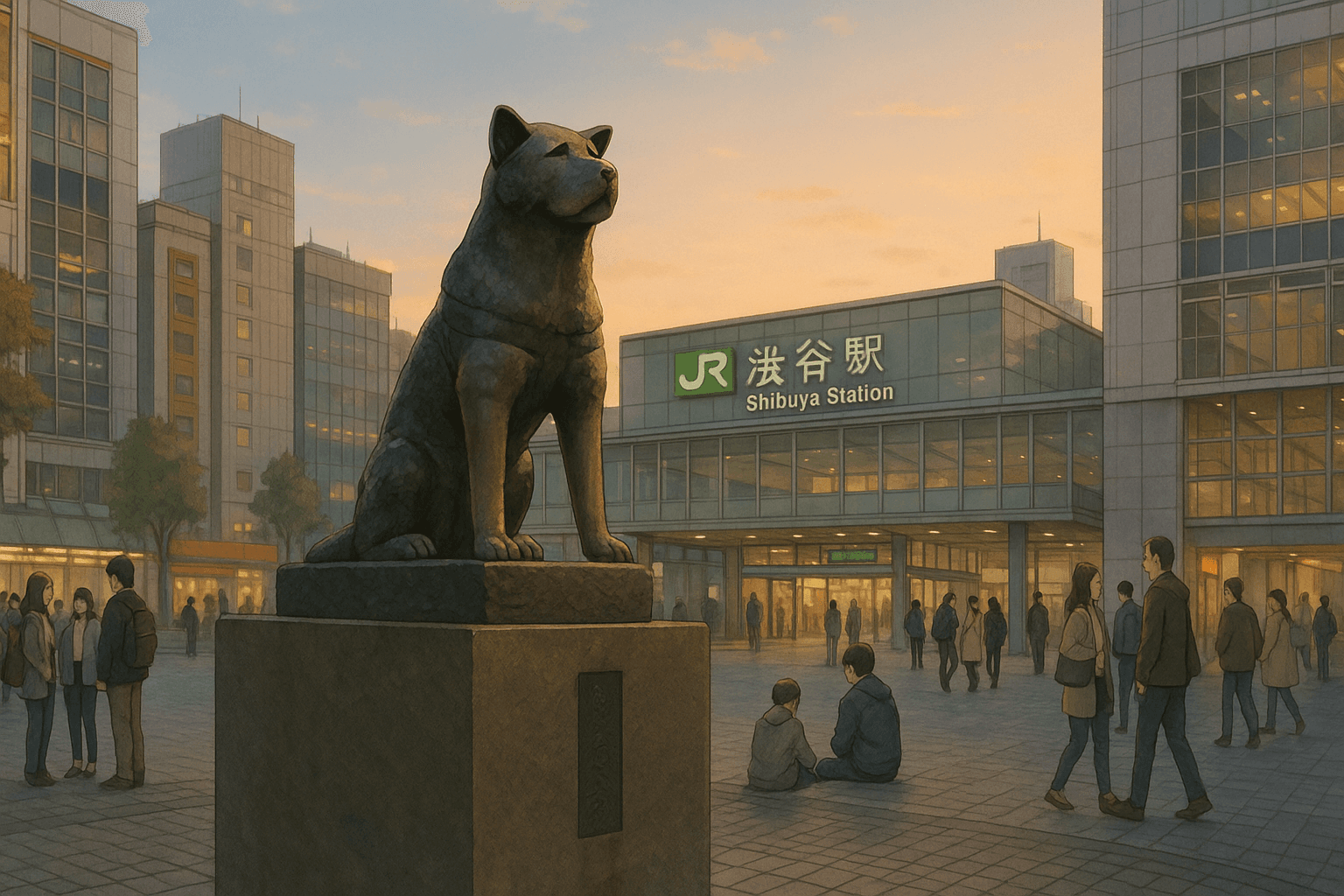
The Hachikō Statue stands just outside Shibuya Station's Hachikō Exit and commemorates an Akita dog famous for his loyalty. After his owner, Professor Hidesaburō Ueno, died in 1925, Hachikō continued to wait at the station every day for nearly 10 years. The bronze statue (and the earlier wooden memorial) became a symbol of loyalty and a beloved Tokyo landmark.
Hachikō's story resonates culturally as a tale of devotion and has been retold in books, films, and school lessons. The site is both a quiet memorial and a lively urban meeting point.
This place appeals to: first-time visitors wanting an iconic Tokyo photo, people interested in Japanese cultural symbols, families, and travelers planning to meet friends near Shibuya.
Why Visit
- Iconic and easy-to-find Tokyo landmark perfect for a quick photo stop.
- Emotional, culturally significant story of loyalty that connects visitors to Japanese social values.
- Convenient meeting point amid Shibuya’s shopping, dining, and nightlife.
- Short visit that fits into half-day itineraries covering nearby attractions.
Main Areas & What to See
Hachikō Statue (the monument)
- What it is: A bronze statue of Hachikō created by sculptor Teru Andō (the current statue was unveiled in 1948, after an earlier version was melted down during WWII).
- Why it matters: The statue memorializes Hachikō’s loyalty and is an enduring symbol in Tokyo’s urban culture.
- What to notice/do: Take a clear photo from the front, read the small plaques nearby explaining the story, and observe local visitors who often leave flowers or small offerings.
Hachikō Square / Hachikō Exit area
- What it is: The open plaza directly in front of Shibuya Station’s Hachikō Exit.
- Why it matters: One of Tokyo’s most famous pedestrian hubs and a common rendezvous spot.
- What to notice/do: Watch the steady flow of commuters and tourists, use the square as a starting point to explore Shibuya Crossing, and find nearby cafés or benches to relax.
Shibuya Crossing (adjacent)
- What it is: The large, busy scramble crossing at Shibuya, often photographed from surrounding buildings.
- Why it matters: A quintessential Tokyo urban scene that pairs well with a Hachikō visit.
- What to notice/do: Cross with the crowd for the experience; for photos, head to upper levels of nearby buildings (Magnet by Shibuya 109, Starbucks in Tsutaya) for a bird’s-eye view.
Shibuya Station & Surroundings
- What it is: Major transport hub with shops, restaurants, and underground passages.
- Why it matters: Practical for onward travel and offers plentiful dining and shopping nearby.
- What to notice/do: Check station maps for exits, explore side streets for small eateries, and consider a short walk to Center Gai for youth culture and nightlife.
Best Time to Visit
- Time of day: Early morning (7–9 AM) for quieter photos; late afternoon to evening for lively atmosphere and illuminated signs.
- Crowd considerations: Midday and evenings, especially weekends, are busiest—expect crowds around the statue and crossing.
- Atmosphere differences: Mornings feel reflective and less crowded; evenings are energetic with neon lights and people gathering.
Seasonal Highlights
- Spring (Mar–May): Pleasant weather; sakura season brings extra foot traffic in nearby parks but not directly at the statue.
- Summer (Jun–Aug): Warm and busy; possible rain during the rainy season—bring an umbrella.
- Autumn (Sep–Nov): Comfortable temperatures and clear skies—good for walking tours of Shibuya.
- Winter (Dec–Feb): Cooler, fewer tourists on weekdays; holiday lights in Shibuya create a festive backdrop.
- Special events: Shibuya hosts seasonal illumination events (winter) and occasional local festivals—these increase attendance in the area.
Practical Tips
- Cultural etiquette: Keep voices moderate when near the small memorial area; avoid climbing on the statue. Many locals view Hachikō respectfully.
- Photography: Photos are allowed; be mindful of blocking pedestrian flow and avoid taking up the entire sidewalk for photos. No special restrictions.
- Payment/access: No admission fee; the statue and square are open 24/7. Nearby shops and cafés accept cash and cards—having a Suica/Pasmo IC card helps for trains.
- Estimated visit duration: 10–30 minutes for the statue and square; add 30–60 minutes if you plan to visit Shibuya Crossing viewpoints or explore nearby streets.
Getting There
- Nearest station: Shibuya Station (JR Yamanote Line, Tokyo Metro Ginza/ Hanzomon/Fukutoshin Lines, Tokyu lines). Use the Hachikō Exit.
- Typical travel time from city center: From Tokyo Station ~25–30 minutes by JR (Yamanote Line); from Shinjuku Station ~7–10 minutes by JR. Times vary by route and transfer.
Is It Worth It?
Yes — especially if you have limited time in Tokyo. The Hachikō Statue is a compact stop that combines cultural meaning with the energy of Shibuya. For a first-time visitor it’s an essential quick experience and photo opportunity; returning travelers may appreciate the everyday local life and use the spot as a convenient meeting point. If you prefer quieter historical sites or immersive museums, combine the stop with nearby, less-crowded attractions rather than making it the sole focus of your day.