
Introduction
Harajuku is a compact yet vibrant neighborhood on the eastern edge of Shibuya in Tokyo known for youth fashion, street culture, and a surprising mix of quiet shrines and bustling shopping streets. It has cultural significance as a birthplace of many Japanese subcultures (from Lolita and visual kei to kawaii fashion) and as a visible expression of creative, often experimental street style. Harajuku appeals to first-time visitors wanting an iconic Tokyo scene, fashion and culture fans, photographers, and repeat visitors seeking new cafés, boutiques, or people-watching spots.
Why Visit
- See Tokyo’s most inventive street fashion and youth culture in person.
- Shop unique boutiques, vintage stores, and international fast-fashion outlets in a compact area.
- Experience a contrast of peaceful Meiji Shrine grounds and buzzing Takeshita-dori energy.
- Sample creative cafés, crepes, and small restaurants that reflect current trends.
Main Areas & What to See
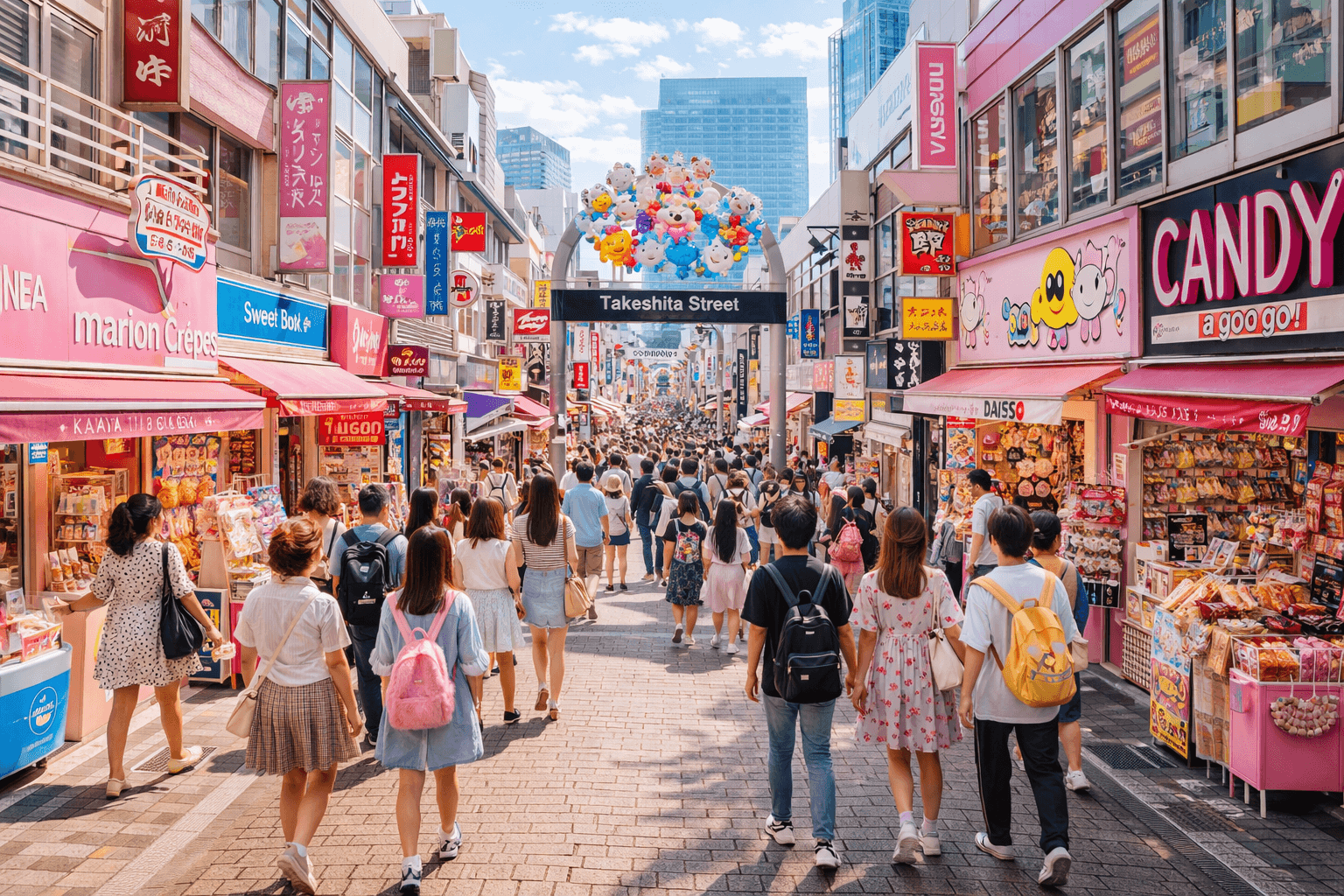
Takeshita-dori
- What it is: A narrow pedestrian street running from Harajuku station into the neighborhood.
- Why it matters: Epicenter of teen fashion, colorful stores, and food stalls (famous for crepes and trendy snacks).
- What to notice/do: Browse small boutiques, try a crepe, expect crowds; go early or late afternoon on weekdays to avoid the busiest times.
Omotesando (the ‘Champs-Élysées’ of Tokyo)
- What it is: A broad, tree-lined avenue with flagship stores, contemporary architecture, and upscale boutiques.
- Why it matters: Offers a calmer, design-focused counterpoint to Takeshita-dori and excellent window-shopping and architecture-walking.
- What to notice/do: Walk from Omotesando Station toward Harajuku, pause to admire modern façades (e.g., Prada, Omotesando Hills), and café-hop.
Meiji Shrine and Yoyogi Park (bordering Harajuku)
- What it is: A large Shinto shrine set in a forested area next to Yoyogi Park.
- Why it matters: Provides a peaceful cultural and historical respite; the shrine is a popular place for traditional ceremonies.
- What to notice/do: Enter through the main torii, follow shrine etiquette (bow at the gate, cleanse hands/mouth), and allow 30–60 minutes for a calm visit.
Cat Street and Ura-Harajuku (backstreets)
- What it is: Trendy backstreets linking Harajuku and Shibuya, filled with independent designers, vintage shops, and cafés.
- Why it matters: Where Tokyo’s street-style creativity becomes boutique shopping and experimental design.
- What to notice/do: Explore slowly, look for one-off stores and small galleries, and save extra time for browsing.
Laforet Harajuku & Local Department Stores
- What it is: Laforet is a multi-level shopping complex known for youth brands; nearby are smaller department stores and concept shops.
- Why it matters: A concentrated place to find avant-garde and emerging brands.
- What to notice/do: Head inside for rotating pop-up shops and limited-edition items.
Best Time to Visit
- Time of day: Early morning (9:00–11:00) for quieter shrine visits and calmer shopping; late afternoon to early evening (16:00–19:00) for lively street scenes and cafés.
- Crowd considerations: Weekends—especially Sundays—are busiest; Takeshita-dori becomes densely packed. Weekdays are far more comfortable.
- Atmosphere differences: Mornings are reflective and local-focused (Meiji Shrine, park runners); afternoons and evenings are energetic, trend-driven, and louder.
Seasonal Highlights
- Spring: Cherry blossoms in nearby Yoyogi Park and along tree-lined Omotesando create a photogenic backdrop; expect higher visitor numbers during sakura season.
- Summer: Street festivals and pop-up events occasionally spill into the area; very warm and humid—stay hydrated.
- Autumn: Pleasant weather and autumn foliage in the shrine grounds make strolling comfortable and scenic.
- Winter: Cooler, quieter streets and seasonal decorations; New Year’s visits to Meiji Shrine draw crowds on Jan 1–3 if you’re interested in traditional hatsumode (first shrine visit).
Practical Tips
- Cultural etiquette: Remove hats when entering shrine buildings, speak quietly on public streets and trains, and follow local queuing behavior. Respect personal space when photographing people.
- Photography rules: You may freely photograph architecture and street scenes, but always ask consent before photographing individuals if you wish to capture close portraits. Some boutiques and cafés restrict photography—check signage.
- Payment & access: Many small shops and cafés accept cash only or prefer cash; carry some yen. Major stores and cafés accept cards and mobile payments. Free Wi‑Fi is limited—consider a local SIM or portable hotspot for navigation.
- Mobility & timing: Streets can be narrow and crowded; bring comfortable shoes. If you plan to visit several shops and cafés plus Meiji Shrine, allow 2–4 hours; a quick stroll can be 45–90 minutes.
Getting There
- Nearest stations: Harajuku Station (JR Yamanote Line) opens onto Takeshita-dori/Meiji Shrine area; Meiji-jingumae Station (Tokyo Metro Chiyoda and Fukutoshin lines) serves Omotesando/Cat Street.
- Typical travel time from city center: From Tokyo Station, roughly 20–30 minutes by train (change to JR Yamanote or subway depending on route). From Shibuya, it’s a short 5–10 minute train or a 15–25 minute walk.
Is It Worth It?
Harajuku is worth a visit for its unmistakable energy and contrasts—boisterous youth culture alongside serene shrine grounds. For first-timers, it’s an essential slice of modern Tokyo; for repeat visitors, the changing boutiques and cafés reward exploration. If you dislike crowds, choose weekday mornings or explore the quieter backstreets for a more relaxed experience.