
Introduction
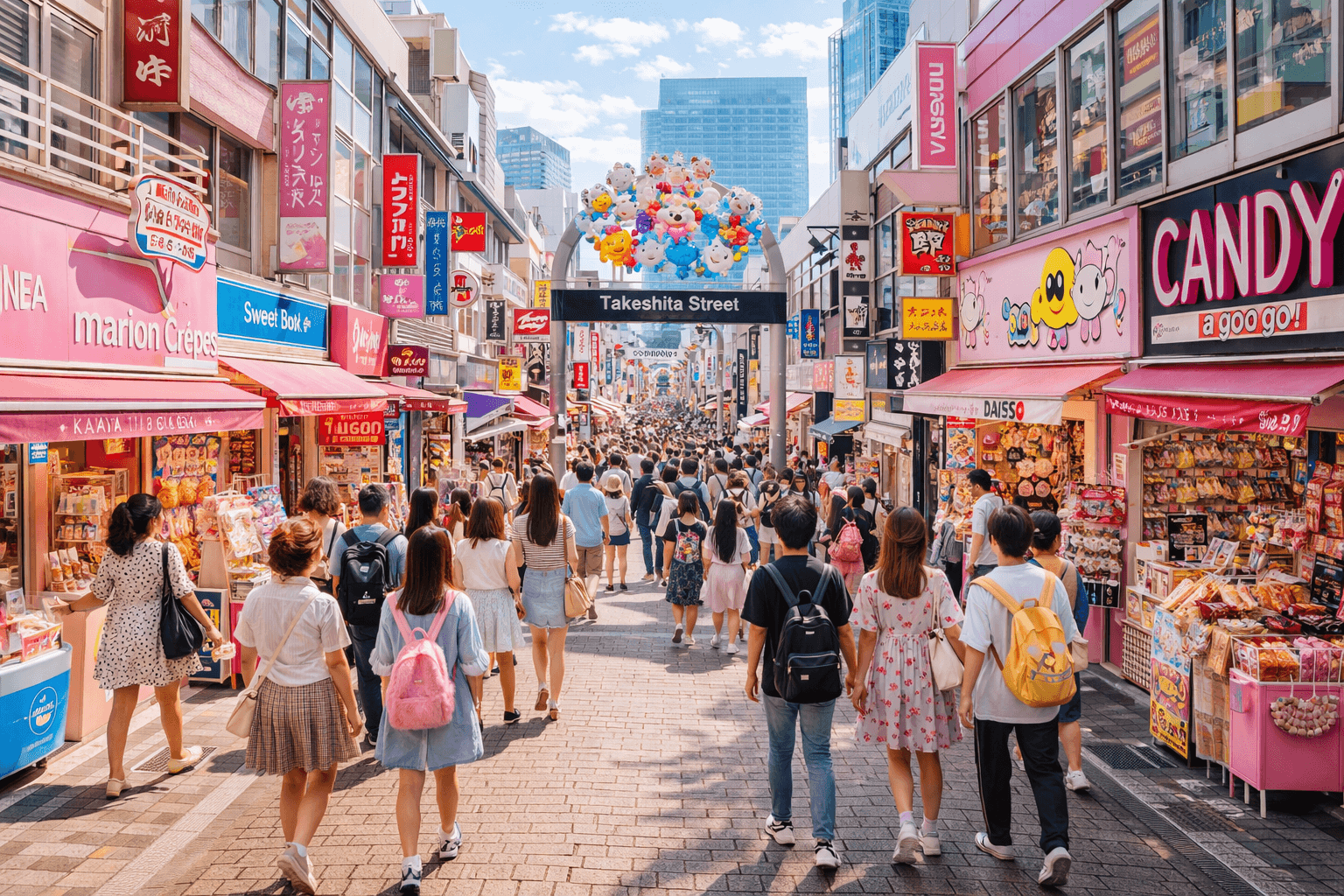
Takeshita Street (Takeshita-dori) is a short, pedestrianized shopping street in Harajuku, Tokyo. Known for its tightly packed boutiques, crepe stands, vibrant street fashion and youth culture, it has been a focal point for Tokyo’s trend-setting scenes since the 1990s. The street sits at the eastern edge of Meiji Shrine and channels a lively, sometimes eccentric energy that contrasts with nearby upscale Omotesando.
Takeshita Street appeals to first-time travelers seeking a quintessential slice of contemporary Tokyo culture, returning visitors interested in new fashion and food trends, and families or teens curious about pop culture and snack street food.
Why Visit
- Experience Tokyo youth culture and ever-changing street fashion up close.
- Sample iconic street foods (crepes, bubble tea, sweet buns) and quirky cafés.
- Find unique souvenirs: capsule toys, kawaii accessories, vintage and indie designer pieces.
- People-watching and short, photogenic blocks ideal for quick exploration.
Main Areas & What to See
Entrance & Costume Shops
What it is: The western entrance near Harajuku Station funnels crowds into a narrow lane lined with costume and cosplay shops. Why it matters: This is where Harajuku’s playful fashion identity is most visible. What to notice/do: Browse curated secondhand stores and themed boutiques; ask before photographing people in costume.
Central Arcade (Core of Takeshita-dori)
What it is: The busiest stretch with fashion stalls, accessory shops and ballooned signage. Why it matters: It’s the heart of the street’s energy—trends appear here first. What to notice/do: Duck into small stores to see local designers; watch for limited-run collaborations and tiny changing rooms.
Food Stands & Crepe Shops
What it is: Rows of food vendors selling crepes, taiyaki, cotton candy, and savory snacks. Why it matters: Eating on the street is part of the experience—many flavors are unique to Harajuku. What to notice/do: Try a freshly made crepe or a Japanese-style sweet bun; carry small change and be mindful of busy sidewalks while eating.
Side Streets & Indie Boutiques
What it is: Narrow alleys off the main street with hidden cafes, vintage stores and experimental fashion. Why it matters: These pockets often carry more original finds and fewer tourists. What to notice/do: Explore slowly—you’ll find quieter cafés and small galleries; stores can be cash-preferred.
Takeshita Street Market Ends & Connection to Omotesando
What it is: At the eastern end the street opens toward Meiji-dori and upscale Omotesando. Why it matters: Contrast between fast, youth-driven Takeshita and the tree-lined, designer-heavy Omotesando is striking. What to notice/do: Walk toward Omotesando for calmer shopping, or visit Meiji Shrine and Yoyogi Park nearby for green space.
Best Time to Visit
- Time of day: Early morning (around 9:00–10:00) for fewer crowds and clearer photos; late afternoon/early evening (16:00–19:00) for energy and lit signage.
- Crowds: Weekends and holidays are extremely busy; weekdays are noticeably calmer.
- Atmosphere differences: Mornings feel local and exploratory; afternoons are bustling and festival-like with street performers and queues.
Seasonal Highlights
- Spring: Nearby cherry blossoms (Yoyogi Park / Meiji Shrine) add quiet contrast; pleasant temperatures for walking.
- Summer: Hot, crowded; summer fashion and seasonal sweets dominate. Beware afternoon heat.
- Autumn: Cooler weather makes exploring comfortable; Halloween weekend (late October) draws extravagant costumes and very large crowds.
- Winter: Holiday decorations appear on nearby Omotesando; shops offer seasonal limited goods.
Practical Tips
- Cultural etiquette: Be polite and patient in queues; do not block sidewalks; ask before photographing individuals, especially costumed performers or students.
- Photography: Photos of storefronts and street scenes are fine; avoid photographing minors or anyone who objects. Some small shops or cafés may prohibit photos—respect signs and staff requests.
- Payments & access: Many small shops favor cash (yen); major stores accept credit cards and contactless IC cards (Suica/Pasmo). Bring small bills for food stalls.
- Accessibility: The street is narrow and crowded; stroller and wheelchair access is possible but limited during peak times.
- Estimated visit duration: 45 minutes to 2 hours for a focused visit; half a day if you include side streets, cafés and nearby Meiji Shrine/Yoyogi Park.
Getting There
- Nearest stations: Harajuku Station (JR Yamanote Line) — main western entrance; Meiji-jingumae (Tokyo Metro Chiyoda and Fukutoshin Lines) — eastern/side access.
- Typical travel time from the city center: From Tokyo Station ~25–30 minutes by JR Yamanote Line to Harajuku; from Shinjuku ~5–8 minutes.
Is It Worth It?
Yes—Takeshita Street is worth a visit for anyone curious about Tokyo’s youth culture, quick street-food adventures, and offbeat shopping. Expect crowds and short waits; if you prefer calmer experiences, visit early on a weekday or combine a brief visit to Takeshita with quieter nearby attractions like Meiji Shrine or Omotesando.