
Introduction
The Imperial Palace (Kokyo) sits at the heart of Tokyo on the former site of Edo Castle. It is the primary residence of Japan’s Imperial Family and a symbolic green sanctuary amid the city's skyscrapers. Visitors come for history, carefully tended gardens, seasonal beauty, and the chance to see traditional moats, stone walls, and palace architecture from public vantage points.
This place appeals to history buffs, garden lovers, photographers, families, and travelers who want a calmer, culturally rich counterpoint to Tokyo’s busy neighborhoods.
Why Visit
- See the historic heart of Edo/Tokyo with well-preserved castle moats, ramparts, and gates.
- Explore tranquil gardens and wide promenades for seasonal flowers and city views.
- Learn about Japan’s imperial history via the East Gardens and occasional guided tours.
- Enjoy easy, free access in a central location — a low-cost cultural stop.
Main Areas & What to See
Imperial Palace East Gardens (Kokyo Higashi Gyoen)
- What it is: A public park on the site of the old Edo Castle inner compounds.
- Why it matters: Contains original stone foundations, guardhouses, and carefully restored garden landscapes that reflect samurai-era layout.
- What to notice/do: Walk the gravel paths, inspect the remains of the Honmaru Palace foundation, visit the Ninomaru Garden for seasonal plantings, and stop by the Information Center for exhibit panels in English.
Imperial Palace Outer Moats and Nijubashi Bridge
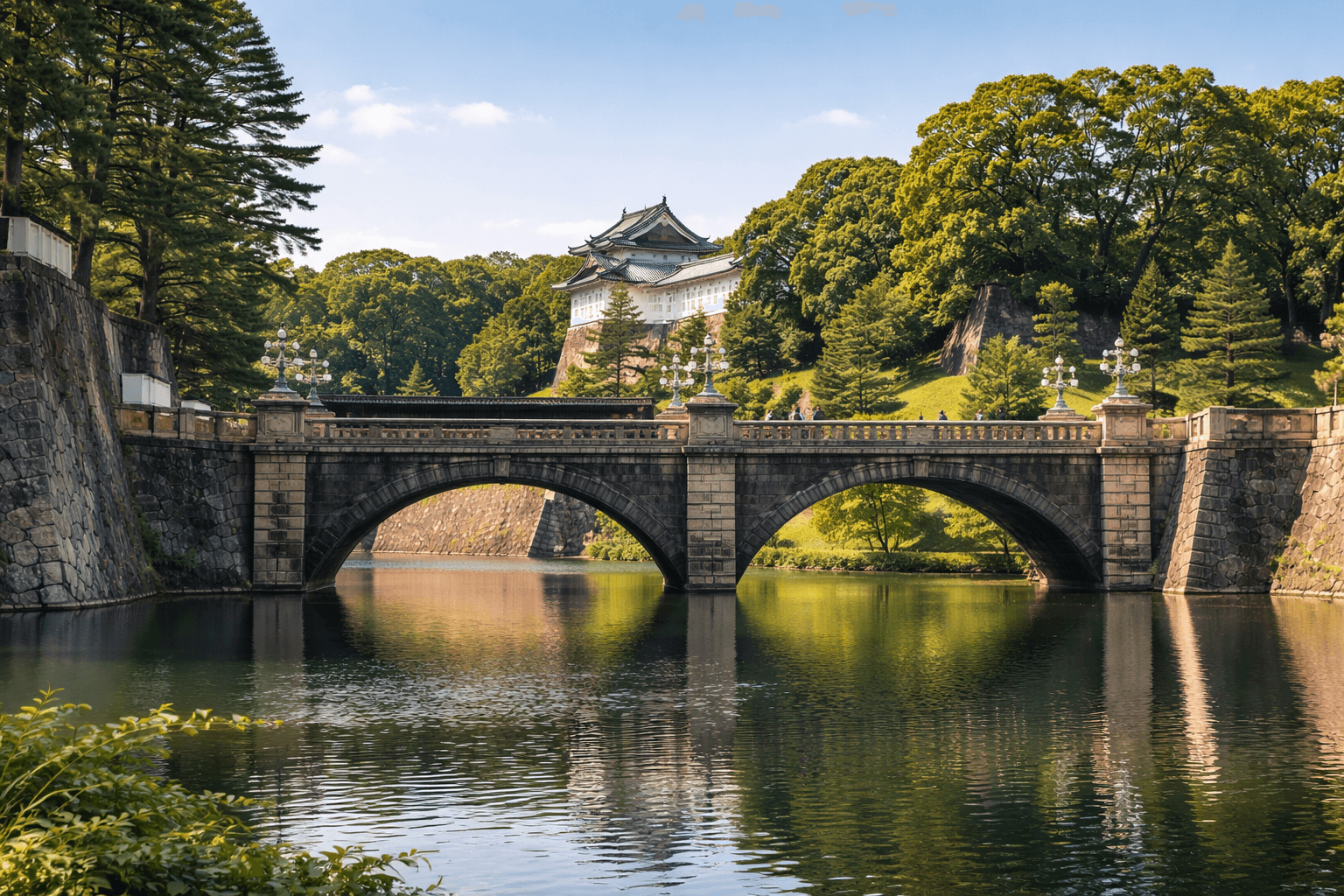
- What it is: The outer moat system and the iconic two-tiered bridge (often called Nijubashi).
- Why it matters: The bridge and moat provide the most photographed, quintessential views of the palace and represent imperial authority and historic engineering.
- What to notice/do: Cross or photograph from the pedestrian area; early morning or late afternoon light is best. Security may limit access when official events occur.
Kokyo Gaien National Garden and Plaza
- What it is: A large open plaza in front of the palace suited for strolling and photography.
- Why it matters: Offers sweeping views of the palace grounds and is a popular spot for picnics and seasonal illumination.
- What to notice/do: Relax on lawns, watch joggers and school groups, and note memorials like the Sakurada Gate area.
Kitanomaru Park (nearby)
- What it is: A public park north of the palace, home to the Nippon Budokan and small museums.
- Why it matters: A quieter green space used by locals, with paths that connect to palace routes.
- What to notice/do: Visit if you want a longer walk or to combine a trip to the Budokan or Science Museum.
Best Time to Visit
- Time of day: Early morning (7:00–9:00) for soft light, cooler temps, and fewer people; late afternoon for warm light on the bridge. Midday is busiest.
- Crowd considerations: Weekends, public holidays, and sakura season draw larger crowds. On official imperial events the public areas may be partially closed.
- Atmosphere differences: Morning feels meditative with joggers and commuters; midday is more touristy and lively; evenings are peaceful but many areas close at dusk.
Seasonal Highlights
- Spring: Cherry blossoms near the moat and Ninomaru make for a classic Tokyo scene (late March–early April, varying by year).
- Summer: Lush green gardens and shade; occasional rain in June (tsuyu) and hot, humid days in July–August.
- Autumn: Crisp air and autumn foliage (November) color the gardens and make for excellent photos.
- Winter: Clear skies can produce sharp, graphic views of stone walls and bridges; fewer tourists and quiet walks.
- Special events: The Emperor’s Birthday and New Year’s public appearances (if any) attract crowds; check dates before visiting as they change annually.
Practical Tips
- Cultural etiquette: Keep voices low, follow signage, and avoid stepping on planted areas. Respect any cordoned-off spaces and security staff instructions.
- Photography: Photography is allowed in most outdoor public areas; do not enter restricted buildings or gardens where signage prohibits photos. Avoid disturbing ceremonies or visitors.
- Payment & access: Entry to outdoor areas and the East Gardens is free. Some guided Imperial Household tours require advance registration (check current procedures if you plan to tour inside the palace grounds).
- Timing: Allow 45–90 minutes for the East Gardens and moats; 2–3 hours to combine with nearby museums or longer walks through Kitanomaru Park.
- Facilities: Public restrooms are available near entrances; there are limited food options inside — plan to bring water or stop in nearby Marunouchi or Ginza for a meal.
Getting There
- Nearest stations: Tokyo Station (Marunouchi Exit) and Nijubashi-mae Station (Tokyo Metro Chiyoda Line). Otemachi, Takebashi, and Sakuradamon stations are also within walking distance depending on which gate you’re heading to.
- Typical travel time from the city center: From Shinjuku or Shibuya, expect 20–30 minutes by train; from Narita Airport, about 60–90 minutes by train or airport transfer depending on service.
Is It Worth It?
Yes — especially if you value history, gardens, or quiet contrasts to Tokyo’s crowds. The palace grounds offer a meaningful glimpse into Japan’s past and a pleasant break in the center of the city. If you have limited time and prefer bustling neighborhoods, prioritize either the East Gardens or the moats/bridge view rather than trying to see everything in one rushed visit.