
Introduction
Meiji Jingu (Meiji Shrine) is a major Shinto shrine set in a peaceful, forested precinct in central Tokyo, bordering the busy neighborhoods of Harajuku and Shibuya. Built in 1920 to honor Emperor Meiji and Empress Shoken, the shrine is both a religious site and a cultural oasis where Japanese traditions, seasonal rituals, and everyday prayer coexist with city life. It appeals to first-time visitors seeking calm away from Tokyo’s bustle, culture-focused travelers, photographers, and anyone curious about Japanese spirituality and ceremonial customs.
Why Visit
- A tranquil, green refuge in the heart of Tokyo where nature and tradition meet.
- Clear insight into Shinto practices: torii gates, purification, ema (wish plaques), and offerings.
- Beautiful seasonal scenery — from spring blossoms to autumn color — and striking architecture.
- People-watching opportunities: weddings in traditional dress, local worshippers, and pilgrim rituals.
Main Areas & What to See
Grand Torii Gate (Nakamise Entrance)
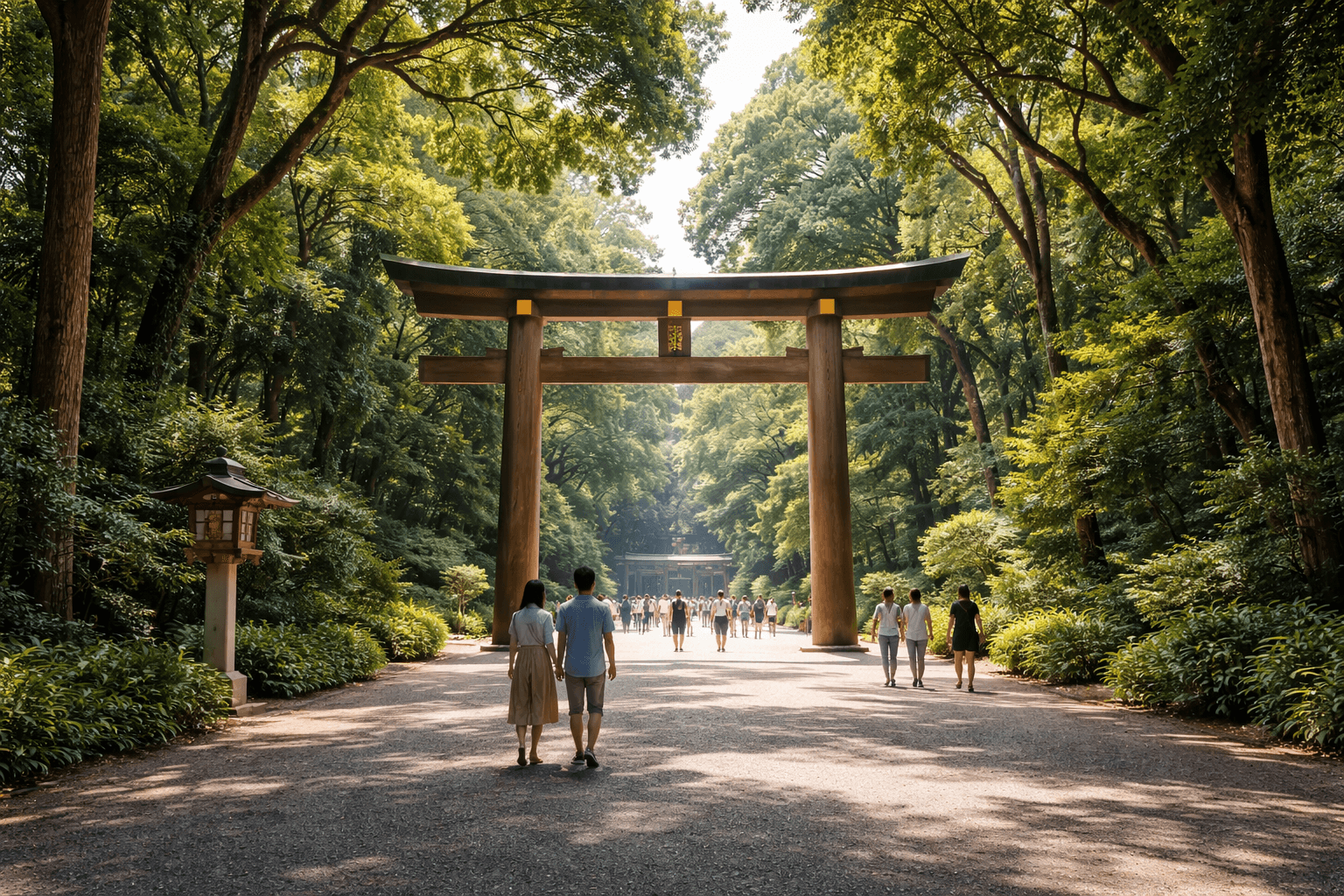
What it is: The large wooden torii that marks the main approach into the shrine forest. Why it matters: Passing under a torii symbolizes entering a sacred space; it’s the first framing of the shrine’s atmosphere. What to notice or do: Pause and bow briefly when you pass beneath; the gate is an excellent spot for photos with minimal background clutter early in the morning.
Forested Pathways (Meiji Jingu Inner Garden)
What it is: A planted forest of more than 100,000 trees donated from across Japan. Why it matters: The woodland creates a microclimate and a sense of separation from the city, offering restorative quiet. What to notice or do: Walk slowly, listen for birds, and enjoy the changing light through the canopy — allow at least 20–30 minutes for a relaxed stroll.
Main Shrine (Honden)
What it is: The main hall where worship takes place; a simple, dignified wooden structure. Why it matters: Central place for prayer and ritual, rebuilt after WWII to match traditional style. What to notice or do: Observe purification at the temizuya (water pavilion), follow the two-bow, two-clap, one-bow practice if you wish to pray, and be respectful and quiet.
Sake Barrels (Kazaridaru) & Wine Barrels (Bordeaux Barrels)
What it is: Decorative stacked barrels of sake and wine donated to the shrine. Why it matters: They symbolize offerings and Meiji-era openness to cultural exchange (Bordeaux barrels reflect the emperor’s interest in Western culture). What to notice or do: These make attractive photographs and are a reminder of the shrine’s historic context.
Inner Garden & Iris Garden (Meiji Jingu Gyoen)
What it is: A separate paid garden behind the main shrine with lawns, ponds, and seasonal plantings. Why it matters: Offers more curated horticultural displays and photogenic landscapes. What to notice or do: Check opening times and consider visiting in late spring (irises) or autumn for color; there is a small admission fee.
Ema and Omikuji Areas
What it is: Shelves and racks where visitors write wishes on wooden plaques (ema) or draw fortunes (omikuji). Why it matters: Direct, interactive ways to take part in Shinto custom and leave a personal mark. What to notice or do: If you get a bad omikuji, you can tie it to the provided lines to leave the misfortune behind.
Best Time to Visit
- Time of day: Early morning (7:00–9:30) for peaceful walks and soft light; late afternoon around golden hour for warmer tones and more activity.
- Crowd considerations: Midday and weekends can be busy, especially near Harajuku and during shrine events. Weekdays are quieter.
- Atmosphere differences: Morning — meditative and calm; midday — lively with tourists, couples, and school groups; evenings — serene but some areas close earlier.
Seasonal Highlights
- Spring (March–May): Cherry blossoms in nearby areas and fresh green foliage in the forest.
- Early summer (June): Iris displays in the Inner Garden; lush, humid greenery.
- Autumn (October–November): Crisp air and attractive autumn color—great for photos.
- Winter (December–February): Clear skies, fewer crowds; New Year (Hatsumode) is extremely busy as people visit to pray for the coming year.
- Special events: Traditional Shinto weddings are frequent and visible year-round; New Year’s first prayers (Hatsumode) and seasonal festivals take place on set dates.
Practical Tips
- Cultural etiquette: Dress modestly, speak quietly, and follow signage. At the purification basin (temizuya), rinse hands and mouth briefly before approaching the main hall.
- How to pray: Approach, toss a coin into the offering box, bow twice, clap twice, make a silent wish, then bow once more.
- Photography: Exterior and garden photography are generally allowed; avoid photographing people without permission and do not take photos inside the honden (main hall) if signs indicate restrictions.
- Payment & access: Entry to the shrine grounds is free. The Inner Garden has a separate paid admission. Facilities accept cash; some vendors near Harajuku take cards, but carry cash for small purchases.
- Timing: Allocate 45–90 minutes for the main precinct; add 30–60 minutes for the Inner Garden or if you plan to attend a ceremony.
Getting There
- Nearest stations: Harajuku Station (JR Yamanote Line) — Meiji Jingu’s main Harajuku entrance is a 2–5 minute walk; Meiji-jingumae 'Harajuku' Station (Tokyo Metro Chiyoda and Fukutoshin Lines) is another convenient option.
- Typical travel time from city center: From Tokyo Station to Harajuku by JR is about 20–30 minutes (one transfer possible depending on service); from Shinjuku it’s 5–10 minutes by JR Yamanote Line.
Is It Worth It?
Yes. Meiji Jingu offers a distinct, calming counterpoint to Tokyo’s urban energy and provides genuine cultural insight without requiring a long trip. For a short stop it’s an excellent, restorative experience; for those interested in Japanese tradition, a longer visit that includes the Inner Garden and observing shrine rituals is rewarding. Expect simple, sincere cultural encounters rather than spectacle.