
Introduction
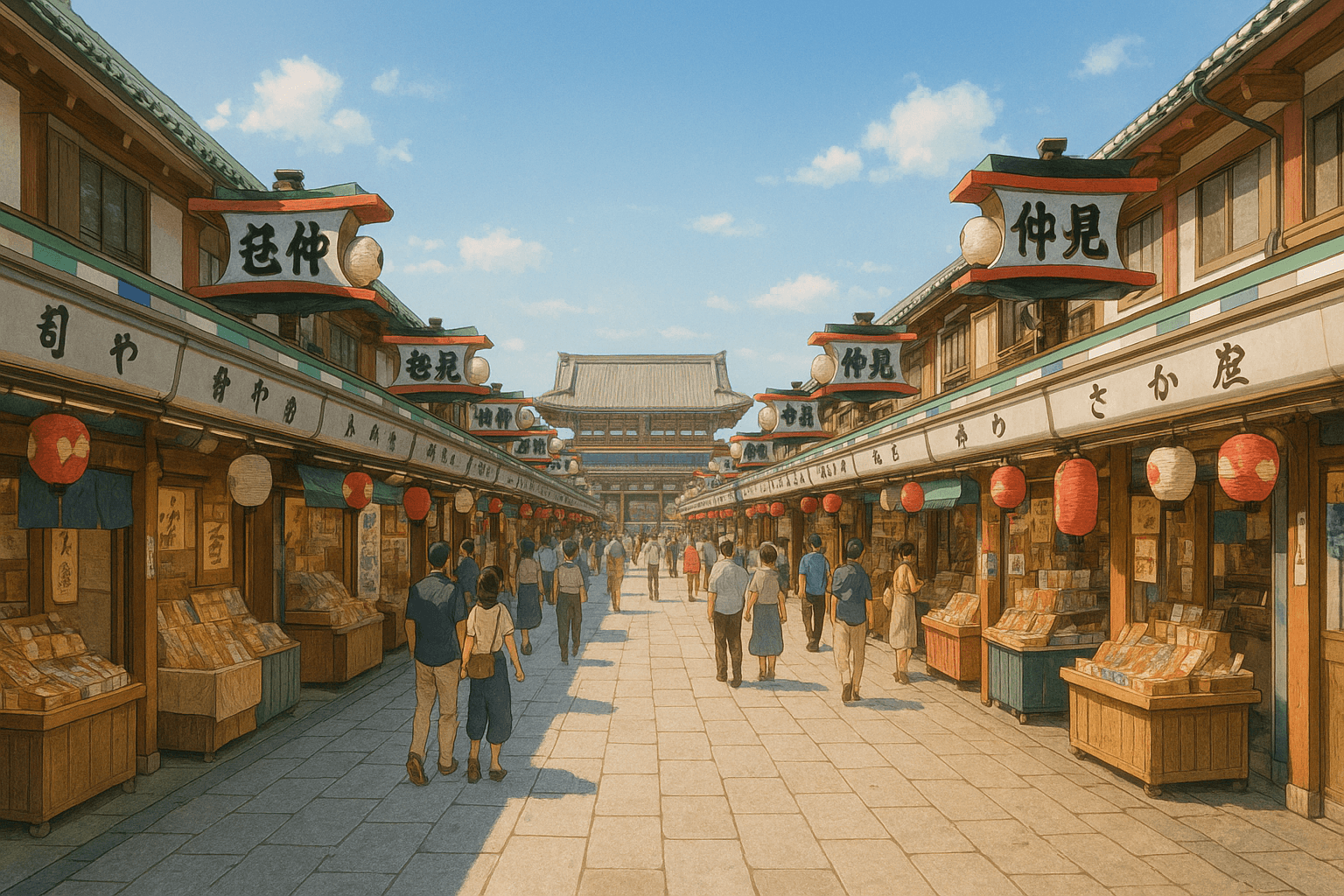
Nakamise-dori is the long, lively shopping street that leads to Senso-ji, Tokyo’s oldest Buddhist temple, in the Asakusa neighborhood. Lined with traditional-style shops and food stalls, the street has served temple visitors for centuries and today blends heritage, souvenirs, and street food. It appeals to first-time visitors wanting a classic Tokyo experience, repeat travelers seeking old-town atmosphere, and anyone interested in traditional crafts, snacks, and temple culture.
Why Visit
- Walkable stretch of authentic Tokyo atmosphere next to one of the city’s major temples.
- Easy place to try popular Japanese street foods and buy tasteful souvenirs.
- Great for photography of traditional architecture, shopfronts, and temple gateways.
- Combines cultural sightseeing (Senso-ji) with relaxed browsing — suitable for families and solo travelers.
Main Areas & What to See
Kaminarimon (Thunder Gate)
- What it is: The dramatic outer gate and symbolic entrance to Nakamise-dori, featuring a giant red lantern.
- Why it matters: An iconic photo spot and the traditional starting point for the approach to Senso-ji.
- What to notice/do: Arrive early to avoid crowds for photos; observe respectful behavior and stay to the side to let worshippers pass.
Nakamise Shopping Street
- What it is: A roughly 250-meter pedestrian avenue packed with around 60 small shops and stalls selling snacks, crafts, and souvenirs.
- Why it matters: The street preserves a Edo-period shopping atmosphere and is a practical place to sample local treats and buy omiyage (gifts).
- What to notice/do: Try ningyo-yaki (sweet red-bean cakes), senbei (rice crackers), and freshly made ningyo-yaki shapes; browse for yukata, fans, chopsticks, and locally made crafts.
Senso-ji Temple (Hozomon and Main Hall)
- What it is: Tokyo’s oldest temple at the end of Nakamise, with incense burners, prayer halls, and the Hozomon gate.
- Why it matters: A living place of worship and focal point of Asakusa’s history and festivals.
- What to notice/do: Purify hands at the chozuya (water basin), observe worship customs (bow, coin offering, prayer), and stand back to watch incense ash used for blessings.
Side Streets & Small Alleys (Denboin-dori, Rokku area)
- What it is: Narrow lanes branching off Nakamise filled with specialist shops, cafes, and retro theaters.
- Why it matters: Offers quieter, more local experiences and hidden gems beyond the main thoroughfare.
- What to notice/do: Look for handmade goods, small soba shops, and traditional sweet shops; explore for quieter photo opportunities.
Best Time to Visit
- Time of day: Early morning (7:30–9:00) for quieter streets and better photos; late afternoon to early evening (16:00–18:30) for lively atmosphere and lit lanterns near sunset.
- Crowd considerations: Midday and weekends are busiest; national holidays and Golden Week bring heavy crowds. Arrive early if avoiding lines is important.
- Atmosphere differences: Mornings feel calmer and more reflective; afternoons are bustling and social, with more vendors serving freshly made snacks.
Seasonal Highlights
- Spring: Nearby cherry blossoms (late March–early April) add color to the Sumida River and small parks; temple grounds can be busy.
- Summer: Energetic festival season — especially the Sanja Matsuri (typically third weekend of May) when Asakusa is lively with processions and stalls.
- Autumn: Cooler weather and autumn foliage make strolls pleasant; fewer foreign crowds than spring.
- Winter: Crisp air and shorter lines on weekdays; New Year’s at Senso-ji is a major cultural event if you want to experience hatsumode (first shrine/temple visit of the year), but expect huge crowds.
Practical Tips
- Cultural etiquette: Dress modestly when entering temple halls; be quiet and respectful near worshippers. When making offerings: bow, throw a coin into the offering box, clap twice (if following Shinto-style practice), and bow again.
- Photography: Photos of the gate, street, and temple exterior are fine. Be discreet and avoid photographing people close-up without permission, especially worshippers. Inside some temple areas photography may be restricted — follow signage and staff requests.
- Payment & shopping: Many shops accept cash only; carry some yen for small purchases and snacks. Increasingly, larger shops accept cards or contactless IC cards (Suica/Pasmo), but small stalls often do not.
- Accessibility & timing: The street is pedestrian but can be crowded and narrow; pushchairs and wheelchairs can manage but expect slow progress during peak times.
- Estimated visit duration: 45 minutes to 2 hours — quick pass-throughs take under an hour; browsing, eating, and visiting Senso-ji comfortably takes 1.5–2 hours.
Getting There
- Nearest stations: Asakusa Station (Tokyo Metro Ginza Line, Toei Asakusa Line, Tobu Skytree Line) and Asakusa Station on the Tsukuba Express (short walk). The Ginza Line exit and the Tobu station are nearest to Kaminarimon.
- Typical travel time from city center: From Tokyo Station or Tokyo Station area, about 20–30 minutes by subway; from Shinjuku around 25–35 minutes depending on transfers.
Is It Worth It?
Yes — Nakamise-dori is worth a visit for its unique combination of history, accessible street food, and souvenir shopping in one concentrated stretch. It can be crowded and touristy, so balance your visit by going early or exploring nearby quieter alleys. For a first-time visitor to Tokyo it reliably delivers a memorable, easy-to-experience slice of traditional city life; returning travelers will still find new snacks and small shops to discover.