
Introduction
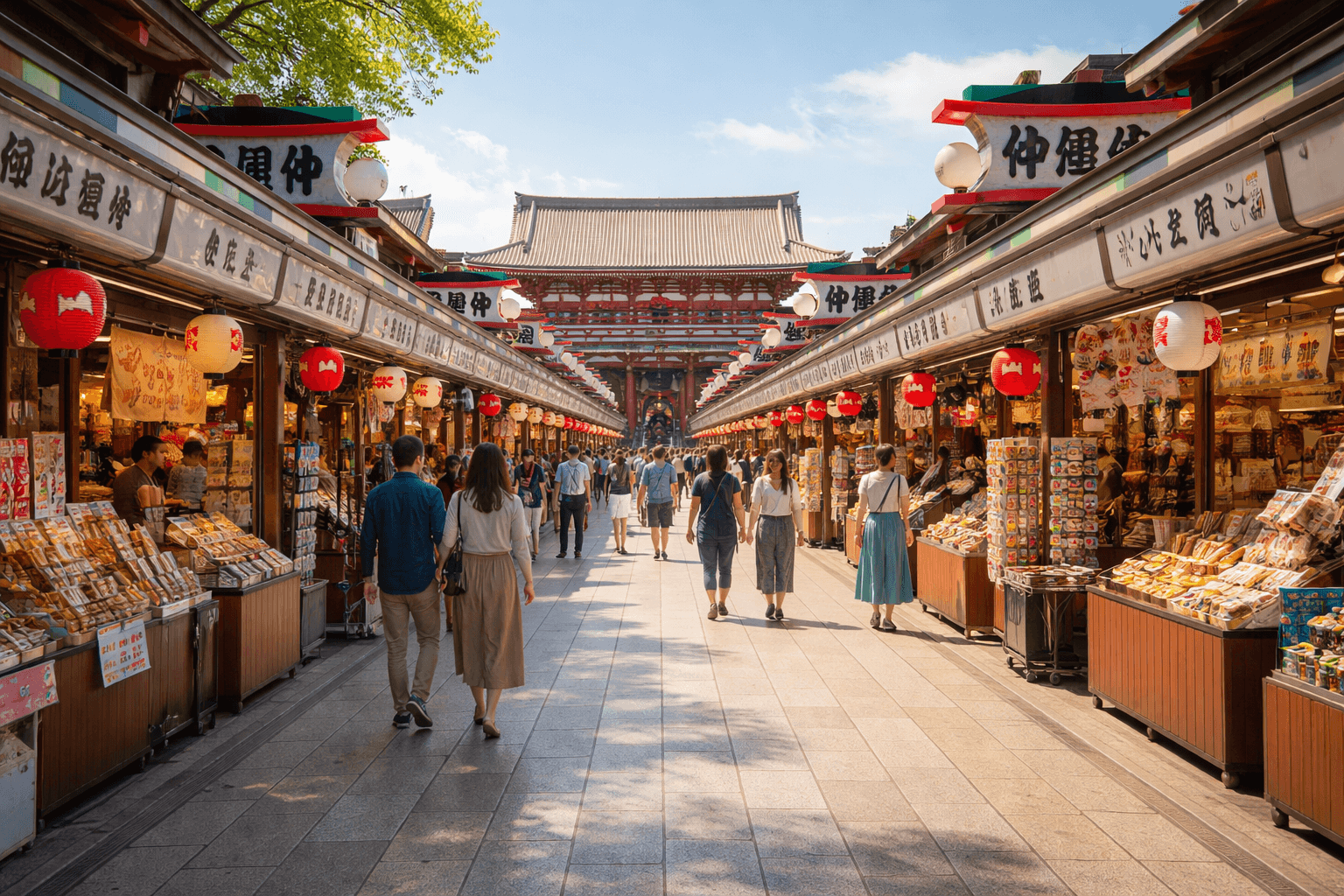
Nakamise Street is a lively, historic shopping arcade that leads to Senso-ji, Tokyo’s oldest Buddhist temple, located in the Asakusa neighborhood. Lined with dozens of small shops and food stalls, the street serves as both a religious approach (omote-sando) and a cultural snapshot of old Tokyo. It appeals to first-time visitors seeking a compact, traditional atmosphere and to returning travelers looking for souvenirs, street food, and local crafts.
Why Visit
- Walkable introduction to traditional Tokyo near Senso-ji temple.
- Wide selection of affordable souvenirs, crafts, and classic street foods.
- Photogenic, atmospheric stretch that blends commerce with culture.
- Easy to combine with river cruises, rickshaw rides, and historic neighborhoods.
Main Areas & What to See
-
Nakamise-dori (the arcade itself)
- What it is: A roughly 250-meter pedestrian shopping street flanked by small shops and stalls.
- Why it matters: It has served temple visitors for centuries and preserves traditional goods and snacks.
- What to notice/do: Try ningyo-yaki (small filled cakes) or senbei (rice crackers), browse yukata, fans, and lacquerware, and observe how vendors wrap and present items.
-
Kaminarimon (Thunder Gate)
- What it is: The iconic outer gate at the mouth of Nakamise with the large red lantern.
- Why it matters: It’s the symbolic entrance to Senso-ji and a popular photo spot.
- What to notice/do: Arrive early or late to avoid crowds for photos; watch for pickpocketing in tourist clusters.
-
Senso-ji Temple entrance (end of Nakamise)
- What it is: The temple’s main approach that opens into the temple grounds and the Hozomon gate.
- Why it matters: The contrast between bustling Nakamise and the temple’s quieter inner grounds is a key part of the experience.
- What to notice/do: Observe ritual cleansing at the temizuya (water basin) and incense-smoke customs; be respectful and quiet when worshippers are present.
-
Side streets and back alleys (Asakusa’s little shops)
- What it is: Narrow lanes off Nakamise with independent cafes, craft shops, and retro storefronts.
- Why it matters: These areas show a less touristy, more local side of Asakusa.
- What to notice/do: Peek into confectioners, try a small cafe, and look for traditional woodworking or textile workshops.
Best Time to Visit
- Time of day: Early morning (before 9:00 AM) for quieter photos and a peaceful approach; late afternoon to early evening (16:00–18:00) for lively street atmosphere and open food stalls.
- Crowd considerations: Midday and weekends can be very crowded, especially during holidays; plan extra time for slow walking.
- Atmosphere differences: Morning is calm and contemplative; afternoon is bustling and colorful with more active vendors and street food.
Seasonal Highlights
- Spring: Cherry blossom season colors nearby parks and riverside walks; combine Nakamise with Sumida Park for blooms.
- Summer: Festival season (e.g., Sanja Matsuri in May—not in summer but notable for Asakusa festivals) brings processions and extra stalls; expect huge crowds during festival days.
- Autumn: Cooler weather and clearer skies make it pleasant for walking; occasional seasonal sweets appear in shops.
- Winter: Early evenings with temple illumination can feel intimate; many shops sell warming snacks like oden and sweet roasted chestnuts.
Practical Tips
- Cultural etiquette: Remove hats and speak quietly near temple areas; don’t walk-and-eat in the most sacred spots if worshippers are present.
- Photography: Photos of the street and gate are fine; be respectful when photographing people, especially worshippers—ask before close-up portraits.
- Payment & shopping: Many small shops take cash (yen) only; larger or tourist-oriented stores may accept cards and mobile pay—carry some cash for food stalls.
- Access & timing tips: Many shops open around 9:00–10:00 and close by early evening; check times if you need a specific store.
- Estimated visit duration: 45 minutes to 2 hours, depending on shopping, snacking, and whether you visit Senso-ji and nearby attractions.
Getting There
- Nearest stations: Asakusa Station (Tokyo Metro Ginza Line, Tobu Skytree Line, Toei Asakusa Line) and Tawaramachi Station (Tokyo Metro Ginza Line) are within a short walk.
- Typical travel time from the city center: From Tokyo Station, expect around 25–35 minutes by subway (Ginza Line via Ueno or direct transfers depending on route); from Shinjuku, about 30–40 minutes.
Is It Worth It?
Yes for most travelers: Nakamise Street delivers a compact, accessible dose of traditional Tokyo—ideal for souvenir shopping, sampling street food, and experiencing the approach to Senso-ji. If you dislike crowds or want hidden local scenes only, visit early or explore Asakusa’s side streets instead. For a first-time Tokyo itinerary, it’s an efficient and culturally rich stop.