
Introduction
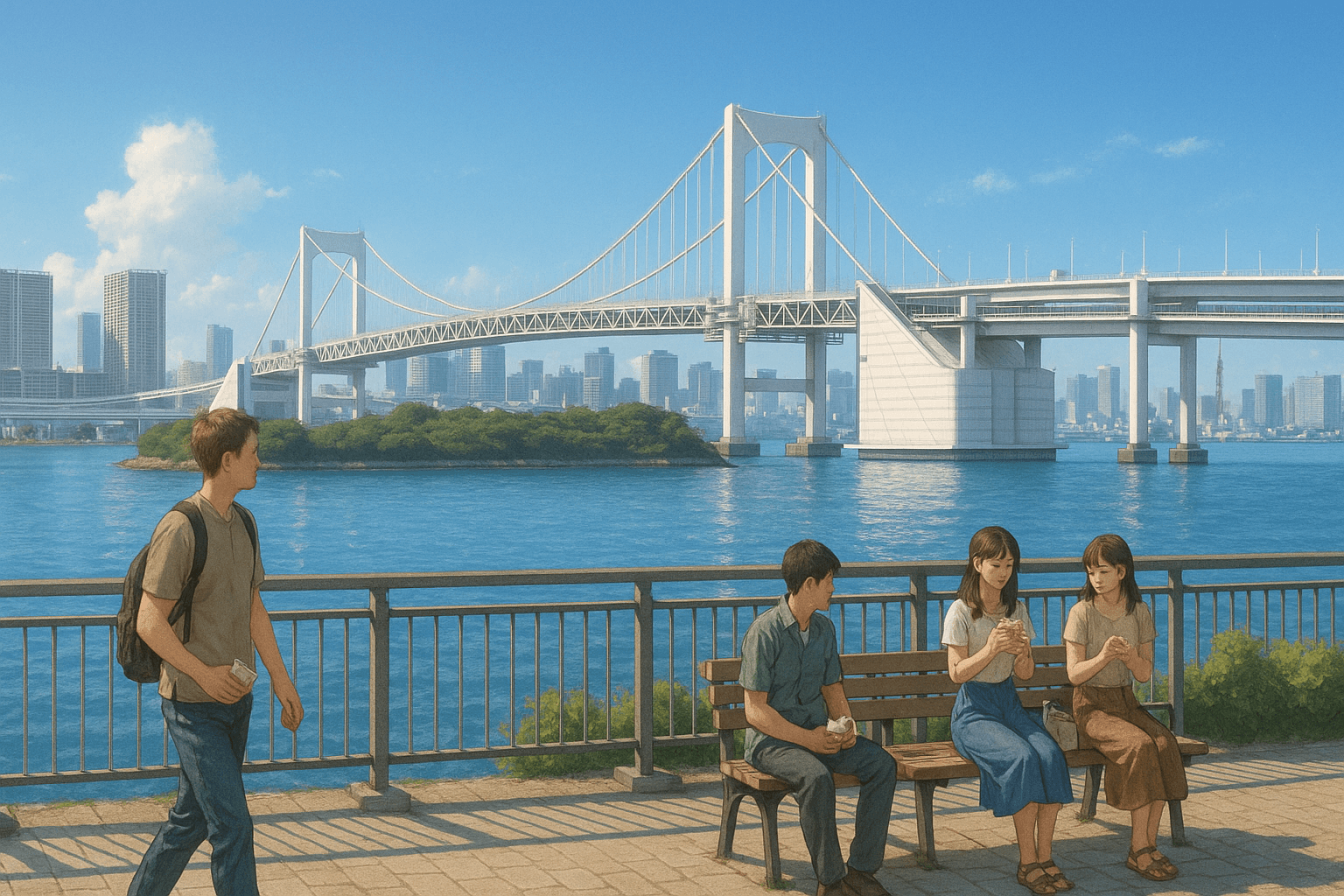
Odaiba is a man-made waterfront district on Tokyo Bay known for futuristic architecture, large-scale entertainment complexes, seaside promenades and wide views of the city skyline. Built on reclaimed land starting in the 19th century and redeveloped from the 1980s onward, Odaiba blends shopping, museums, leisure facilities and public space — a contrast to Tokyo’s denser historic neighborhoods.
This area appeals to families, design and tech fans, couples seeking sunset views, and anyone who wants a relaxed, open-air break from Tokyo’s subway hubs.
Why Visit
- Waterfront views and skyline photo opportunities (Rainbow Bridge, Tokyo Bay).
- Concentrated attractions: museums, malls, onsen, and family-friendly attractions within easy walking distance.
- Nighttime atmosphere with illuminated bridges and ferris wheel — great for evening strolls.
- Easy-access modern entertainment and food options for all budgets.
Main Areas & What to See
Palette Town / Aomi (entertainment cluster)
What it is: A group of large complexes that historically included shopping malls, a large ferris wheel, and cultural facilities. Why it matters: Offers a one-stop area for shopping, casual dining, and family attractions. What to do: Ride the Ferris wheel at dusk for panorama, browse specialty shops, and time your visit for evening lights.
DiverCity Tokyo Plaza
What it is: A multi-level shopping mall known for its life-size Gundam statue outside. Why it matters: Iconic meeting point and pop-culture draw for anime/robot fans. What to do: Photograph the Gundam (there are scheduled light/motion shows), explore food floors, and shop for souvenirs.
Odaiba Seaside Park & Decks
What it is: Promenade and small beach area along the water, with parks and piers. Why it matters: Offers the best open views of Rainbow Bridge and Tokyo’s skyline. What to do: Walk along the boardwalk, picnic at sunset, and stop at the outdoor cafés. Bring a light jacket in the evening.
TeamLabs & Mori Building Digital Art (or similar digital art spaces)
What it is: Immersive digital art museums that use projection, sound and interactive installations. Why it matters: A modern and sensory experience popular with photographers and creative travelers. What to do: Book timed tickets in advance where applicable, arrive early to avoid lines, and follow the museum’s photo rules.
Miraikan (National Museum of Emerging Science and Innovation)
What it is: A hands-on science museum focused on robotics, space and future tech. Why it matters: Highly engaging for adults and children interested in science and technology. What to do: Allow 1–2 hours to explore exhibits; check for special talks or demonstrations.
Oedo-Onsen-Monogatari (hot-spring theme park)
What it is: A complex recreating an Edo-period town with public baths, foot baths, and yukata rental. Why it matters: Easy way to try onsen culture without leaving central Tokyo. What to do: Familiarize yourself with onsen etiquette (washing before entering) and be aware of tattoo policies.
Best Time to Visit
- Time of day: Late afternoon into evening is ideal — enjoy daylight views and stay for illuminated skyline and ferris wheel. Morning visits are quieter for museums and promenades.
- Crowd considerations: Weekends and holidays draw families and tourists; visit on a weekday morning for quieter shopping and attractions.
- Atmosphere differences: Daytime is bright and family-oriented; nights are romantic and photogenic with lights reflecting on the bay.
Seasonal Highlights
- Spring: Mild weather; cherry blossoms appear in some parks around Tokyo Bay (check local bloom forecasts).
- Summer: Warmer evenings, occasional festivals and fireworks in the bay area — expect crowds on warm nights.
- Autumn: Clear skies and comfortable temperatures make for excellent skyline views.
- Winter: Crisp air offers sharp night views; holiday illumination displays and seasonal markets are common.
Practical Tips
- Cultural etiquette: Remove shoes where requested (onsen, some traditional venues); keep voices moderate on public walkways; follow signs and staff instructions.
- Photography: Public spaces are fine to photograph; respect no-photo signs inside museums, exhibits or art installations. Be mindful when photographing children.
- Payment & access: Most shops accept cards, but smaller food stalls may be cash-only — carry some yen. Facilities are largely accessible, but check individual venues for elevator access if mobility is a concern.
- Timing: Build a half-day (3–4 hours) for a quick visit or a full day (6–8 hours) to include multiple attractions and an onsen.
Getting There
- Nearest stations: Yurikamome line (Daiba, Odaiba-kaihinkoen, Aomi stations) and Rinkai line (Tokyo Teleport station).
- Typical travel time from city center: From Tokyo Station or Shinjuku, expect about 20–35 minutes depending on transfer and line choices; from Shibuya or Shinjuku allow closer to 30 minutes.
- Note: The scenic Yurikamome elevated line runs across Rainbow Bridge and provides great views; it’s slightly slower but tourist-friendly.
Is It Worth It?
Odaiba is worth visiting if you want waterfront open space, family-oriented entertainment, modern museums and evening views without travelling far from central Tokyo. It’s less about traditional Tokyo culture and more about contemporary leisure and skyline scenery — ideal for a relaxed half- or full-day visit. If you prefer historic neighborhoods and temples, combine Odaiba with other Tokyo districts rather than replacing them.