
Introduction
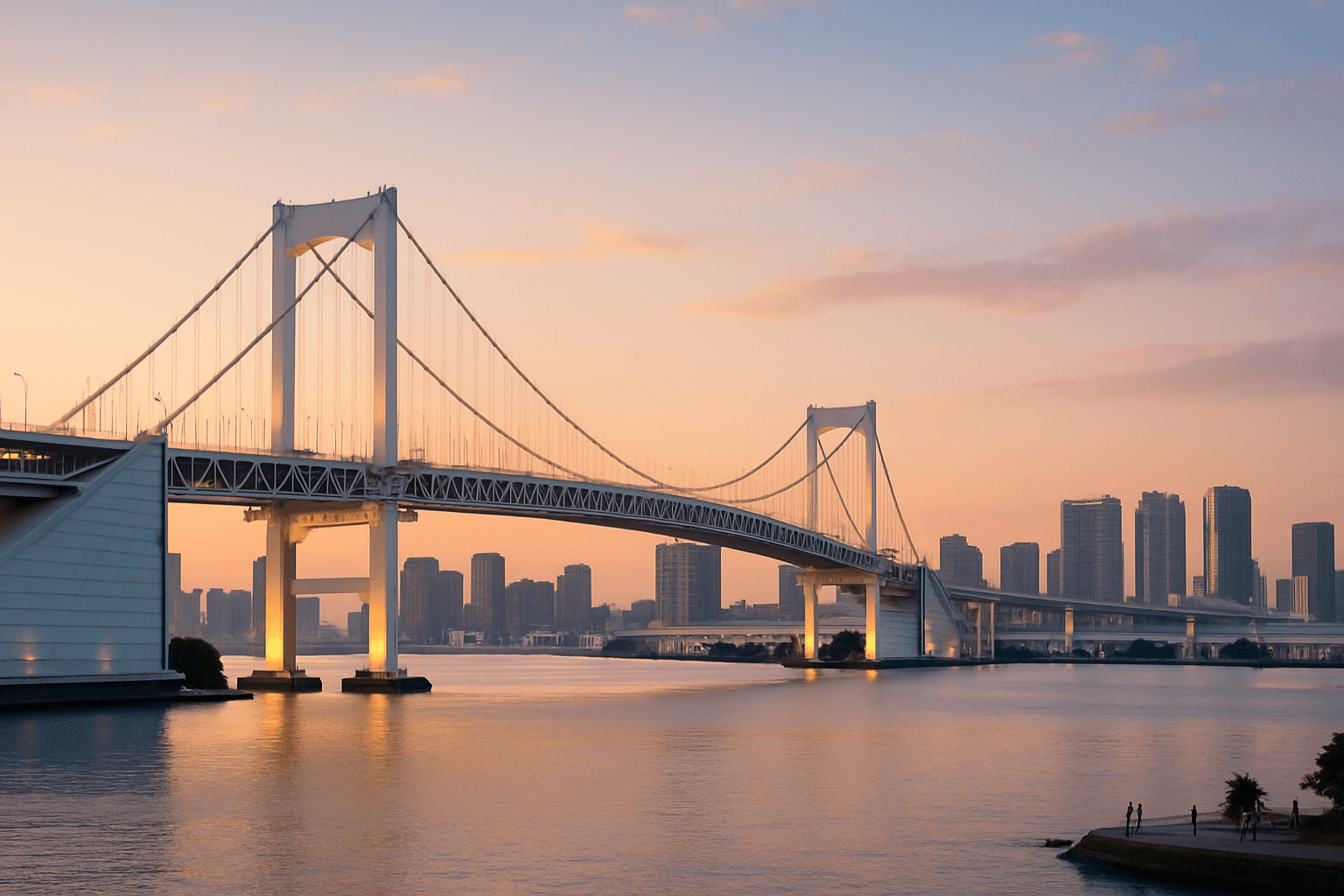
Rainbow Bridge is Tokyo’s large suspension bridge linking the Shibaura/Minato area with Odaiba across Tokyo Bay. Beyond its role as a traffic artery, the bridge is an accessible public landmark with pedestrian promenades, night-time illumination and wide views of the city skyline, Tokyo Tower, Odaiba and — on clear days — Mount Fuji. It appeals to sightseers, photographers, couples on evening walks, and anyone looking for a free, short outdoor experience with iconic Tokyo views.
Why Visit
- Free, panoramic waterfront views of central Tokyo and Odaiba.
- A pleasant 20–30 minute walk across Tokyo Bay with dedicated promenades.
- Famous night illumination and skyline photo opportunities.
- Easy to combine with Odaiba attractions, cruises, or a Tokyo Bay sunset.
Main Areas & What to See
-
Rainbow Promenade (North route)
- What it is: One of two pedestrian walkways on the lower deck.
- Why it matters: Offers views toward Tokyo Tower, the inner harbour and the city skyline.
- What to notice/do: Pause at benches and viewing points; notice the structure’s steel towers and how the cityscape changes as you walk.
-
Rainbow Promenade (South route)
- What it is: Parallel walkway facing Tokyo Bay and Odaiba.
- Why it matters: Best for bay views, Odaiba’s waterfront, and possible distant views of Mount Fuji when clear.
- What to notice/do: Walk slowly at sunset to capture silhouettes; use the Odaiba side to continue exploring the seaside park.
-
Odaiba & Odaiba-kaihinkoen area
- What it is: Waterfront park and shopping/entertainment district at the bridge’s west end.
- Why it matters: Offers framed views back to the bridge and many places to eat or sit after your walk.
- What to notice/do: Combine with the Statue of Liberty replica, shopping malls, or a bay cruise.
-
Shibaura/Tamachi side
- What it is: Mainland access point with quieter city-side perspectives.
- Why it matters: Views of the bridge structure itself and Tokyo’s shipping lanes.
- What to notice/do: Start or finish here for a less touristy approach; catch the Yurikamome for a scenic elevated ride.
Best Time to Visit
- Time of day: Late afternoon through early evening is best — daytime for clear distant views, golden hour for photos, and after sunset to see the illumination.
- Crowd considerations: Evenings and weekends attract more sightseers and photographers; weekday mornings are quieter.
- Atmosphere differences: Day visits feel open and airy with bay breezes; evenings are atmospheric with lights and reflections on the water.
Seasonal Highlights
- Spring: Pleasant temperatures and nearby cherry blossoms in some waterfront parks — clear days can offer crisp views.
- Summer: Longer hours for the promenade (April–October) and lively waterfront activity; expect more visitors and occasional strong winds that can close the walkways.
- Autumn: Clear skies and good visibility for distant views; comfortable walking weather.
- Winter: Shorter promenade hours (November–March) and fewer crowds; colder but often clearer air for views of Mount Fuji.
- Events: Bridge lighting can change for national holidays and seasonal events; nearby Odaiba often hosts festivals and fireworks on special dates.
Practical Tips
- Opening hours: Pedestrian promenades operate seasonally — typically 9:00–21:00 (April–October) and 10:00–18:00 (November–March); last entry is usually 30 minutes before closing. The promenade is closed on the third Monday of each month and may close for strong winds or maintenance. Check local notices on the day you go.
- Entry & cost: Free to enter.
- Accessibility: Access via elevators and ramps at the official entrances; parts of the promenade are covered but the path can be narrow in places. Strollers are allowed; bicycles must be walked (not ridden).
- Etiquette & rules: No smoking, no pets in the promenade, don’t throw objects over the railing. Be mindful of other walkers and photographers.
- Photography: Excellent 360° photo opportunities; use a wide lens for skyline shots and a tripod sparingly during busy times so you don’t block the path.
- Payment & facilities: No admission fee; few shops on the bridge itself — bring small change or a card for nearby cafés. Public restrooms are available near entrances.
- Estimated visit duration: 20–45 minutes for a one-way walk (25–30 minutes is typical). Add extra time if you plan to linger for photos or combine with Odaiba attractions.
Getting There
- Nearest stations / access points:
- Shibaura-futō Station (Yurikamome) — closest access to the mainland entrance (about 5–10 minute walk).
- Tamachi Station (JR) — about a 15–20 minute walk to the promenade entrance.
- Odaiba-kaihinkoen Station (Yurikamome) and Tokyo Teleport Station (Rinkai Line) — approaches from the Odaiba side (around 5–12 minute walk).
- Shimbashi Station connects to the Yurikamome Line for an elevated, scenic approach.
- Typical travel time from the city center: From Tokyo Station or Shinjuku expect roughly 20–35 minutes by train plus a short walk; from Shimbashi it's 10–20 minutes depending on transfer and walking.
Is It Worth It?
Yes — especially for first-time visitors who want an inexpensive way to see Tokyo’s waterfront and skyline, or for photographers seeking sunset and night-light scenes. Returning visitors will find it a quick, reliable outdoor stop to combine with Odaiba or a bay cruise. It’s not a lengthy attraction, but it delivers strong visual payoff for little cost; avoid very windy days or the routine monthly closure to make the most of the visit.