
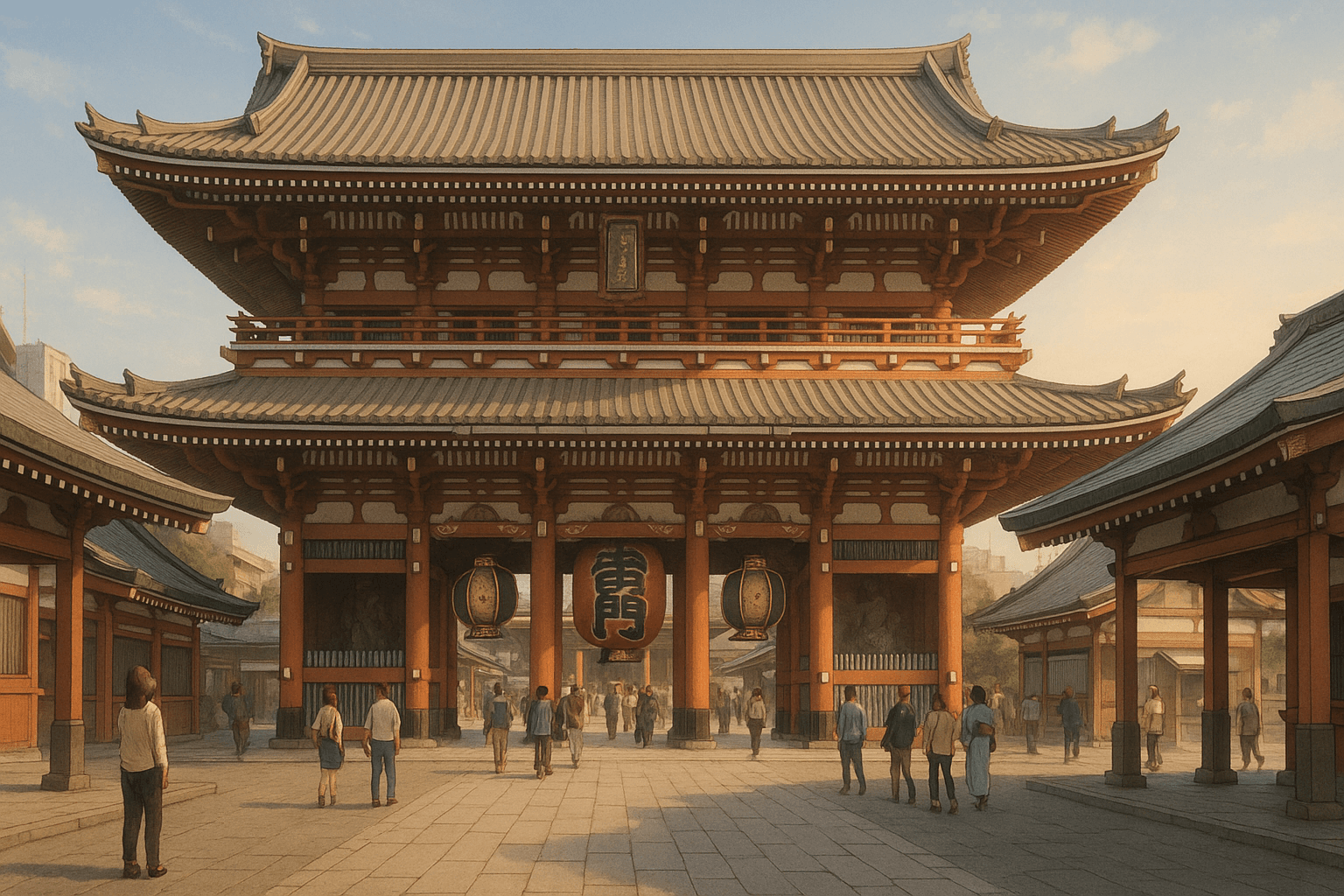
Senso-ji Temple Travel Guide (浅草寺)
Location: Asakusa, Taito City, Tokyo Best for: First-time visitors, cultural exploration, street food, photography Estimated visit time: 1.5–3 hours
Senso-ji is Tokyo’s oldest and most iconic Buddhist temple, blending deep history with lively street culture. Founded in 645 AD, it remains one of the city’s most atmospheric places, where incense smoke, prayer rituals, and bustling shopping streets coexist.
Why Visit Senso-ji?
- Experience traditional Tokyo in a modern city
- Walk through historic gates and a classic pagoda
- Enjoy local snacks and souvenirs along Nakamise Street
- Visit day or night—both offer distinct moods
Main Areas & What to See
1. Kaminarimon (Thunder Gate)
- The temple’s famous entrance, marked by a giant red lantern
- Iconic photo spot—go early morning for fewer crowds
- Turn around after entering to see the intricate guardian statues
2. Nakamise Street
- A 250-meter shopping street leading to the main hall
- Try classic snacks like:
- Ningyo-yaki (sweet sponge cakes)
- Senbei (rice crackers)
- Matcha sweets
- Great place for souvenirs: fans, yukata, chopsticks, charms
3. Hozomon Gate & Five-Story Pagoda
- The quieter inner gate area opens up visually
- The pagoda is one of Tokyo’s most photogenic traditional structures
4. Main Hall (Hondo)
- Dedicated to Kannon, the Goddess of Mercy
- Observe worshippers lighting incense—waft smoke toward yourself for good luck
- Photography is allowed outside, but not inside the hall
5. Omikuji (Fortune Telling)
- Draw a paper fortune for ¥100
- Bad fortunes are tied to racks to “leave the bad luck behind”
Best Time to Visit
- Early morning (8–9 AM): Peaceful, spiritual atmosphere, best photos
- Evening (after sunset): Lantern-lit, quieter, very atmospheric
- Avoid: Late morning–mid afternoon on weekends and holidays
Seasonal Highlights
- Spring: Cherry blossoms along Sumida River nearby
- Summer: Sanja Matsuri (May) brings massive crowds and energy
- Autumn: Comfortable weather, clear skies
- Winter: Calm, crisp air, fewer tourists
Practical Tips
- Dress respectfully: Shoulders and knees covered recommended
- Cash helpful: Many stalls don’t accept cards
- Combine with nearby spots:
- Sumida River walk
- Asakusa Culture Tourist Information Center (free observation deck)
- Tokyo Skytree (20-minute walk or short train ride)
Getting There
- Nearest station: Asakusa Station
- Ginza Line
- Asakusa Line
- Tobu Skytree Line
- From central Tokyo: ~20–30 minutes
Is Senso-ji Worth It?
Absolutely. While busy, Senso-ji offers one of the clearest, most accessible introductions to Japanese temple culture. With the right timing—especially early morning or evening—it can feel both lively and deeply atmospheric.