
Introduction
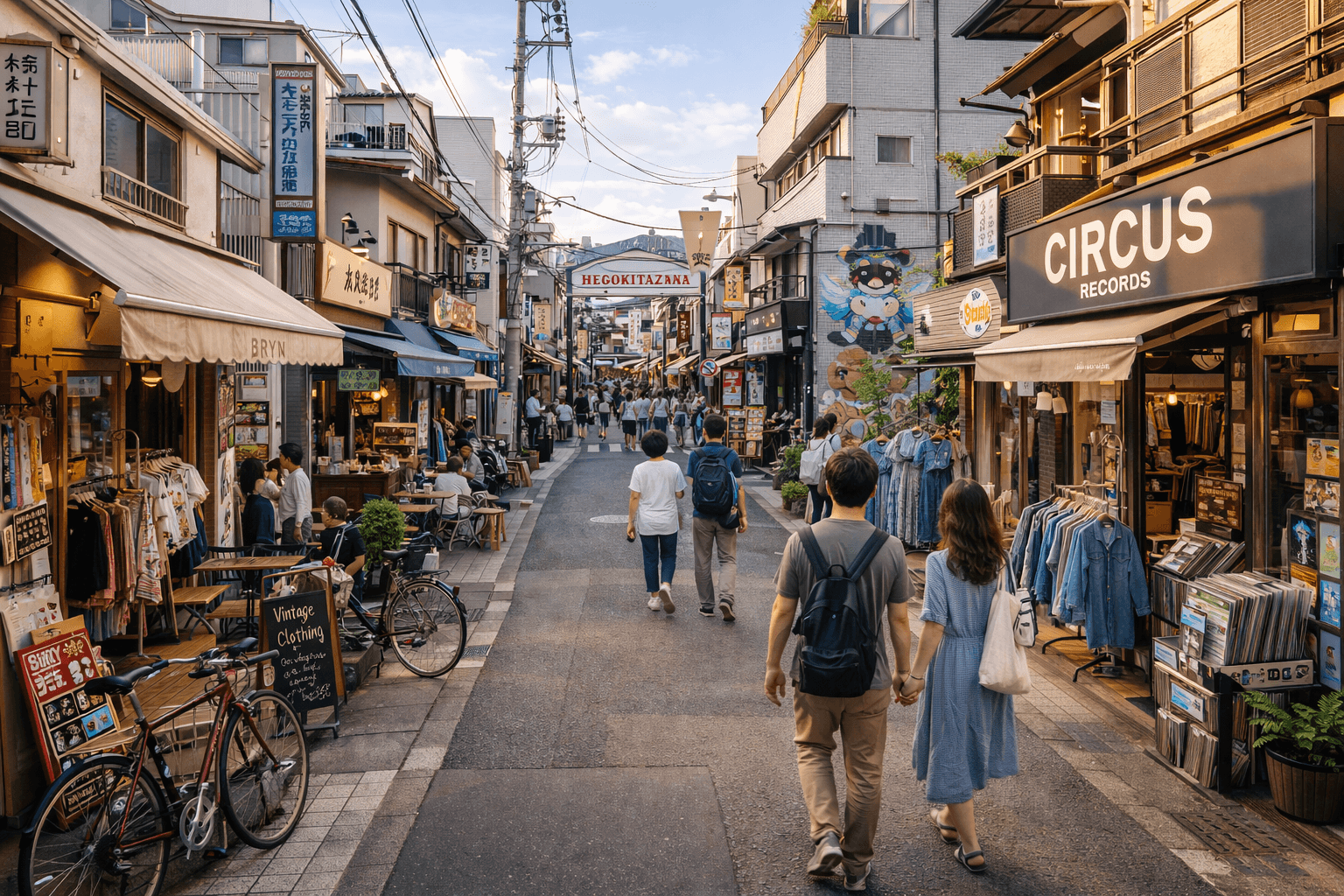
Shimokitazawa (often shortened to "Shimokita") is a compact, bohemian neighborhood west of central Tokyo known for its narrow lanes, independent shops, secondhand clothing stores, small theaters, live-music venues, and café scene. Historically a post-war residential area that became a magnet for students and creatives, it now offers an intimate, low-key alternative to Tokyo’s flashier districts. The area appeals to artists, vintage and fashion hunters, music lovers, slow‑travelers, and anyone who wants a more local, neighborhood feel.
Why Visit
- Authentic, pedestrian-friendly streets filled with vintage stores, indie boutiques, and cafés.
- Rich live-culture scene: small theaters, intimate music venues, and experimental art spaces.
- Easy to combine with nearby neighborhoods (Shibuya, Nakameguro) while feeling like a different Tokyo.
Main Areas & What to See
Station Area & North Exit Lanes
- What it is: The immediate area around Shimokitazawa Station — a tangle of alleys and low-rise buildings.
- Why it matters: It’s the neighborhood’s heart; most small shops, eateries, and theaters are within a 5–10 minute walk.
- What to notice/do: Wander without a strict plan, duck into vintage stores and record shops, and stop at a small café for people‑watching.
Vintage & Secondhand Streets
- What it is: Clusters of tightly packed vintage clothing shops and curated secondhand stores.
- Why it matters: Shimokita is one of Tokyo’s top neighborhoods for affordable, well-curated vintage fashion.
- What to notice/do: Expect a mix of decades and styles — check sizes carefully, try items on when possible, and ask staff about item care.
Theater & Live-Music Row
- What it is: Small theaters and live houses hosting plays, indie bands, and experimental performances.
- Why it matters: The theaters preserve the neighborhood’s creative identity and often feature local acts not seen elsewhere.
- What to notice/do: Check schedules in advance (evening shows are common). Buy tickets early for popular acts and arrive early to secure standing space or a seat.
Cafés, Bakeries & Tiny Restaurants
- What it is: A dense selection of independent cafés, craft bakeries, and small izakaya-style eateries.
- Why it matters: Food and drink here reflect local tastes and seasonal ingredients, often served in intimate spaces.
- What to notice/do: Try a specialty coffee shop for a relaxed break; explore lunchtime set menus at small restaurants for good value.
Residential Backstreets & Murals
- What it is: Quiet lanes with local homes, pocket parks, murals, and small galleries.
- Why it matters: These streets show the neighborhood’s lived-in character and reveal quieter, photogenic corners.
- What to notice/do: Walk slowly, respect private spaces, and look for small pop-up exhibitions or craft stalls.
Best Time to Visit
- Time of day: Late morning to early afternoon is ideal for shopping and cafés; early evening is best for live music and theater.
- Crowd considerations: Weekends (especially afternoons) are the busiest; weekdays are much calmer.
- Atmosphere differences: Mornings feel relaxed and local; evenings turn lively with music and dining—still intimate compared to larger districts.
Seasonal Highlights
- Spring: Mild weather and cherry trees in nearby parks make strolling pleasant; lighter menus appear in cafés.
- Summer: Outdoor events and late-night live shows; small cooling cafés and craft-beer bars are popular.
- Autumn: Comfortable weather for wandering and seasonal food offerings (sweet potato, chestnut items).
- Winter: Cosy indoor cafés and theaters; smaller crowds and a peaceful atmosphere.
- Festivals & events: Occasional local music festivals, theater seasons, and pop-up markets happen year-round—check event listings before you go.
Practical Tips
- Cultural etiquette: Keep noise low in residential lanes, queue politely for shops, remove hats in small theaters, and be mindful of narrow sidewalks.
- Photography: Street photography of public scenes is generally fine, but ask permission before photographing people closely or inside small shops and venues.
- Payment & access: Many small shops and cafés accept cash only; carry some yen. ATMs at convenience stores (7-Eleven, Post Office) accept international cards.
- Timing tips: Most small stores open mid-morning (10:00–11:00) and close in the evening (often by 20:00). Live venues typically start shows after 19:00.
- Estimated visit duration: 2–4 hours for a focused visit; half to a full day to explore shops, a performance, and a relaxed meal.
Getting There
- Nearest stations: Shimokitazawa Station (Odakyu Odawara Line and Keio Inokashira Line) — the main access point.
- Typical travel time from major centers: From Shibuya: ~7–10 minutes by train; from Shinjuku: ~10–15 minutes (direct Odakyu or with a short transfer); from Tokyo Station: ~25–35 minutes depending on transfers.
- Note: Trains are frequent; use the Odakyu or Keio Inokashira lines for the most direct routes.
Is It Worth It?
Shimokitazawa is worth a visit for travelers who want a quieter, characterful slice of Tokyo that emphasizes independent culture over spectacle. It won’t replace landmark sightseeing, but it offers memorable shopping, music, and neighborhood vibes that contrast well with busier parts of the city. If you enjoy vintage finds, live performances, or slow wandering, plan at least a half‑day here.