
Introduction
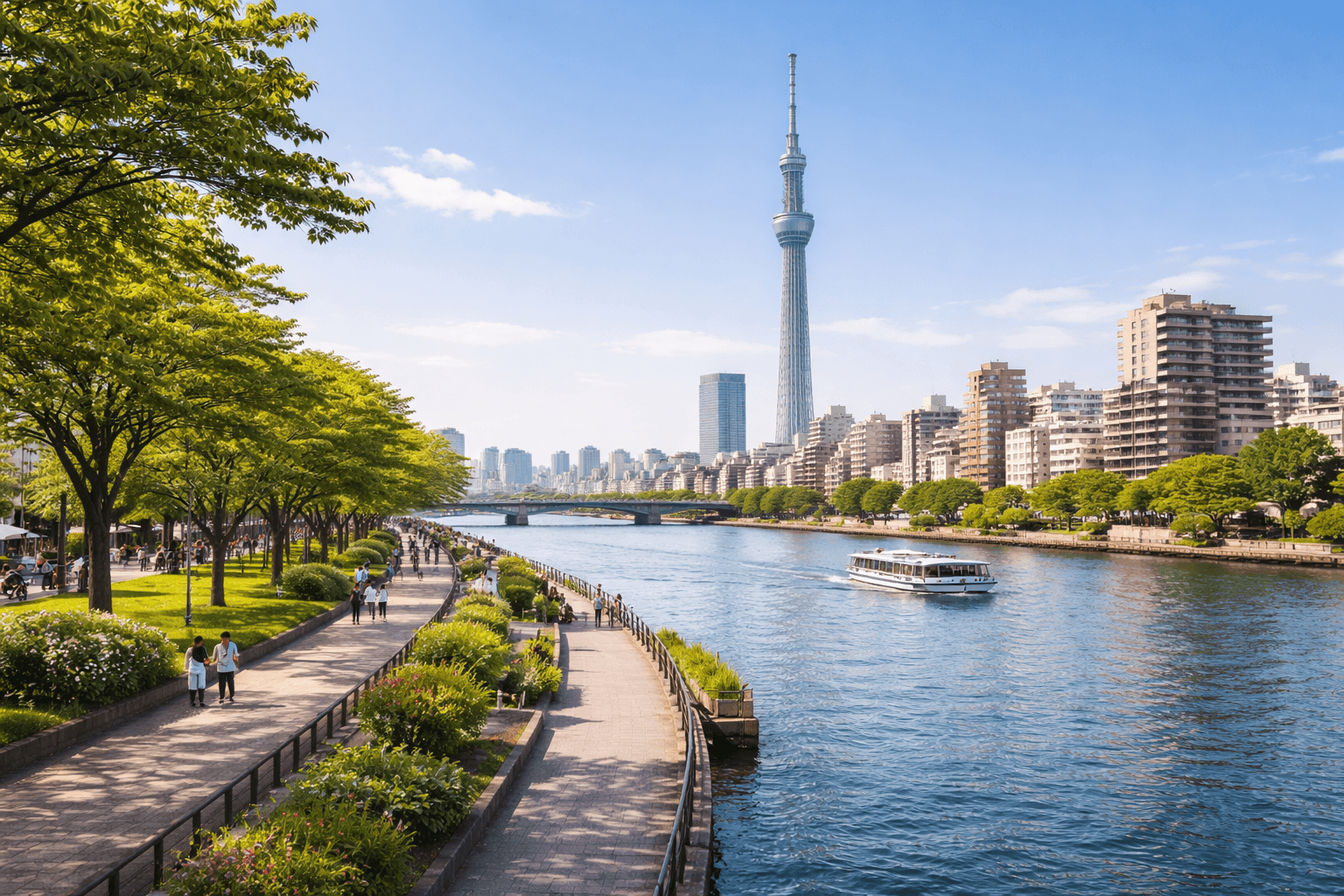
Sumida is one of Tokyo's eastern wards along the Sumida River, blending modern landmarks, traditional neighborhoods and quiet riverside life. It’s home to Tokyo Skytree, museums that celebrate Edo and ukiyo-e history, sumo culture in Ryōgoku and local artisan shops. Sumida appeals to first-time visitors drawn to major sights and returning travelers who want a calmer, more local slice of Tokyo beyond Shinjuku or Shibuya.
Why Visit
- See Tokyo Skytree and its surrounding shopping and riverfront precinct.
- Explore Edo-era history at the Edo-Tokyo Museum and Hokusai Museum.
- Experience sumo culture in Ryōgoku and lively riverside walks.
- Enjoy seasonal river events and a less frenetic neighborhood vibe.
Main Areas & What to See
Tokyo Skytree / Oshiage
- What it is: Tokyo’s tallest tower with observation decks, a large shopping mall (Tokyo Solamachi) and aquarium nearby.
- Why it matters: Offers panoramic city views and a modern contrast to Tokyo’s older districts.
- What to notice/do: Book observation-deck tickets in advance for sunset; explore Solamachi’s specialty shops and rooftop views; visit Sumida Aquarium in the lower mall.
Ryōgoku (Sumo district)
- What it is: Tokyo’s sumo heart—stables, the Kokugikan sumo arena and many chanko nabe (sumo stew) restaurants.
- Why it matters: Closest place to witness sumo training, tournaments and the sport’s culinary culture.
- What to notice/do: Attend a tournament (in Jan, Mar, May, Jul, Sep, Nov) or arrange a morning stable visit through approved tours; try chanko nabe.
Edo-Tokyo Museum & Hokusai Museum
- What it is: Two complementary museums — Edo-Tokyo Museum (history of Tokyo/Edo) and the Sumida Hokusai Museum (work of ukiyo-e master Katsushika Hokusai).
- Why it matters: They contextualize Tokyo’s transformation and showcase iconic Japanese art.
- What to notice/do: Allow time for exhibits; both have multilingual panels and museum shops with informative souvenirs.
Sumida River & Riverside Walks
- What it is: Scenic riverfront promenades with bridges, parks and cafés.
- Why it matters: Offers peaceful views, boat cruises and seasonal festivals.
- What to notice/do: Walk from Ryōgoku toward Asakusa for great skyline and temple views; consider a short river cruise.
Kinshichō & Local Shopping Streets
- What it is: A commercial hub with department stores, izakaya lanes and everyday Tokyo life.
- Why it matters: Good for practical shopping, nightlife and affordable dining away from tourist crowds.
- What to notice/do: Explore side streets for local eateries and craft shops; useful base for budget travelers.
Best Time to Visit
- Time of day: Early morning for riverside walks and sumo stable visits; late afternoon to sunset at Skytree for views; evening for dining in Ryōgoku/Kinshichō.
- Crowd considerations: Tokyo Skytree and Solamachi get busiest mid-afternoon; museums are calmer on weekday mornings.
- Atmosphere differences: Mornings are peaceful and local; evenings bring restaurant and bar activity, especially around Ryōgoku and Kinshichō.
Seasonal Highlights
- Spring: Cherry blossoms along the Sumida River (late March–early April) — popular for hanami.
- Summer: Sumida River Fireworks (late July) — huge, crowded and lively; book early if planning to attend.
- Autumn: Pleasant riverside strolls and clear Skytree views; museum exhibitions often change.
- Winter: Crisp air yields excellent observation-deck visibility; fewer tourists on weekdays.
Practical Tips
- Cultural etiquette: Bow politely, speak softly on trains and avoid eating while walking. When visiting shrines or museums follow any posted rules.
- Photography: Public areas and the river are fine; inside some museums, exhibits or sumo stables may prohibit photos — check signs or ask staff.
- Payment & access: IC cards (Suica/Pasmo) accepted widely; carry some cash for small restaurants and markets. Museums and Skytree observation tickets are best reserved online for busy days.
- Sumo-specific: Stable visits usually require prior arrangement through official tours; tournament tickets sell out — reserve in advance.
- Estimated visit duration: Half-day covers Skytree + aquarium; a full day lets you add a museum and Ryōgoku; 2–3 days lets you explore neighborhoods at a relaxed pace.
Getting There
- Nearest stations: Oshiage (Skytree) Station (Toei Asakusa Line / Tokyo Metro Hanzomon / Tobu Skytree Line), Ryōgoku Station (JR Sobu Line / Toei Oedo Line), Asakusa Station (Ginza/Asakusa lines, short walk across the river), Kinshichō Station (JR/Metro).
- Typical travel time from Tokyo Station: 10–20 minutes by train (Ryōgoku ~6–8 min; Oshiage ~15–20 min with a transfer depending on route).
Is It Worth It?
Sumida is worth visiting for a balanced Tokyo experience: modern skyline views from Skytree, meaningful cultural context at museums and an authentic taste of sumo and riverfront life. If you prefer fast-paced nightlife or major shopping, combine Sumida with nearby Asakusa or Kinshichō. For first-timers, a half- to full-day in Sumida provides memorable, varied experiences without the crowds of central tourist hubs.