
Introduction
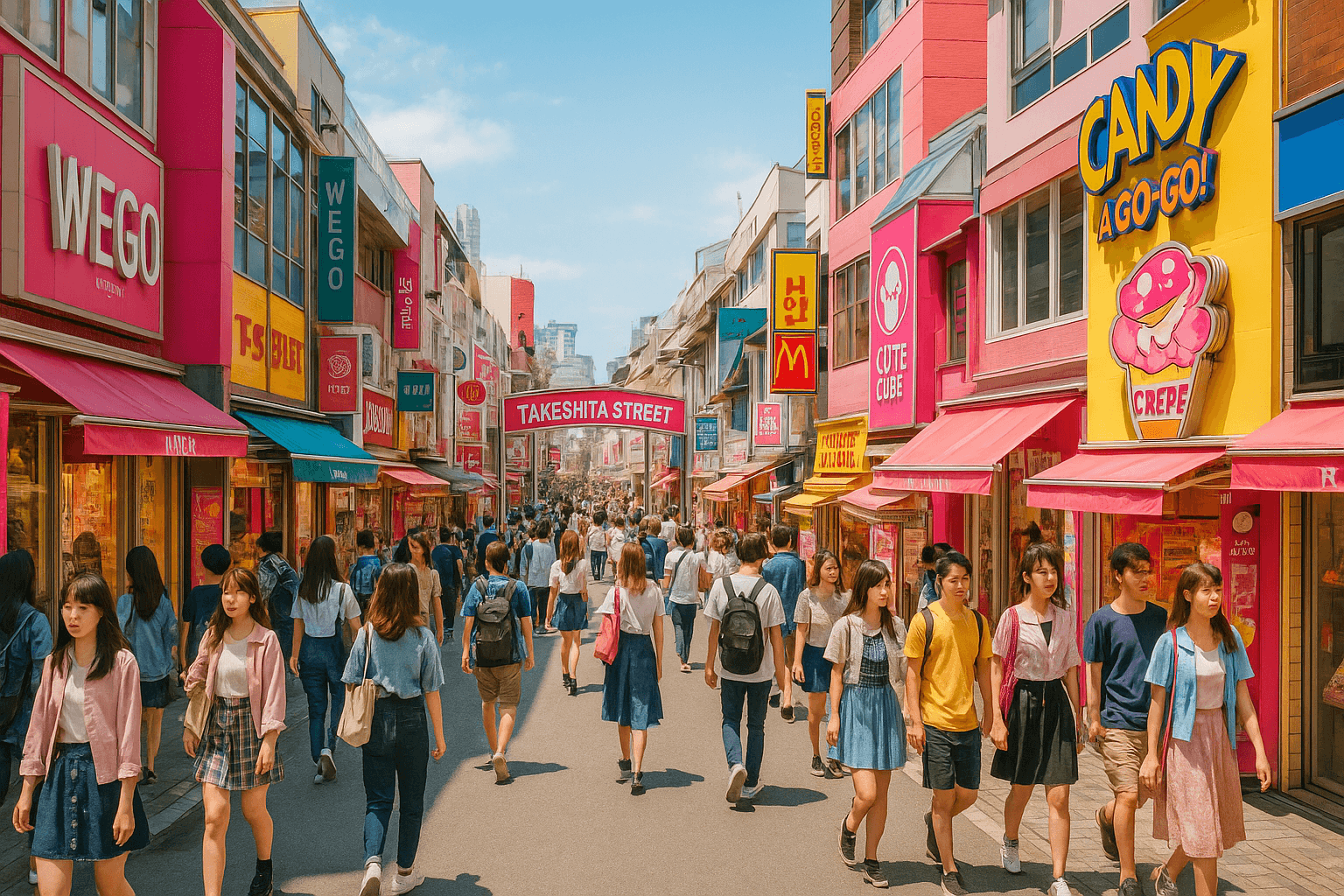
Takeshita Street (Takeshita-dori) is a short, pedestrian-focused shopping street in Harajuku, Tokyo, known for its dense concentration of youth fashion, quirky shops, and accessible street food. Lined with independent boutiques, themed stores, and colorful cafes, it represents a modern, pop-culture heartbeat of Tokyo where trends are born and everyday eccentricity is welcomed.
Cultural and experiential significance: Takeshita Street is a visible expression of Japan’s youth culture and fashion subcultures — from kawaii (cute) aesthetics to experimental street styles. It’s less about historic monuments and more about observing contemporary urban life, design, and culinary treats.
Who it appeals to: first-time visitors wanting a lively, visual introduction to modern Tokyo; fashion and pop-culture fans; foodies seeking quick, Instagram-worthy snacks; photographers; and travelers who enjoy people-watching and short, high-energy strolls.
Why Visit
- A concentrated showcase of Harajuku’s youth fashion and creative retail concepts.
- Easy access to unique, affordable souvenirs and niche boutiques found nowhere else.
- Fast, fun street food — crepes, bubble tea, and themed treats.
- Great for short visits: compact, walkable, and visually stimulating.
Main Areas & What to See
Entrance & Bridge Area (near Harajuku Station)
- What it is: The main approach from JR Harajuku Station and nearby Meiji-dori.
- Why it matters: High-energy entry point with dense crowds and immediate visual impact.
- What to notice/do: Watch cosplay and street fashion on weekends; pick up a map or guide at information kiosks; be ready for crowds during peak times.
Boutique Row (central Takeshita-dori)
- What it is: A run of small independent stores selling clothing, accessories, and novelty items.
- Why it matters: Many emerging designers and trend-forward shops are here; good place to discover one-off pieces.
- What to notice/do: Look for limited-run items, vintage-inspired goods, and local designers; sizes may run small—try items on where possible.
Themed Cafes and Character Stores
- What it is: Cafes and stores dedicated to characters, sweets, and immersive themes (e.g., crepe stands, character pop-ups).
- Why it matters: Offers unique food experiences and souvenir shopping tied to Japanese pop culture.
- What to notice/do: Some cafes require reservations or queues; menus often change seasonally; check opening rules for costume photography or interiors.
Food Stalls & Crepe Stands
- What it is: Rows of quick-serve kiosks selling crepes, taiyaki, bubble tea, and savory snacks.
- Why it matters: Iconic Harajuku treats; perfect for sampling while you walk.
- What to notice/do: Order at the counter and eat on the go; bring a small bag for wrappers; cashless options are common but some stalls prefer cash.
Side Streets and Back Alleys (Ura-Harajuku)
- What it is: Narrow lanes branching off Takeshita-dori leading to quieter, trendier shops and vintage boutiques.
- Why it matters: Less crowded, more local designer shops, and boutique coffee shops.
- What to notice/do: Spend time exploring these for unique finds and calmer atmosphere away from the main drag.
Best Time to Visit
- Time of day: Early morning (around 10:00 when shops open) or late afternoon (after 15:00) for fewer crowds. Evening after 18:00 can be lively but some small shops may close.
- Crowd considerations: Weekends and holidays are busiest; expect heavy congestion near the main entrance and popular crepe stands. Weekdays are significantly calmer.
- Atmosphere differences: Mornings feel fresh and exploratory; midday is frenetic and bustling; evenings can be festive but a bit more relaxed if shops remain open.
Seasonal Highlights
- Spring (Mar–May): Mild weather and occasional pop-up seasonal menus (sakura flavors). Crowds increase during cherry blossom season at nearby parks.
- Summer (Jun–Aug): Hot and humid; more tourists and festivals in the wider Harajuku/Omotesando area. Some shops run summer-themed promotions.
- Autumn (Sep–Nov): Comfortable temperatures and fewer tourists — good time for browsing. Limited-edition autumn flavors in cafes.
- Winter (Dec–Feb): Cooler, quicker visits; holiday window displays and occasional winter menus. Some niche shops offer New Year specials.
Special events: Takeshita Street itself doesn’t host large festivals, but Harajuku sees seasonal pop-ups and fashion events; check local listings if you have specific dates.
Practical Tips
- Cultural etiquette: Keep to the left while walking if a flow is present, avoid loud phone calls, and be polite when photographing people — always ask before taking close-up photos of someone.
- Photography: Street photography of storefronts and public fashion is generally acceptable; be respectful of private interiors and “no photography” signs in cafes or shops.
- Payment: Many shops accept credit cards, but small vendors and some stalls prefer cash (yen). ATMs are available at nearby stations and convenience stores.
- Accessibility: The street is narrow and crowded; wheelchair and stroller access is possible but can be difficult at peak times. Several shops have steps — ask staff for assistance.
- Timing: A focused walk through Takeshita Street can take 30–90 minutes depending on shopping and queue times. Combine with nearby Meiji Shrine or Omotesando for a half- or full-day outing.
Getting There
- Nearest stations: JR Harajuku Station (Yamanote Line) — main entrance is a 1–3 minute walk; Meiji-jingumae Station (Tokyo Metro Chiyoda/Fukutoshin lines) — 3–7 minute walk.
- From city center: From Tokyo Station or Shinjuku, Takeshita Street is typically 15–25 minutes by train (one transfer depending on route). From Shibuya, it’s 5–10 minutes by train or short taxi ride.
Is It Worth It?
Short answer: Yes — if you enjoy vibrant street culture, quick tastings, and people-watching. Takeshita Street delivers a compact, sensory experience of contemporary Tokyo.
Balanced perspective: It can be crowded, commercial, and touristy, so manage expectations if you seek quiet or traditional Japanese sites. For first-time visitors or those interested in youth culture, it’s a must-see; returning travelers may prefer exploring the quieter back alleys and nearby Omotesando for a different perspective.