
Introduction
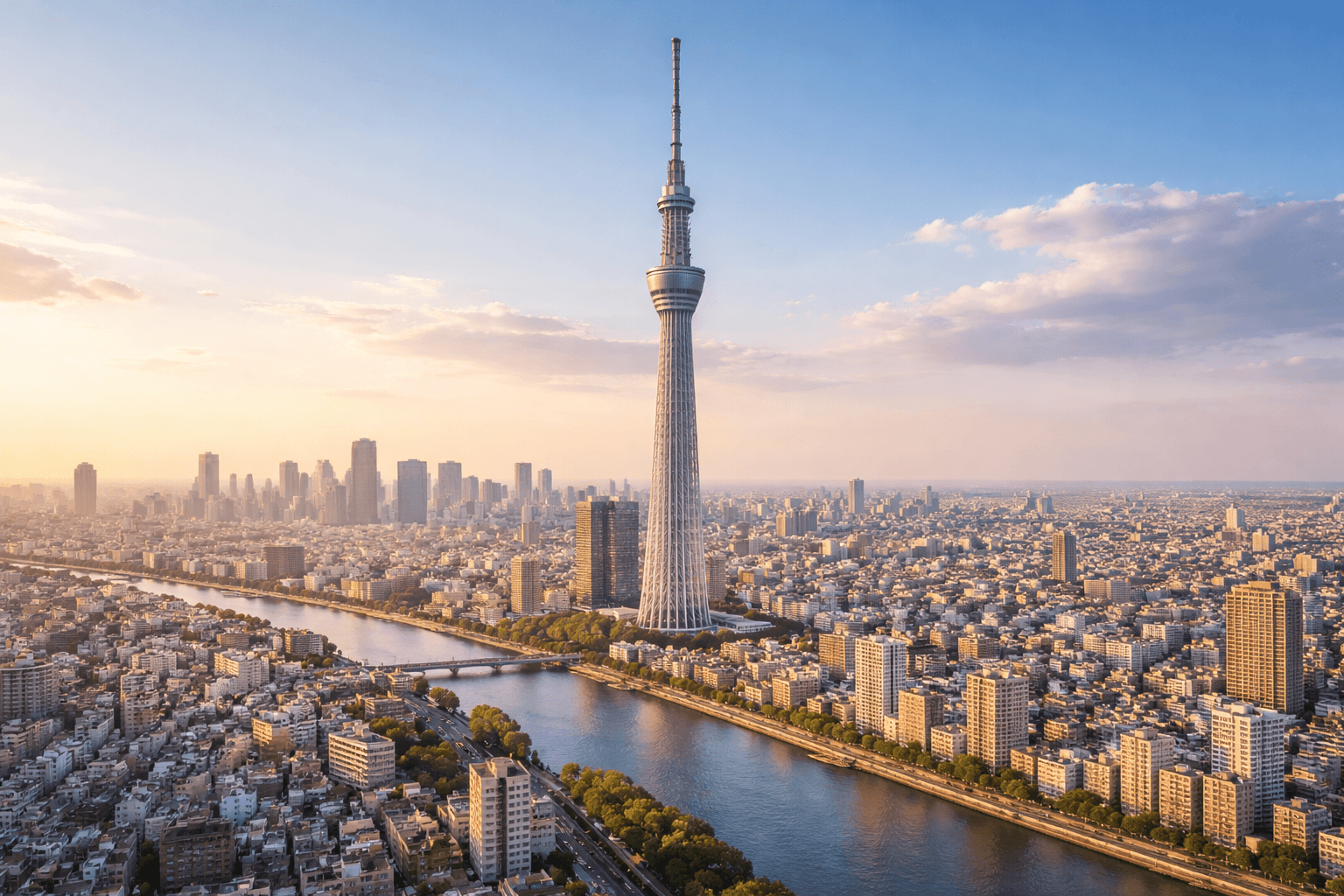
Tokyo Skytree is a 634-meter broadcast tower and observation complex in Sumida, Tokyo. Completed in 2012, it replaced older transmission infrastructure and quickly became both a functional landmark and an iconic viewpoint over the city. Beyond height, the Skytree is a modern symbol of Tokyo’s blend of technology and tradition — its design references traditional Japanese pagodas while offering panoramic, accessible views. The site appeals to first-time visitors seeking a signature skyline perspective, photographers hunting sunrise or nightscapes, families and shoppers (the base includes a large mall), and repeat visitors wanting a different seasonal or time-of-day vantage.
Why Visit
- Unrivaled panoramic views of Tokyo, from downtown to Mount Fuji on clear days.
- Two observation decks (Tembo Deck and Tembo Galleria) offering different perspectives and experiences.
- Conveniently combined with shopping, dining, and nearby cultural sites in Asakusa and Sumida.
- Excellent for photography at sunrise, sunset and after dark — city lights are spectacular.
Main Areas & What to See
Tembo Deck (350 m)
- What it is: The primary observation deck with three floors of viewing space.
- Why it matters: Accessible, spacious, with floor-to-ceiling windows and information panels that help you identify landmarks.
- What to notice/do: Walk the circular promenade, use the spotting scopes, and time your visit for clear-weather views of Tokyo Bay and, if visible, Mount Fuji.
Tembo Galleria (450 m)
- What it is: A higher, slanted glass corridor that rises to 450 meters.
- Why it matters: Offers a dramatic “skywalk” feeling and a narrow, upward-spiraling view of the city.
- What to notice/do: Stand in the northern glass corridor for long, recessionary lines of streets and the impression of walking above the skyline.
Glass-Floor/Photo Spots
- What it is: Designated areas for photos, including a small glass-floor section on the Tembo Deck.
- Why it matters: Great for dramatic photos; queues can form, so plan accordingly.
- What to notice/do: Keep belongings secure; children should be supervised.
Solamachi Shopping Mall (at the base)
- What it is: A multi-floor complex with shops, restaurants, and an aquarium nearby.
- Why it matters: Useful for meal breaks, souvenirs, and family-friendly activities before or after the tower visit.
- What to notice/do: Sample local snacks, pick up unique Tokyo Skytree memorabilia, or visit Tokyo Solamachi’s observation-themed stores.
Surrounding Area: Sumida Aquarium & Asakusa
- What it is: Nearby cultural and leisure sites within easy walking distance or a short train ride.
- Why it matters: Combine modern vistas with traditional Tokyo: short hop to Senso-ji temple and Nakamise shopping street.
- What to notice/do: Plan a half-day combining Skytree, the aquarium, and a stroll through Asakusa.
Best Time to Visit
- Time of day: Early morning (right after opening) for smaller crowds and softer light; late afternoon through sunset for changing light and golden hour; after dark for city lights and illuminated tower views.
- Crowd considerations: Weekends, public holidays, and evenings are busiest. Aim for weekday mornings for the quietest experience.
- Atmosphere differences: Daytime emphasizes distance views and clarity; sunset offers color and changing shadows; nighttime is about sparkling city lights and the tower’s illumination.
Seasonal Highlights
- Spring: Cherry blossoms in nearby parks (e.g., Sumida Park) create attractive foregrounds for Skytree photos.
- Summer: Longer daylight; occasional haze reduces distant visibility but festivals in Asakusa add cultural color.
- Autumn: Clearer air and vibrant foliage make for excellent long-distance views and warm tones at sunset.
- Winter: Crisp air often provides the best visibility for Mount Fuji sightings; it can be cold and windy on higher decks.
Practical Tips
- Tickets: Buy advance-timed tickets online to avoid long queues; same-day tickets are available but can sell out during peak periods.
- Entry & timing: Allow 1–2 hours for observation decks; add extra time for queues, photos, shopping, or meals.
- Accessibility: Elevators and facilities accommodate wheelchairs and strollers; staff can assist but check latest accessibility info before visiting.
- Payment: Card and contactless payments widely accepted in the tower and Solamachi mall; carry some cash for small vendors.
- Clothing: Wind and chill increase with height — bring a light jacket, especially in cooler months and at night.
- Photography: Personal photography is allowed; tripods and professional setups may be restricted without prior permission. Respect signage and other visitors.
- Etiquette: Keep voices moderate, yield at narrow viewpoints, and supervise children on glass-floor areas.
Getting There
- Nearest stations: Oshiage (Skytree) Station — direct access to Tokyo Skytree Town; Tokyo Skytree Station on the Tobu Skytree Line is also adjacent.
- Typical travel time: From Tokyo Station (city center) it's about 25–35 minutes by subway/train depending on transfers; from Asakusa it's a short 10–15 minute walk or one stop on local lines.
- Signage: Stations and the area are well-signposted in English and Japanese; follow signs for "Skytree Town" or "Tokyo Skytree."
Is It Worth It?
For most visitors: yes — Tokyo Skytree delivers a reliable, accessible way to see Tokyo from above, with the convenience of shopping and nearby cultural sites. For photographers and clear-weather seekers, the higher Galleria and winter mornings are particularly rewarding. If you have limited time in Tokyo and prefer historic neighborhoods over modern observation towers, you might choose Asakusa or a rooftop bar instead. Overall, combine Skytree with nearby attractions to get the best value from a visit.