
Introduction
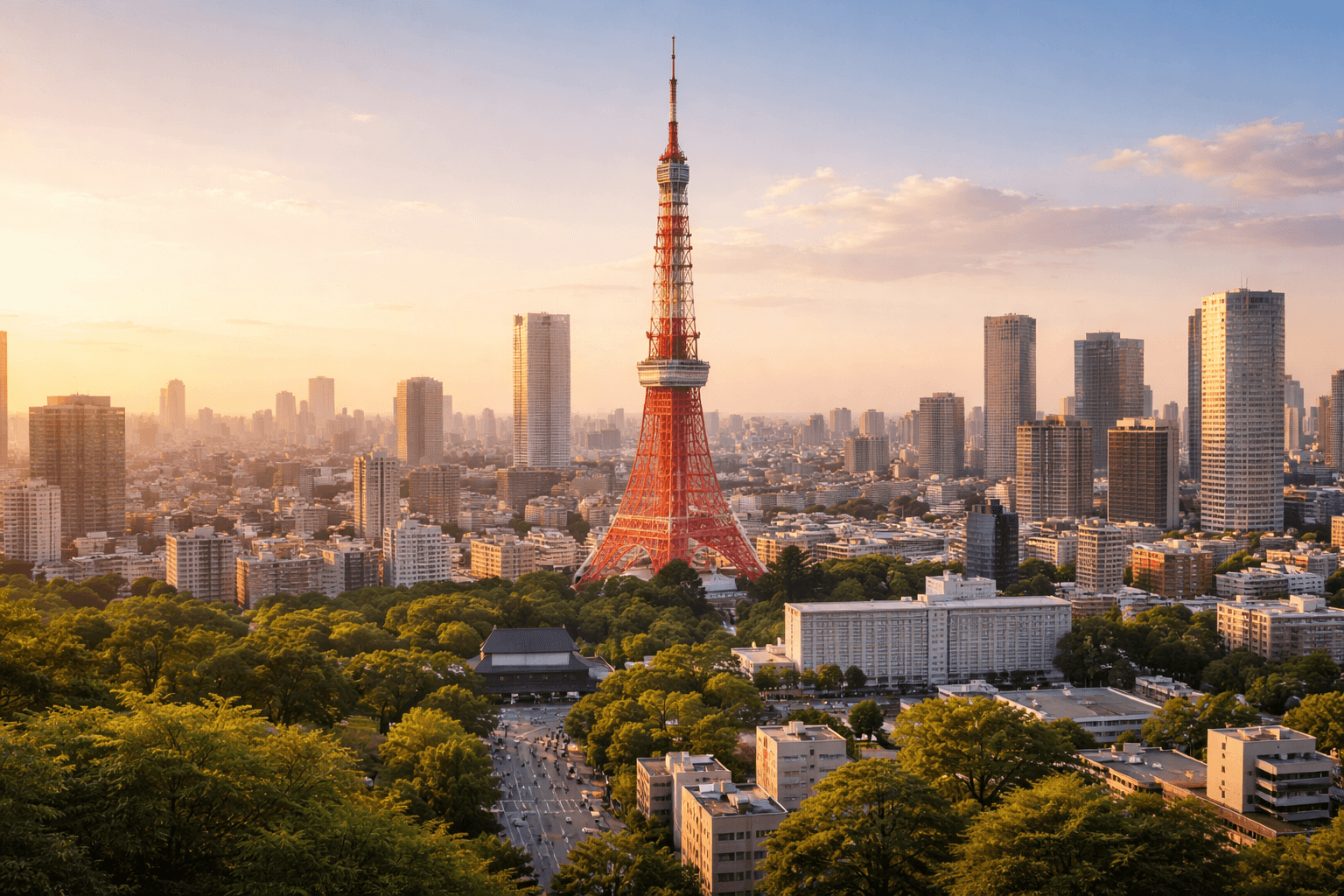
Tokyo Tower is a 333-meter landmark and observation complex in Minato Ward, modeled after the Eiffel Tower but thoroughly Japanese in scale and context. Since opening in 1958 it has been a symbol of postwar recovery, broadcasting infrastructure, and a panoramic vantage point over Tokyo. The site appeals to first-time visitors seeking a classic city panorama, repeat visitors who enjoy skyline photography or night views, and travelers interested in mid‑century Tokyo history and lively surrounding neighborhoods.
Why Visit
- Iconic skyline viewpoint with wide-ranging city views.
- Compact cultural complex: observation decks, museums, and shops.
- Great spot for both daytime cityscapes and illuminated night scenes.
- Easy to combine with nearby neighborhoods (Roppongi, Zojoji Temple).
Main Areas & What to See
Main Deck (mid-level observation)
- What it is: The primary public viewing floor offering 360° views and floor-to-ceiling windows.
- Why it matters: It provides a broad, accessible perspective of central Tokyo — good for orientation and daytime panoramas.
- What to notice/do: Walk the full circumference, use the viewing scopes, and compare landmarks like the Imperial Palace, Tokyo Skytree, and on clear days Mount Fuji.
Top Deck (upper observation)
- What it is: A higher, smaller observation room reached by elevator.
- Why it matters: Higher elevation for more expansive, often clearer vistas — especially at sunset and night.
- What to notice/do: Arrive before sunset if you want both daylight and illuminated city views; space is more limited so expect brief lines at peak times.
FootTown (base complex)
- What it is: Multi-floor building at the base with souvenir shops, restaurants, an aquarium or small museums, and ticketing.
- Why it matters: Good place to plan your visit, eat, and pick up themed goods; useful if weather limits outdoor viewing.
- What to notice/do: Browse local snacks and Tower-themed souvenirs; check seasonal exhibitions.
Zojoji Temple (adjacent)
- What it is: Historic Buddhist temple directly south of the tower.
- Why it matters: Offers a striking contrast of centuries-old architecture framed by the tower — great for photos and cultural context.
- What to notice/do: Walk the temple grounds, respect prayer areas, and use the contrast for photos (especially at golden hour).
Best Time to Visit
- Time of day: Late afternoon through early evening is ideal — arrive an hour before sunset to see daylight, dusk, and night lights. For purely night views, 8–10 p.m. offers dramatic illumination.
- Crowd considerations: Evenings and weekends are busiest. Early mornings on weekdays are quieter if you prefer solitude.
- Atmosphere differences: Day visits emphasize distant geography and Mount Fuji views (weather permitting); nights emphasize glittering city lights and a romantic atmosphere.
Seasonal Highlights
- Spring: Cherry blossoms near Zojoji and along nearby streets can frame the tower; moderate crowds during sakura peaks.
- Summer: Clearer long days for late sunsets; look for special seasonal events or illumination programs.
- Autumn: Crisp air increases chances of long-distance visibility; fall foliage at nearby parks adds color.
- Winter: Often the clearest visibility for distant views (including Mount Fuji) but colder; special winter illuminations may be scheduled.
Practical Tips
- Cultural etiquette: Keep voices low inside viewing areas and temples; remove hats or loud accessories during quiet moments at Zojoji. Queue politely and follow staff directions.
- Photography rules: Handheld photography is allowed; tripods and large lighting setups are often restricted on observation decks. Drone use is prohibited in central Tokyo airspace.
- Payment & access: Tickets for observation decks are sold on-site; many onsite shops and restaurants accept credit cards and IC transit cards, but carrying some cash (JPY) is useful for small purchases. Expect security checks at busy times.
- Timing: Allocate 1–2 hours for a standard visit (viewing floors, quick walk in FootTown); 2–3 hours if you plan to include meals, museum exhibits, or Zojoji Temple.
Getting There
- Nearest stations: Akabanebashi Station (Toei Oedo Line) is the closest on foot; Kamiyacho Station (Tokyo Metro Hibiya Line) and Onarimon Station (Toei Mita Line) are also within a 10–15 minute walk. Hamamatsucho Station (JR) is a 15–20 minute walk and useful for transfers from Tokyo Station or Shinbashi.
- Typical travel time from the city center: From Tokyo Station expect roughly 20–30 minutes by train + short walk; from Shinjuku or Shibuya allow 25–35 minutes depending on transfers.
Is It Worth It?
Short answer: Yes, for most visitors. Tokyo Tower is worth visiting for its classic viewpoint, the accessible mix of culture and shopping at its base, and the photogenic pairing with Zojoji Temple. If you prefer ultra-modern heights, Tokyo Skytree offers a different scale — but Tokyo Tower’s mid‑century charm and central location make it a practical, rewarding stop on a Tokyo itinerary.