
Introduction
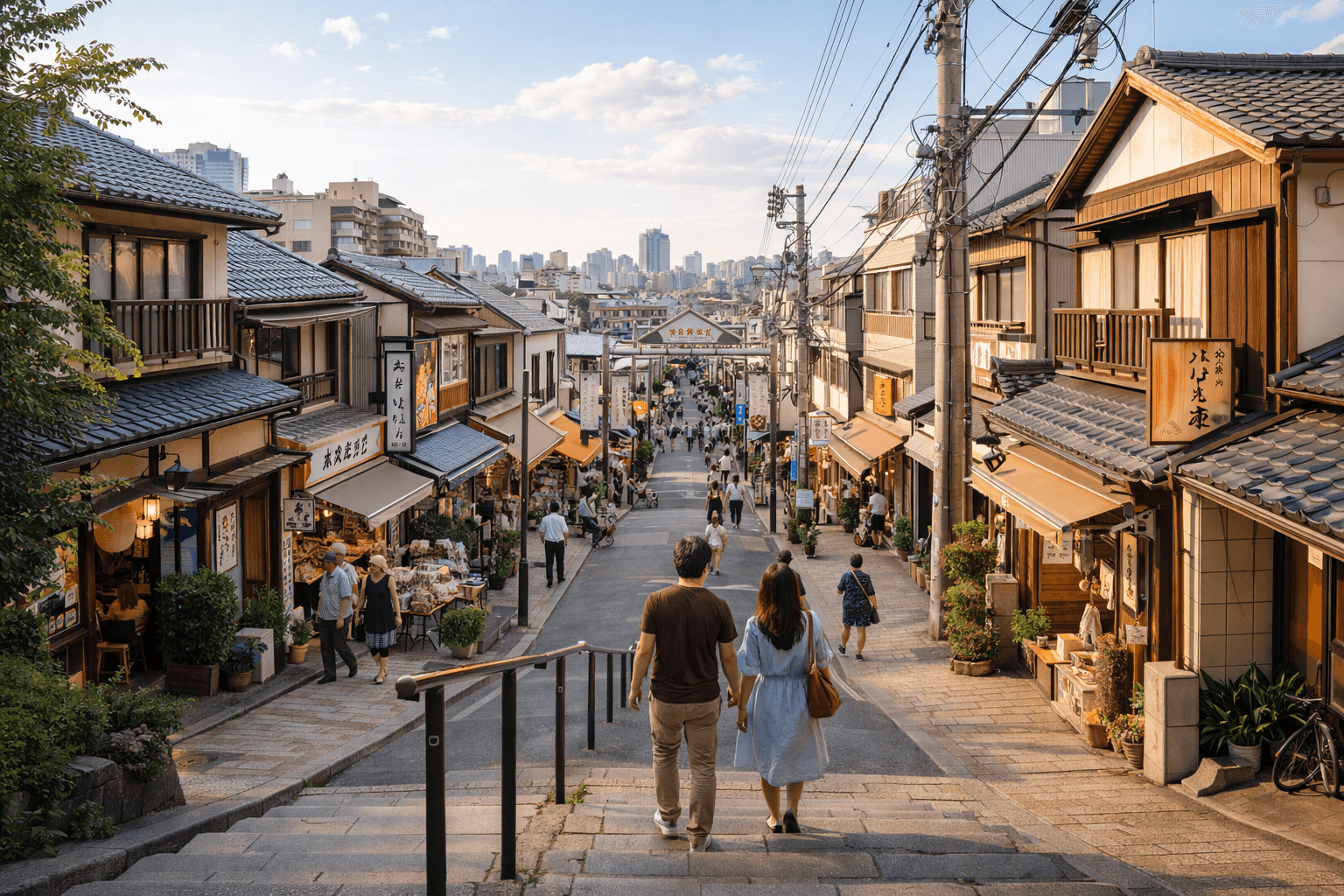
Yanaka is a historic neighborhood in northeastern Tokyo (Taito Ward) known for its narrow streets, low-rise wooden houses, temples, and a preserved atmosphere that feels like Tokyo before rapid postwar redevelopment. It forms part of the larger Yanesen area (Yanaka, Nezu, Sendagi) and is valued for its living community, traditional shops, and cemetery parks that invite slow exploration.
Yanaka's significance is cultural and experiential: it offers a rare glimpse of daily, old-style Tokyo—temples and shrines nestled among residences, century-old mom-and-pop businesses, and creative small museums—making it appealing to travelers seeking history, photography, relaxed walks, and local food away from major tourist hubs.
Who it appeals to: first-time visitors wanting a calmer Tokyo contrast; repeat visitors who want neighborhood-level discoveries; photographers; those interested in architecture, temples, ceramics, and local food.
Why Visit
- Walkable, low-rise streets that preserve prewar Tokyo atmosphere.
- Cluster of temples (including Yanaka Cemetery) that combine history and seasonal beauty.
- Independent shops, cafés, and craft stores offering authentic local finds.
- Easy half-day escape from busy central areas—great for slow travel and photography.
Main Areas & What to See
Yanaka Ginza shopping street
- What it is: A compact, lively shotengai (shopping street) of traditional stalls, bakeries, and cafés.
- Why it matters: It’s the neighborhood’s social spine and best spot to sample local snacks and buy souvenirs.
- What to notice/do: Try croquettes and local sweets, browse pottery and antiques, and sit at a café to watch everyday life.
Yanaka Cemetery (Yanaka Reien)
- What it is: One of Tokyo’s larger historic cemeteries with tree-lined paths and many notable graves.
- Why it matters: It’s both serene and beautiful—cherry blossoms in spring and quiet corners for reflection.
- What to notice/do: Walk the shaded lanes, observe gravestone architecture, and pause at small temple grounds alongside the cemetery.
Tennoji & Shinobazu-dori temples
- What it is: A cluster of small temples and shrines scattered through the neighborhood.
- Why it matters: Each temple has its own character and history; together they show the religious fabric of local life.
- What to notice/do: Respectful photography, ring temple bells only where invited, and look for seasonal lanterns or statues.
Yanaka Cultural Center & Small Museums
- What it is: Local museums and community spaces focusing on traditional crafts, neighborhood history, and art.
- Why it matters: They provide context on Yanaka’s artisans, ceramics, and preservation efforts.
- What to notice/do: Check opening hours in advance; exhibitions are often in English-friendly formats but may be small and intimate.
Residential alleys and old houses
- What it is: Quiet lanes with wooden townhouses, narrow passages, and everyday scenes.
- Why it matters: This is where Yanaka’s charm truly lives—walking here feels like stepping back in time.
- What to notice/do: Walk slowly, be mindful of residents, and look for decorative details like traditional doorways and tiled roofs.
Best Time to Visit
- Time of day: Morning (9:00–11:30) for quieter streets and bakeries just opening; late afternoon (15:00–17:30) for warm light and active shops/cafés.
- Crowds: Weekdays are much quieter than weekends; Yanaka Ginza gets noticeably busier on weekend afternoons.
- Atmosphere differences: Morning = calm, reflective; midday = livelier with market/food activity; evening (after 18:00) many shops close and the neighborhood returns to a residential calm.
Seasonal Highlights
- Spring: Cherry blossoms along cemetery paths and temple grounds — one of the most picturesque times.
- Summer: Shade-filled walks and local festivals (matsuri) in nearby areas—check local schedules for small shrine events.
- Autumn: Colorful foliage in temple gardens and cooler, comfortable walking weather.
- Winter: Crisp, quiet streets; fewer tourists and clear views for street photography.
Practical Tips
- Cultural etiquette: Keep noise low, remove shoes where required (temple buildings), and avoid walking into private courtyards or gardens without permission.
- Photography: Street and temple exteriors are fine; avoid photographing mourners, worshippers, or home interiors. Observe signs that restrict photography at some temples or shops.
- Payment & access: Many small shops and cafés prefer cash (yen). ATMs at convenience stores (7-Eleven) accept international cards. Most streets are flat but some alleys are narrow—carry a portable bag rather than a large suitcase.
- Timing: Allow 2–4 hours for a relaxed visit; half-day if combining a meal and a couple of museums, full day if lingering in cafés and exploring every alley.
Getting There
- Nearest stations: Nippori Station (JR Yamanote Line, Keihin-Tohoku Line) and Nishi-Nippori Station (Chiyoda/Tobu lines) are the closest major access points; Sendagi and Nezu (Chiyoda Line) are also within easy walking distance to parts of Yanaka.
- Typical travel time: From Tokyo Station, expect about 20–30 minutes by train to Nippori (JR Yamanote + short walk). From Ueno, it’s a 10–15 minute walk or one stop by train.
Is It Worth It?
Yes—especially if you want a quieter, human-scale slice of Tokyo that contrasts with shopping districts and skyscrapers. Yanaka rewards slow walking, curiosity, and simple pleasures: food stalls, temple gardens, and the warm familiarity of neighborhood life. If you only have a few hours in Tokyo, prioritize Yanaka when you want calm, local texture, and photography opportunities rather than mainstream sightseeing.